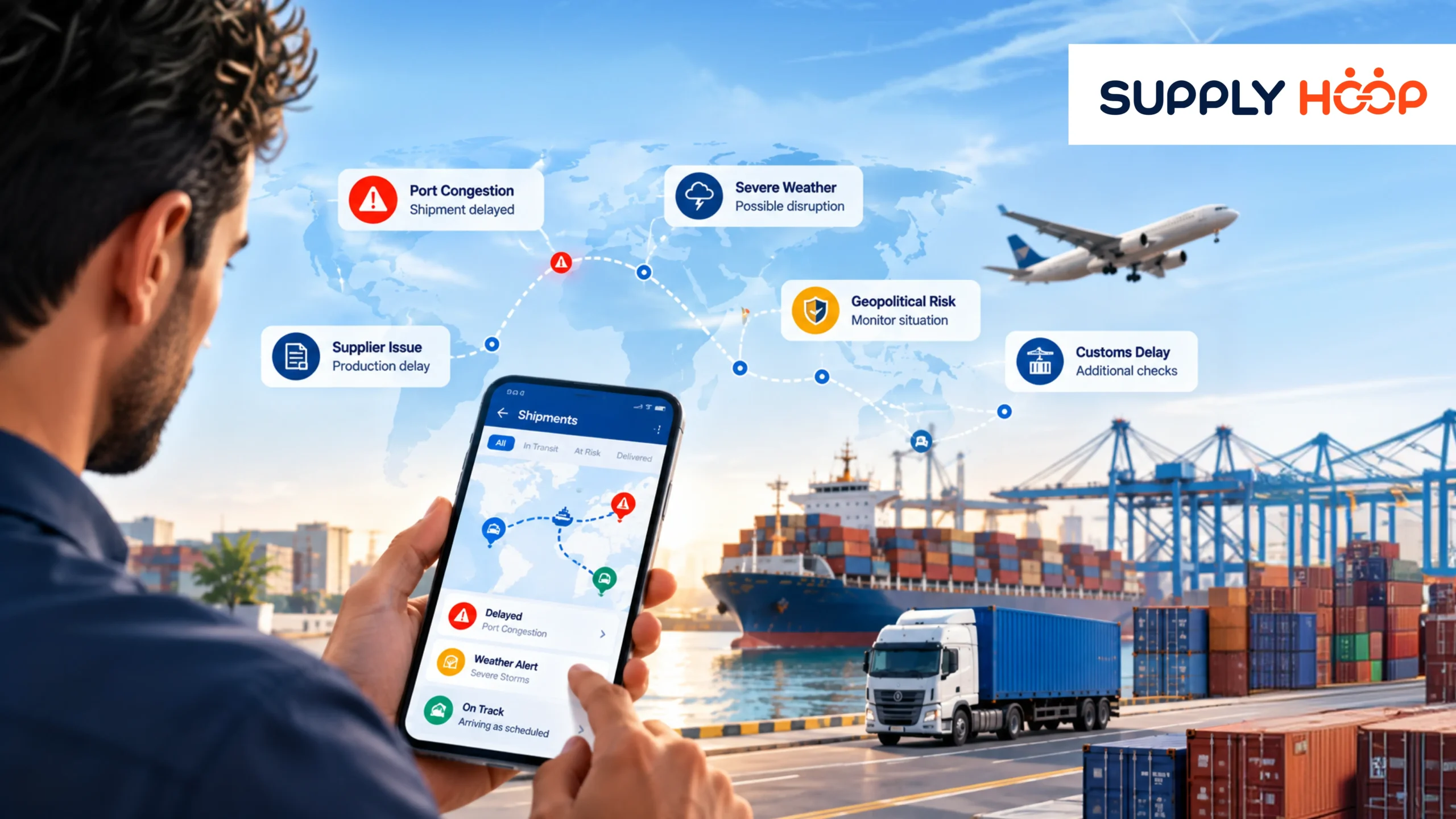
A supplier misses a production commitment.
A port suddenly faces congestion.
A shipment containing critical inventory stops progressing.
A quality issue is discovered before delivery.
A safety incident interrupts a logistics route.
These events are different, but they create the same question for the supply chain team:
What is affected, and what do we need to do now?
That question is becoming harder to answer as supply chains stretch across suppliers, freight forwarders, carriers, warehouses, customs authorities, and customers. In 2026, research found that only 45% of surveyed organizations considered themselves prepared for supply chain disruptions, while 65% still relied on manual reporting to gather supply chain data.
This is why mobile supply chain visibility matters for risk management. Its value is not simply putting tracking information on a phone. It is giving decision-makers access to the operational information they need while there is still time to respond.
Supply Chain Risk is Often a Problem of Detection Time
Consider two businesses affected by exactly the same disruption.
Both have containers moving through a port that suddenly experiences a major operational delay.
Company A discovers the problem after its customer asks why the shipment has not arrived.
Company B receives an exception alert, identifies the affected containers, checks the revised ETA, sees which customer orders depend on them, and begins reviewing alternative plans.
The disruption is identical.
The response window is not.
That difference matters because supply chain risks tend to become more expensive as they move downstream. A delay identified early may require a schedule adjustment. The same delay discovered days later could require expedited transportation, additional inventory, warehouse rescheduling, or difficult customer conversations.
Mobile visibility brings that information closer to the people making the decisions.
Think of Risk as Four Questions, Not Another Dashboard
A practical risk-management process should answer four questions:
What happened?
What is exposed?
How serious is the impact?
What action should happen next?
A visibility platform becomes valuable when it helps teams move through those questions quickly.
For example, knowing that a vessel is delayed is information.
Knowing that the vessel carries six shipments connected to four customers and two urgent purchase orders creates context.
Knowing which orders may miss their required delivery dates creates risk visibility.
And notifying the responsible people while giving them access to the shipment details creates an opportunity to act.
That is the difference between tracking an event and managing its business impact.
1. Logistics Disruption: Identify Which Freight is Actually Exposed
Not every global disruption affects every shipment.
A storm near a port, strike, geopolitical event, carrier disruption, border closure, or road interruption may generate dozens of headlines. Operations teams still need to determine whether their own freight is exposed.
That is where connected shipment visibility becomes useful.
Rather than manually checking booking files and spreadsheets, teams can use shipment routes, milestones, locations, ETAs, and exceptions to identify potentially affected movements.
The mobile experience is particularly useful because disruption does not wait until someone is sitting in front of a desktop.
A logistics manager could receive an exception notification, open the affected movement, review its latest status, check associated orders, and contact the appropriate team directly from the mobile workflow.
The purpose is not to predict every disruption. It is to shorten the distance between an event occurring and the business understanding its exposure.
2. Supplier Continuity: Look Beyond “Has it Shipped?”
Supplier risk starts before freight begins moving.
Imagine a supplier normally dispatches an order every Monday. Monday passes without a shipment milestone. The purchase order remains open. By Wednesday, production planning assumes the material will still arrive on schedule.
The problem is already developing even though there is no delayed shipment to track yet.
This is why risk visibility should connect purchase orders with logistics execution.
Teams need to understand whether expected orders have progressed, whether suppliers have met required milestones, and whether incoming inventory is still aligned with business requirements.
Supplier continuity is a significant blind spot in many organizations. Critical dependencies can remain hidden beyond direct suppliers, and stronger visibility helps organizations assess affected suppliers and sites more quickly when incidents occur.
Mobile visibility cannot eliminate supplier failure. It can, however, help teams notice operational signals sooner and understand which orders may require attention.
3. Quality Failures: Connect the Issue to the Shipment
Quality risk becomes particularly difficult when information is separated from the physical movement.
Suppose a warehouse receives a shipment and identifies damaged cartons or a product-quality concern.
The team now needs context.
Which purchase order does the cargo belong to? Who supplied it? When did it move? Which customer or inventory requirement is connected to it? Are supporting documents available? Has similar cargo already been distributed elsewhere?
If those answers live in separate systems, the investigation slows down.
With connected mobile visibility, authorized teams can access relevant shipment, order, document, and delivery information from one operational view.
Photos, delivery documentation, shipment references, timestamps, and related records can provide useful evidence for determining what happened and coordinating the response.
The objective is not merely recording that a quality failure occurred.
It is reducing the time required to understand its scope.
4. Safety Incidents: Get Critical Information to the Right People
Some supply chain exceptions affect schedules.
Others require immediate escalation.
A vehicle incident, damaged cargo, temperature excursion, unsafe handling situation, or another safety-related event may require several parties to respond quickly.
In these situations, information scattered across email chains creates unnecessary friction.
Mobile access can help authorized users retrieve relevant shipment details and supporting documentation without waiting to return to a workstation. Notifications can also bring significant exceptions to the attention of designated users sooner.
Importantly, a visibility platform does not replace established safety procedures, emergency response protocols, regulatory reporting, or trained personnel.
Its role is different: to make relevant operational information accessible when people need it.
5. Find the Risk Hidden Between Two Milestones
Some risks do not arrive as obvious alerts.
They appear as silence.
A container should have been discharged, but no discharge milestone arrives.
Customs clearance normally takes a day, but the shipment has remained unchanged for three.
A delivery was expected yesterday, but there is no Proof of Delivery.
A purchase order should have progressed to shipment, but it remains open.
Individually, these may look like missing updates.
Operationally, they can be early risk signals.
This is why visibility should monitor not only events that happened, but also expected events that did not happen.
Instead of requiring teams to remember hundreds of expected milestones, exception management can highlight movements that have deviated from their expected progression.
That allows teams to investigate before the customer becomes the first person to notice the problem.
6. Use Supply GPT to Ask About Exposure, Not Just Status
Risk management becomes difficult when the data exists but answering a question still requires several reports.
This is where Supply GPT can provide a different kind of value.
Instead of asking only:
“Where is shipment 7843?”
a logistics team could ask questions such as:
“Which shipments are currently delayed?”
“Which purchase orders have not progressed as expected?”
“Show shipments with customs exceptions.”
“Which deliveries are still missing confirmation?”
“What needs attention today?”
The important shift is from retrieving a record to identifying a group of movements that may require investigation.
AI does not make the risk decision for the business. It helps users interrogate connected operational information more quickly so qualified people can make that decision with better context.
7. Keep the Response Connected After the Alert
Detecting risk quickly solves only half the problem.
The next challenge is coordination.
Operations may need to investigate the shipment. Procurement may need to contact the supplier. The warehouse may need to change its receiving plan. Customer service may need to communicate a revised expectation. Management may need to understand the potential impact.
If every department receives the information separately, response time can still be lost.
A mobile visibility platform creates a common operational reference around which those conversations can happen.
The shipment status, purchase order, latest milestone, documents, exceptions, and customer information can remain connected rather than being reconstructed through separate spreadsheets and email threads.
This is important because effective risk management depends not only on seeing the risk, but also on coordinating the response.
Mobile Visibility does not Remove Risk. It Gives You More Time to Manage it.
No visibility platform can stop a storm, prevent every supplier failure, eliminate every quality problem, or guarantee that a shipment will never be disrupted.
That should not be the promise.
The more valuable promise is decision time.
If your team learns about a disruption today instead of three days from now, there may still be alternatives.
If a missing supplier milestone is noticed before inventory becomes critical, procurement may have options.
If a customs problem is identified before free time expires, operations may be able to intervene.
If delivery evidence is immediately accessible when a quality dispute occurs, the investigation can begin with better information.
Recent 2026 risk-management guidance similarly emphasizes that visibility alone is insufficient; resilience depends on converting risk information into prioritized action.
That is where mobile visibility becomes useful, not because the supply chain suddenly becomes risk-free, but because the organization becomes less dependent on discovering problems late.
Turn Risk Signals into Earlier Decisions
Supply chain risk management should not begin when someone opens a weekly report.
It should begin when something deviates from the expected plan.
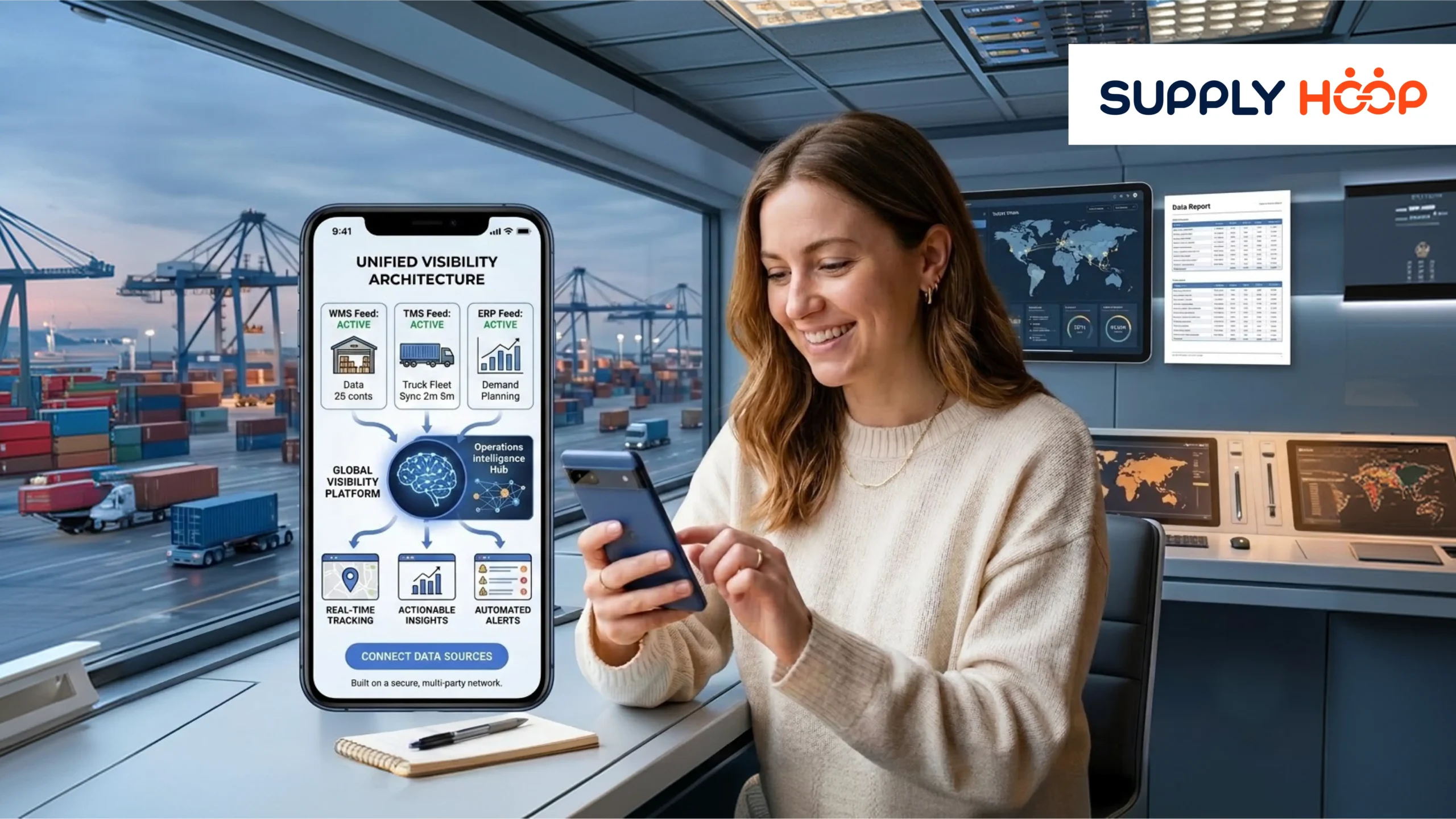
By connecting purchase orders, shipments, milestones, inventory, documents, exceptions, and delivery information in a mobile environment, Supply Hoop can help logistics teams maintain a clearer operational picture wherever they are working.
Supply GPT can help users interrogate that connected information, while mobile alerts can bring relevant exceptions to their attention without requiring constant dashboard monitoring.
The outcome is straightforward: see the operational signal earlier, understand what it affects, and give your team more time to decide what happens next.
Book a demo to explore how Supply Hoop can bring end-to-end supply chain visibility to mobile and help your team identify logistics risks and exceptions before they become harder and more expensive to manage.