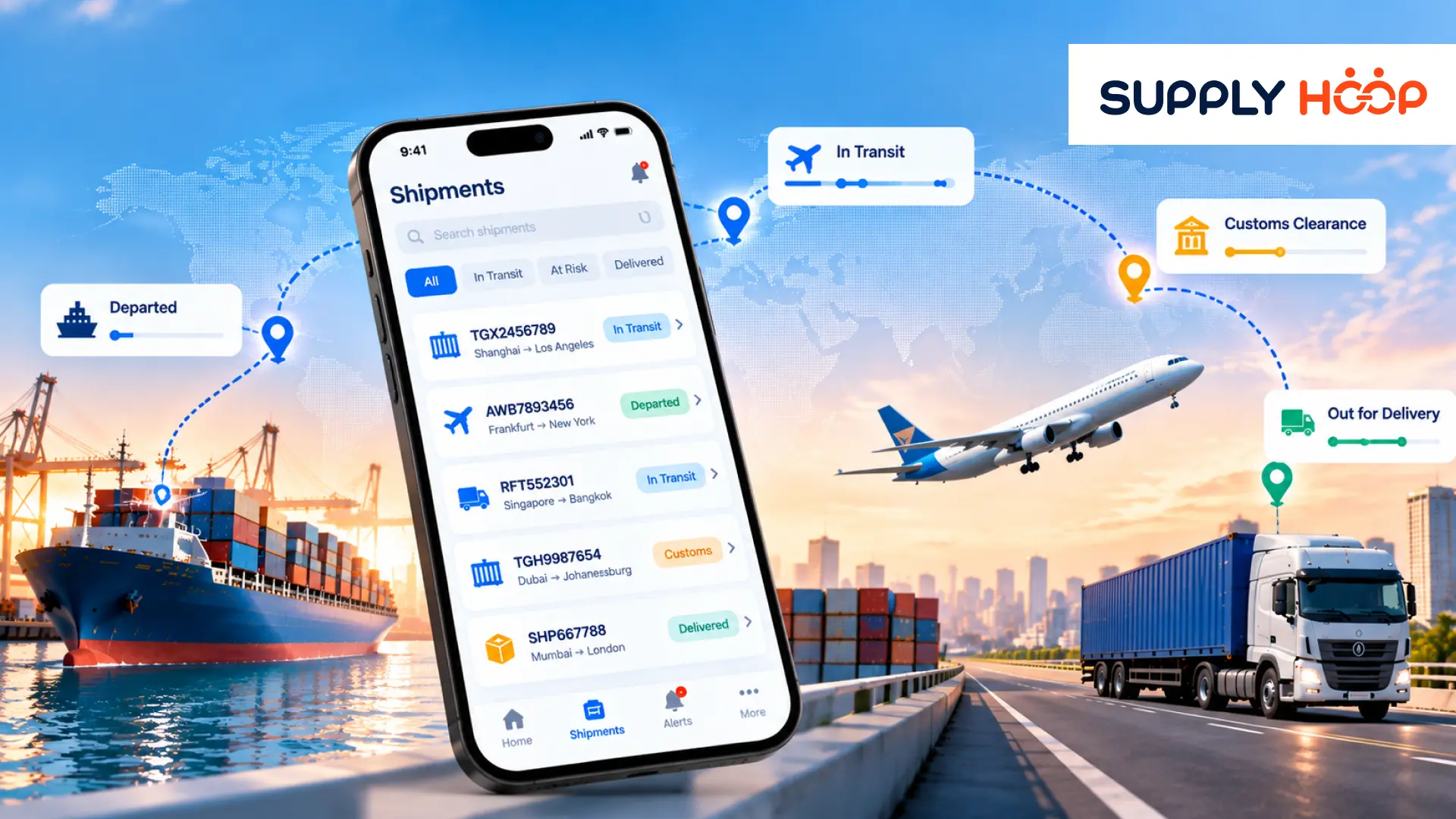
A customer calls asking for the latest status of a shipment moving from Shanghai to Los Angeles.
The freight forwarder has the information. The booking is recorded in CargoWise, the vessel movement is available through the shipping line, and the latest estimated arrival date is shown in a carrier tracking portal.
Yet answering one customer question still requires opening several systems.
The challenge is not missing shipment information. It is the effort required to find, verify, and communicate it.
For freight forwarders managing multiple customers, carriers, and transportation modes, these small tasks add up throughout the day. A mobile shipment tracking app helps simplify the process by bringing relevant freight updates into one accessible view.
Instead of replacing existing logistics systems, it connects the information they generate and makes it easier for operations teams, customer service representatives, and logistics managers to access shipment progress wherever they work.
Why do Freight Forwarders Still Switch Between Multiple Tracking Systems?
A single international shipment can generate information across several platforms.
Consider an ocean shipment involving a manufacturer, freight forwarder, shipping line, customs broker, warehouse, and inland transport provider.
The freight forwarder may create and manage the shipment in CargoWise. The carrier publishes vessel movement milestones. Customs clearance information comes through a separate process. Delivery confirmation may be recorded by the final-mile transport provider.
Each system serves a different operational purpose.
The difficulty begins when someone needs to understand the complete shipment journey.
A customer service representative might know that the vessel has arrived but still need to confirm whether the container was discharged, whether customs clearance is complete, and whether delivery has been scheduled.
Without connected visibility, gathering those answers requires additional searches and internal communication.
A mobile supply chain visibility platform addresses this information gap by making relevant shipment data available through one mobile environment.
One Mobile App Doesn’t Mean Replacing Your Existing Logistics Software
One misconception about centralized shipment tracking is that businesses need to replace their existing transportation management, ERP, or freight forwarding software.
That is not the objective.
CargoWise remains responsible for its established freight forwarding workflows. Carrier systems continue publishing transportation milestones. Warehouse and customs systems maintain their respective operational records.
The mobile visibility platform provides an additional layer that connects relevant information from those sources.
Through integrations with CargoWise, ERP platforms, carrier feeds, and other logistics systems, freight forwarders can access shipment updates without manually checking every original source.
This distinction is particularly important for companies that have already invested in specialized logistics technology.
The goal is not to manage every logistics process inside one app. It is to make the information needed for everyday decisions easier to access.
What should You Actually See When Tracking Freight on Mobile?
A tracking number and a general status such as “In Transit” rarely provide enough information for effective shipment management.
A useful freight tracking mobile app should help users understand where a shipment stands, what has happened recently, and whether anything requires attention.
The relevant information changes depending on the transportation mode.
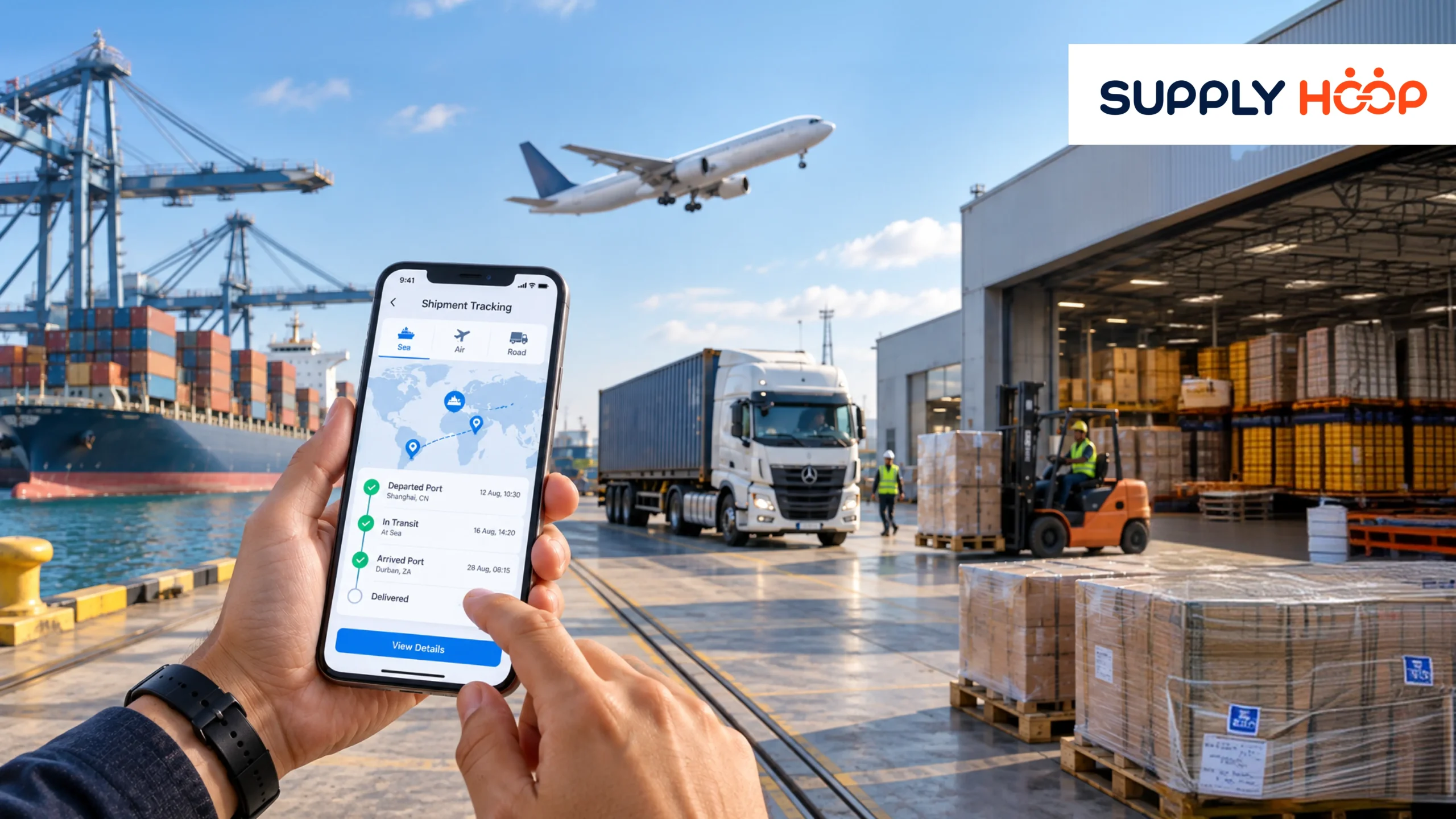
For ocean freight, teams may need to monitor vessel departure, transshipment, estimated arrival, container discharge, customs release, and final delivery.
Air freight requires visibility into flight departure, arrival, customs clearance, and cargo collection.
Road freight may involve pickup confirmation, transport progress, delivery status, and exceptions affecting the journey.
Across these transportation modes, a connected mobile view should make important information accessible, including:
- Current shipment status and available tracking milestones
- Estimated and actual departure and arrival information
- Revised ETAs and significant schedule changes
- Customs clearance progress where connected data is available
- Shipment exceptions and delays
- Relevant shipping documents and delivery confirmation
This helps freight forwarders monitor different shipment types without maintaining separate tracking routines for every carrier or transportation mode.
The Real Problem Often Begins When a Shipment Status Changes
Finding a shipment is one task. Recognizing that something important has changed is another.
Suppose a vessel originally scheduled to arrive on Monday is now expected on Thursday.
The shipping line updates its schedule, but the customer service team continues working with the earlier ETA.
The warehouse has already planned receiving activity. Inland transport arrangements may also depend on the original arrival date.
By the time the revised information reaches everyone, several operational decisions may need to be reconsidered.
This is where connected shipment visibility becomes more useful than basic tracking.
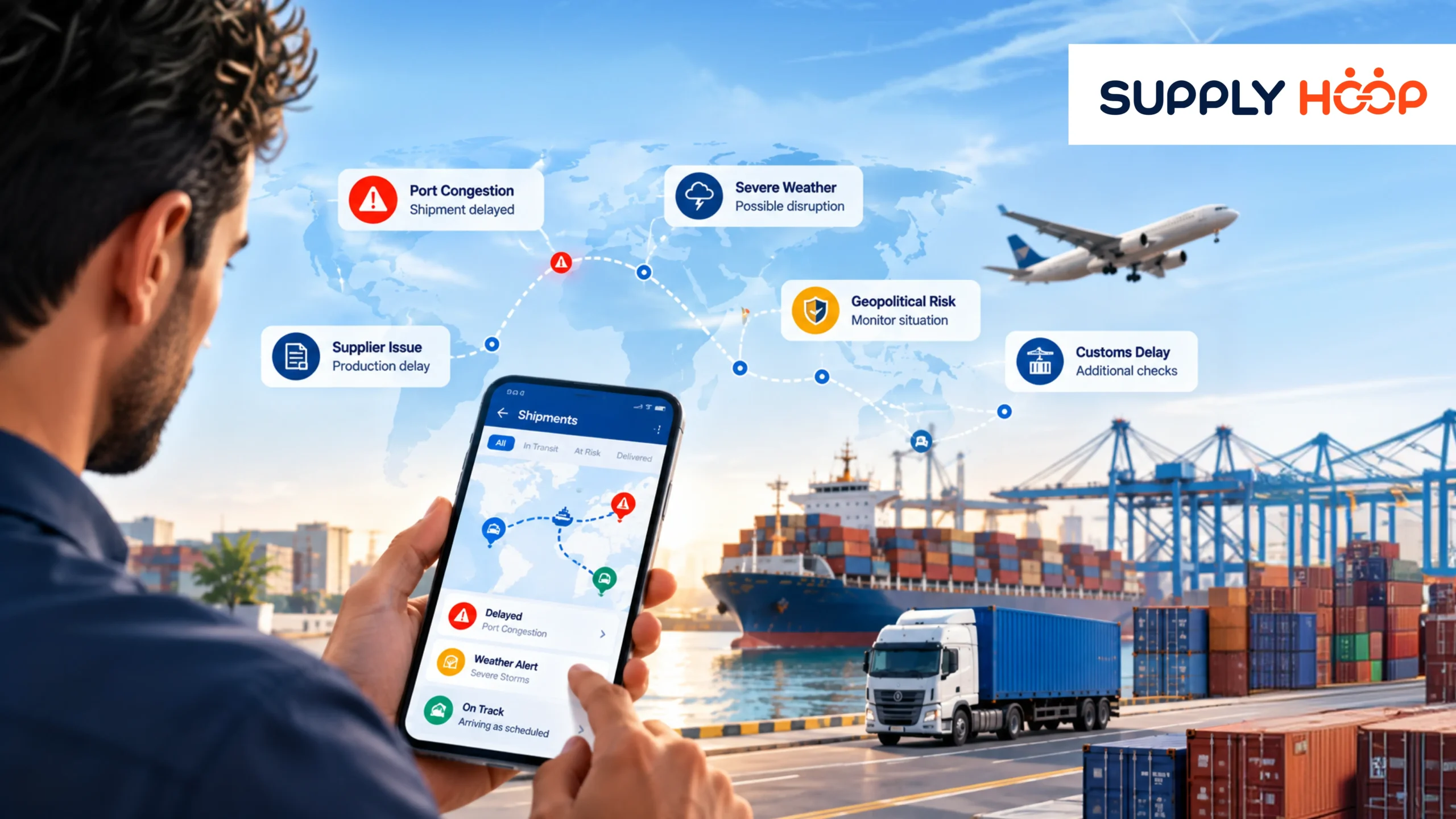
When updated milestones and exceptions become available through a mobile app, teams can identify relevant changes earlier and review their consequences.
The operations team can investigate the revised arrival date. Customer service can communicate an updated expectation. Transport planners can reconsider collection arrangements.
The value comes from making the changed information accessible while there is still time to respond.
How Mobile Shipment Tracking Changes Customer Service Workflows?
Customer service teams often become the link between customers and internal logistics systems.
A customer asks for an ETA. Customer service checks with operations. Operations reviews the carrier information. The answer travels back through the same communication chain.
That process may be necessary for complex exceptions, but it creates unnecessary work when the customer only needs a routine shipment update.
With mobile shipment visibility, authorized customer service users can check available milestones and shipment progress directly.
Consider three common customer enquiries.
“Has my shipment departed?”
The representative can review the latest departure milestone instead of contacting operations for confirmation.
“Has the arrival date changed?”
The representative can check the latest available ETA and determine whether the expected timeline has been revised.
“Has the shipment been delivered?”
The representative can review delivery status and supporting information when it has been made available through connected systems.
These changes reduce dependence on repeated internal follow-ups and allow operations teams to concentrate on exceptions requiring investigation.
What Happens When You Need Shipment Information Away from Your Desk?
Freight forwarding operations do not stop when managers leave the office.
A logistics manager may be attending a customer meeting when an urgent shipment enquiry arrives. A warehouse supervisor may need to confirm whether inbound cargo is still arriving as scheduled. A business development manager may be discussing delivery commitments with a customer.
In each situation, access to current shipment information can influence the next decision.
A mobile visibility app allows authorized users to review relevant shipment information from their phones instead of depending entirely on desktop applications.
This is especially useful when someone needs to confirm an ETA, review a milestone, or investigate an exception while working outside the office.
Mobile access does not change the underlying logistics process. It removes some of the friction involved in accessing operational information.
Can AI Make Shipment Tracking Even Simpler?
Even after shipment information is connected, users may still need to search through multiple records.
For freight forwarders handling large shipment volumes, finding the right shipment or identifying a group of delayed movements can take time.
This is where logistics assistant Supply GPT introduces a different way to access logistics information.
Instead of navigating shipment records individually, users can ask questions in natural language based on the information available through connected systems.
For example:
- Which ocean shipments are arriving this week?
- Which shipments have revised ETAs?
- What shipments are currently delayed?
- Which containers are waiting for customs clearance?
- What shipments require attention today?
These questions focus on the information users need rather than the systems holding it.
Supply GPT helps simplify information retrieval, while operational decisions remain with the logistics professionals responsible for managing the shipments.
Keep Customers Updated Without Giving Them Access to Every System
Not everyone involved in a shipment needs the same level of information.
Operations teams may require detailed milestone histories, exception information, and internal shipment records.
Customers generally need a more focused view of their cargo movement, estimated delivery, and relevant documents.
A connected visibility platform can support this distinction by making appropriate information accessible to different authorized users.
Communication can also extend beyond the mobile app.
Through WhatsApp integration, relevant shipment milestones and status changes can be communicated through a familiar messaging channel.
For freight forwarders, this creates an opportunity to reduce repetitive update requests while keeping customer communication aligned with available shipment information.
The objective is not to share every operational detail. It is to make useful, relevant information easier for the right people to receive.
How can You Measure Whether a Mobile Visibility App is Saving Time?
Introducing a mobile tracking application should produce improvements in everyday workflows, not simply add another technology platform.
Before implementation, freight forwarders can identify how much effort currently goes into retrieving and communicating shipment information.
For example, measure how often customer service contacts operations for routine updates, how many carrier portals employees check each day, and how long it takes to respond to a shipment status enquiry.
After introducing connected visibility, review whether those activities have changed.
Useful performance indicators include the average time required to answer a shipment enquiry, the number of manual status follow-ups, the time between an ETA change and customer notification, and the percentage of active shipments with current milestone information.
These measurements help businesses evaluate whether the mobile app is improving access to information and reducing administrative work.
They also reveal where additional integrations or better data quality may be needed.
Make Shipment Information Easier to Access, Not Harder to Manage
Freight forwarding will continue to depend on specialized logistics platforms, carrier systems, customs processes, and transportation providers.
Those systems are necessary because each performs a different function.
The opportunity lies in making their information work together.
A connected mobile shipment tracking app allows freight forwarders to access relevant milestones, monitor ETA changes, identify exceptions, and answer customer questions without repeatedly moving between disconnected tracking environments.
With Supply Hoop, logistics teams can bring shipment visibility into a mobile-first experience supported by CargoWise and other system integrations, natural-language access through Supply GPT, and customer communication through WhatsApp.
Instead of treating every shipment enquiry as another information search, teams can focus on understanding shipment progress and taking action when something changes.
Explore Supply Hoop’s mobile visibility platform and book a demo to see how your freight forwarding team can access shipment updates from one mobile app while continuing to use the logistics systems already supporting your operations.