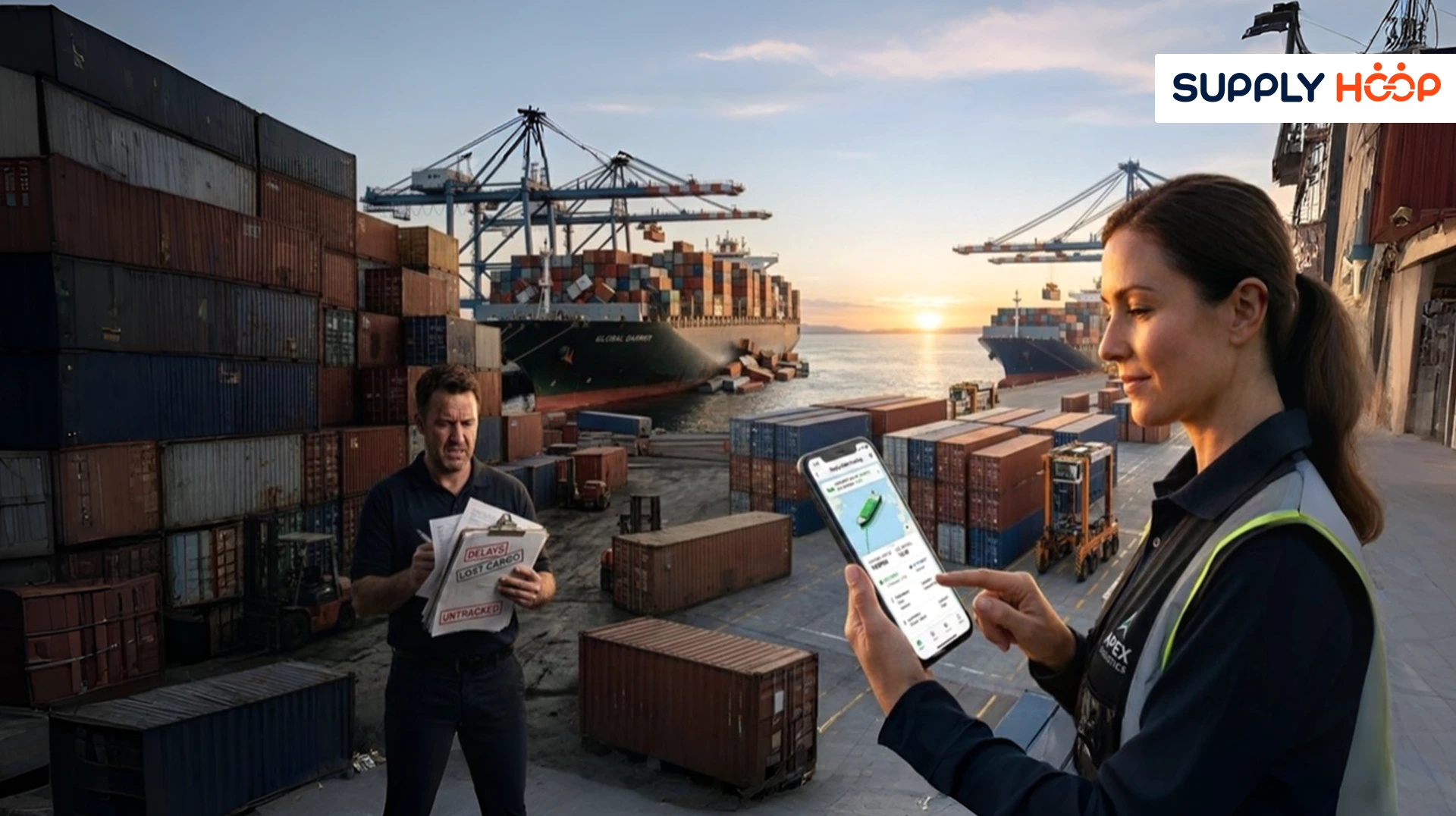
A shipment gets delayed, but nobody notices immediately. A container sits longer than expected at the port. A customer asks for an update, but operations is still waiting for confirmation. Inventory arrives late, production slows down, and suddenly multiple teams are trying to solve the same issue at once.
None of these problems seems catastrophic on its own.
But together, they create something far more dangerous: a supply chain operating without visibility.
And in today’s logistics environment, poor visibility is no longer just an operational inconvenience, it’s a direct financial risk.
Visibility Problems Don’t Always Look Like Visibility Problems
Most companies think poor visibility means “not being able to track a shipment.”
In reality, the issue runs much deeper.
Poor supply chain visibility often appears as:
- Rising detention and demurrage costs
- Constant follow-up emails and calls
- Delayed customer responses
- Inventory shortages or overstocking
- Missed delivery commitments
- Slow reaction during disruptions
What makes it difficult is that these issues often feel disconnected. Teams solve one problem at a time without realizing the root cause is the same: critical information is not reaching the right people at the right time.
The Financial Impact Most Companies Underestimate
The hidden cost of poor visibility rarely appears in a single invoice. It builds slowly across daily operations.
A delayed update can trigger:
- Extra storage fees at ports
- Missed warehouse scheduling windows
- Emergency transportation costs
- Customer penalties
- Manual labor spent chasing information
Even something as simple as not knowing a shipment’s ETA early enough can affect procurement, warehouse planning, and customer communication simultaneously.
The operational cost becomes cumulative.
And in a logistics environment already affected by geopolitical disruptions, port congestion, and fluctuating freight rates, that lack of visibility becomes even more expensive.
Why Traditional Systems are Struggling?
Most logistics businesses already have systems in place. The problem is that those systems often operate independently.
Teams typically manage information across:
- ERP systems
- Freight forwarding platforms
- Carrier portals
- Emails
- WhatsApp messages
- Spreadsheets
The result is fragmented operations.
When teams spend more time gathering information than acting on it, response time slows down. By the time updates are confirmed, the situation may already have changed.
That’s why traditional visibility models are no longer enough for modern supply chains.
Why Mobile Visibility is Becoming Essential?
The logistics industry has changed dramatically over the past few years. Decisions no longer happen from a single office desk.
Operations teams move between:
- Warehouses
- Ports
- Distribution centers
- Customer locations
Visibility needs to move with them.
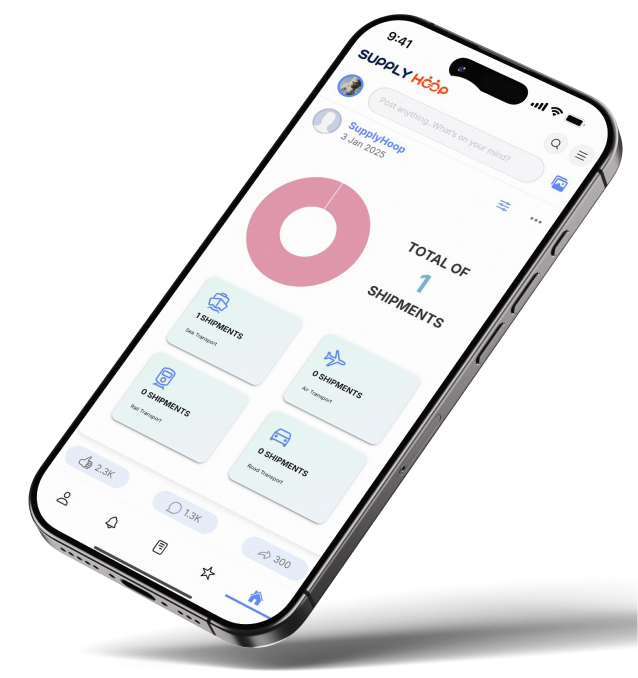
This is where mobile apps are transforming supply chain operations.
Instead of waiting to access systems later, teams can now:
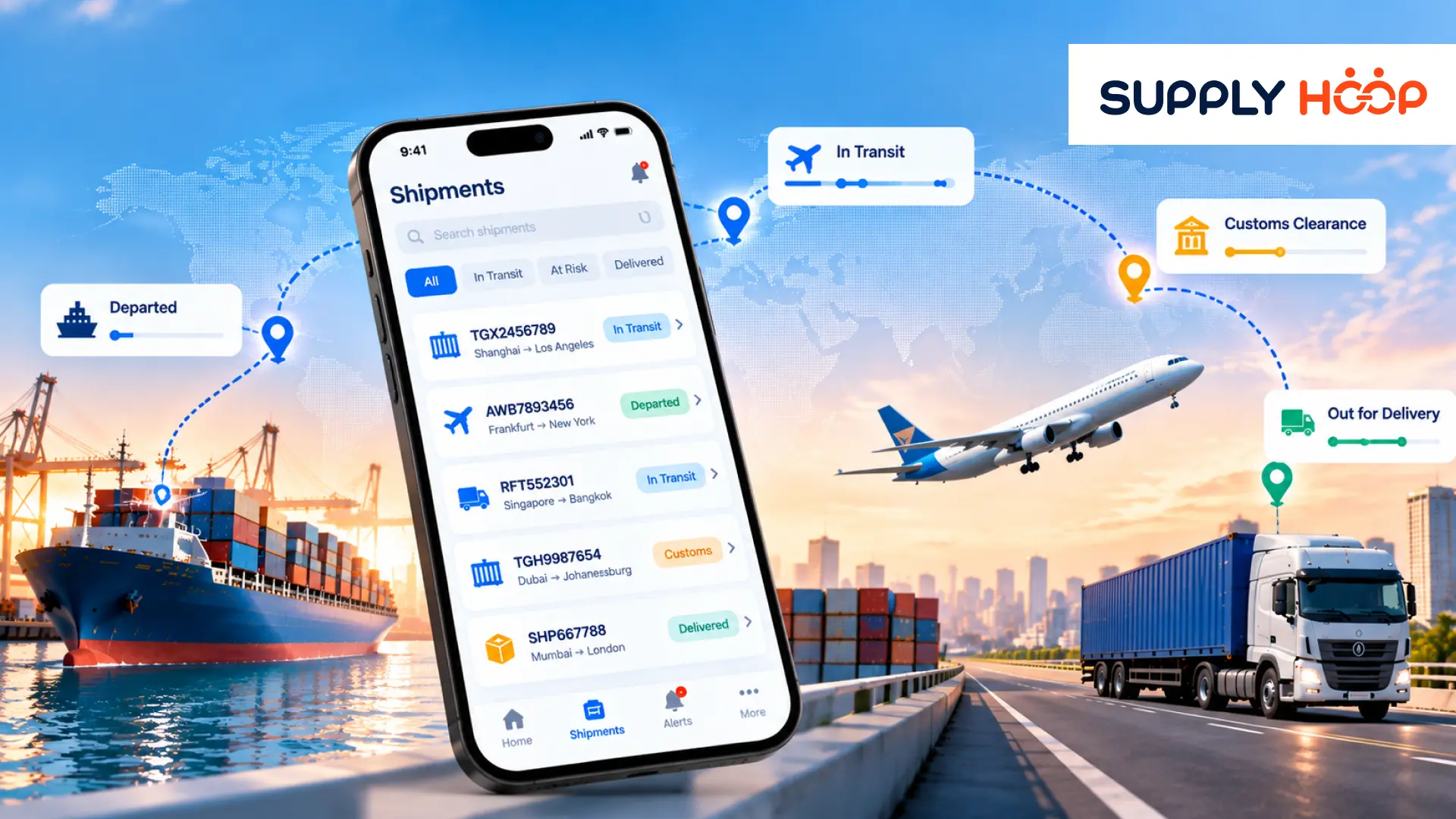
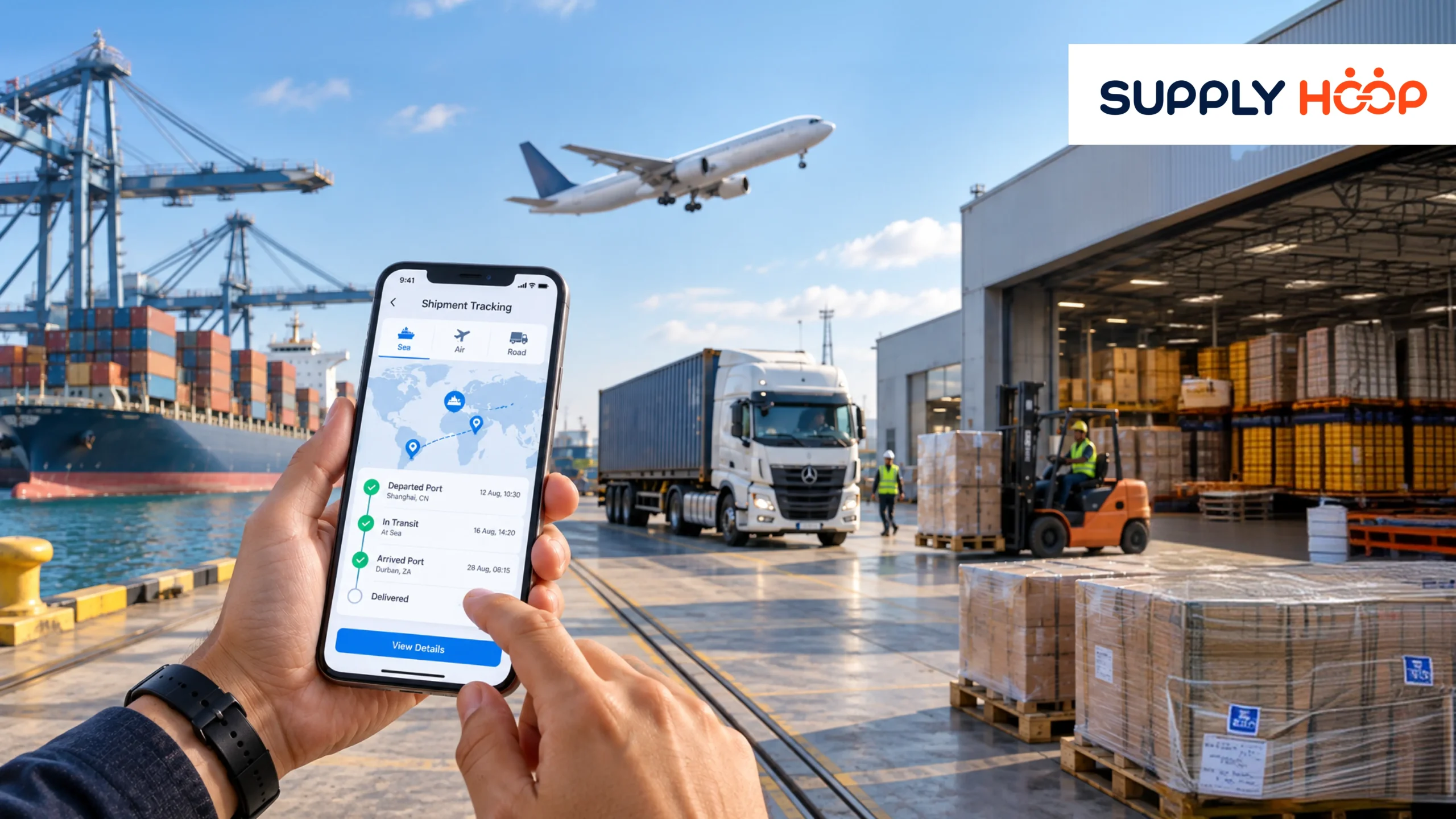
- Track shipments in real time
- Monitor ETA and milestone updates
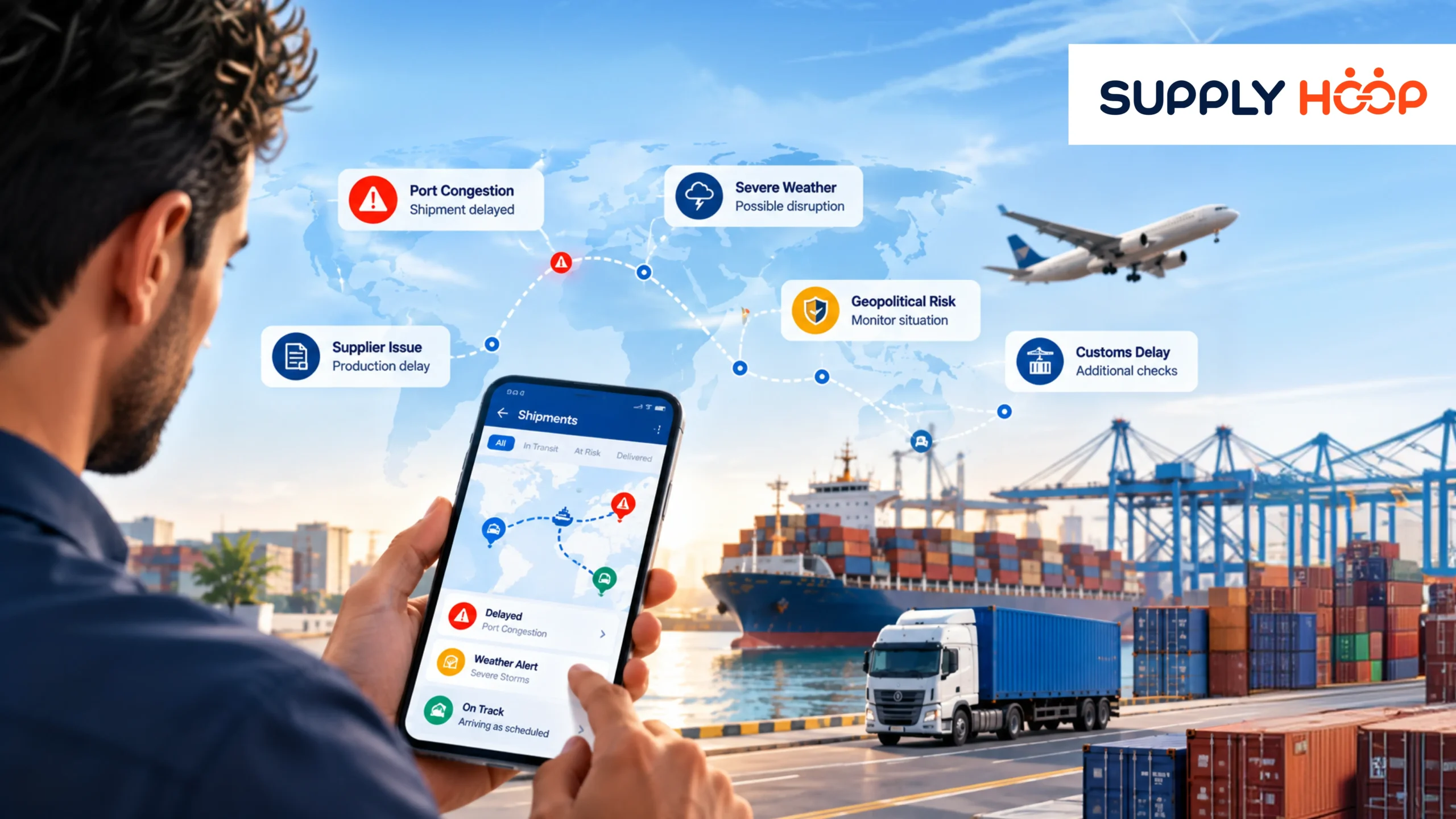
- Receive instant alerts for delays or disruptions
- Access shipment and document status immediately
Everything becomes accessible directly through a mobile device.
Real-Time Visibility Changes Operational Behavior
One of the biggest advantages of mobile visibility is speed.
When teams receive information in real time, they stop reacting late.
For example:
A vessel delay is detected earlier.
A warehouse team adjusts schedules before congestion builds.
Customers are informed before they ask for updates.
Alternative transport decisions are made sooner.
Visibility doesn’t just improve awareness, it improves decision-making.
How AI Makes Mobile Visibility Smarter?
Modern supply chain visibility platforms are no longer just tracking tools. Many now include AI-powered logistics assistants that help teams understand what needs attention immediately.
Instead of manually searching systems, users can ask simple questions through the mobile app:
- “Which shipments are delayed today?”
- “What containers are at risk of detention charges?”
- “Which deliveries will impact customer timelines?”
AI converts raw logistics data into clear operational insight.
This significantly reduces the time spent chasing updates and improves response speed across operations.
Communication Gaps are One of the Biggest Hidden Costs
One of the most overlooked problems in logistics is communication delay.
Most supply chain disruptions become more expensive because information travels too slowly between teams, customers, and partners.
Mobile visibility platforms integrated with communication channels like WhatsApp help solve this problem by:
- Sending automated shipment updates
- Notifying customers about delays instantly
- Sharing milestone progress in real time
- Reducing repetitive status follow-ups
This creates a smoother flow of information across the supply chain.
Inventory Visibility is Just as Important as Shipment Visibility
Poor visibility doesn’t only affect cargo movement. It directly impacts inventory management too.
Without accurate real-time information, businesses often experience:
- Excess inventory buildup
- Delayed replenishment decisions
- Production interruptions
- Inaccurate demand planning
Mobile apps provide instant access to inventory status, inbound shipments, and warehouse updates, helping businesses make faster planning decisions.
This improves both operational efficiency and working capital management.
Why Customer Expectations are Driving the Need for Visibility?
Today’s customers expect transparency.
They want:
- Accurate ETAs
- Real-time shipment updates
- Immediate communication during delays
The old model of “we’ll get back to you shortly” no longer works in modern logistics.
Freight forwarders and logistics providers that offer mobile visibility create a much stronger customer experience because information is available instantly.
That transparency builds trust.
From Reactive Logistics to Proactive Operations
The companies performing best today are not necessarily the ones avoiding disruptions completely.
They are the ones seeing problems earlier and responding faster.
That’s the real value of supply chain visibility.
Mobile-first visibility platforms help logistics teams move from:
- Reactive operations → proactive control
- Delayed updates → real-time awareness
- Fragmented systems → connected workflows
This shift creates more resilient and agile supply chains.
The Bigger Picture: Visibility is Becoming a Competitive Advantage
As supply chains become more complex, visibility is no longer just an operational feature, it’s becoming a competitive differentiator.
Companies with strong visibility capabilities can:
- Respond faster during disruptions
- Reduce avoidable logistics costs
- Improve customer satisfaction
- Make better operational decisions
And most importantly, they operate with greater confidence.
Conclusion
The hidden cost of poor supply chain visibility is not just measured in delayed shipments. It appears in lost time, rising costs, operational stress, customer dissatisfaction, and missed opportunities.
In today’s logistics environment, businesses cannot afford to operate with delayed or fragmented information.
A mobile-first visibility platform changes that by bringing real-time tracking, AI-driven insights, instant communication, and operational awareness into one connected experience.
It gives logistics teams the ability to see problems earlier, act faster, and stay in control.
If you’re ready to reduce operational blind spots and achieve true end-to-end supply chain visibility, now is the time to rethink how your teams access information. Book a demo today and discover how mobile-driven visibility can help you eliminate hidden supply chain costs and operate with greater clarity and control.