A customer confirms a shipment while you’re away from your desk.
They need the next available sailing, a booking update, and an estimated arrival date.
You know the information is available. But getting it usually means opening your laptop, checking a carrier website, accessing your booking system, and switching between a few more screens.
And that’s before the shipment even starts moving.
Now imagine handling those everyday shipping activities from your phone.
Not just tracking a shipment, but managing the journey from booking to delivery.
That’s where mobile freight management is heading. The opportunity isn’t to replace every logistics system. It’s to make the information and workflows freight forwarders depend on more accessible, wherever their work takes them.
Your Shipment Starts Moving Long Before the Vessel does
Think about what happens before an ocean shipment leaves its origin port.
The customer confirms the cargo. Your team checks sailing schedules, compares transit options, reviews departure dates, and works out whether the proposed timeline meets the customer’s requirements.
A shipment from Shanghai to Los Angeles, for example, may have several sailing options with different departure dates, transit times, and connections.
Traditionally, checking those options could mean visiting multiple carrier websites or contacting shipping partners.
With a mobile sailing schedule inquiry feature, users can search relevant routes and review available schedule information without waiting to return to their desks.
That makes early planning more convenient.
Of course, a published sailing schedule isn’t a confirmed booking. Space availability and final transportation arrangements still need to be verified.
But having schedule information accessible on mobile can help freight forwarders start those conversations sooner.
Why should Repeat Bookings Mean Repeating the Same Work?
Here’s a familiar situation.
A customer ships similar cargo along the same trade lane every month.
The origin is the same. The destination is the same. Much of the cargo information remains unchanged.
Yet creating the next booking may still involve entering many of the same details again.
A mobile booking workflow that supports duplicating previous bookings can simplify that process.
Instead of starting from scratch, users can reuse relevant information, update the shipment date or cargo quantity, review the requirements, and proceed with the supported booking process.
The benefit is less repetitive data entry and a more convenient way to handle familiar shipping requirements.
Accuracy still matters. Shipping instructions, cargo details, and booking confirmations must be checked before anything is finalized.
Mobile booking should make the process easier, not remove the checks that keep shipments moving correctly.
For freight forwarders handling recurring business, that distinction is important.
The Booking is Confirmed. Now the Questions Begin.
Once the shipment is booked, the customer’s attention shifts.
Has the cargo been received?
Has the container been gated in?
Did the vessel depart?
Is the shipment still expected to arrive on time?
Has customs clearance progressed?
And eventually, has the cargo been delivered?
A single shipment can pass through numerous milestones before reaching its final destination.
The challenge is keeping those updates accessible without repeatedly searching through separate platforms.
With mobile Track & Trace, authorised users can review the latest available shipment information, completed milestones, and upcoming movements from their phones.
A useful tracking experience should answer three questions:
Where is the shipment now? What has already happened? What happens next?
The reliability of those answers depends on the connected carriers, logistics systems, and available data.
But when relevant information is accessible in one mobile environment, routine shipment monitoring becomes easier for both operations and customer service teams.
The Most Important Update Might be the One You weren’t Looking for
Let’s say a vessel is scheduled to depart on Friday.
The customer has planned inventory replenishment around the expected arrival date. The warehouse has prepared its receiving schedule, and inland transportation arrangements are already being discussed.
Then the departure is postponed.
The information may be updated in the carrier’s system, but what happens if nobody checks it?
The change could remain unnoticed until someone asks why the shipment hasn’t progressed.
This is where push notifications become particularly valuable.
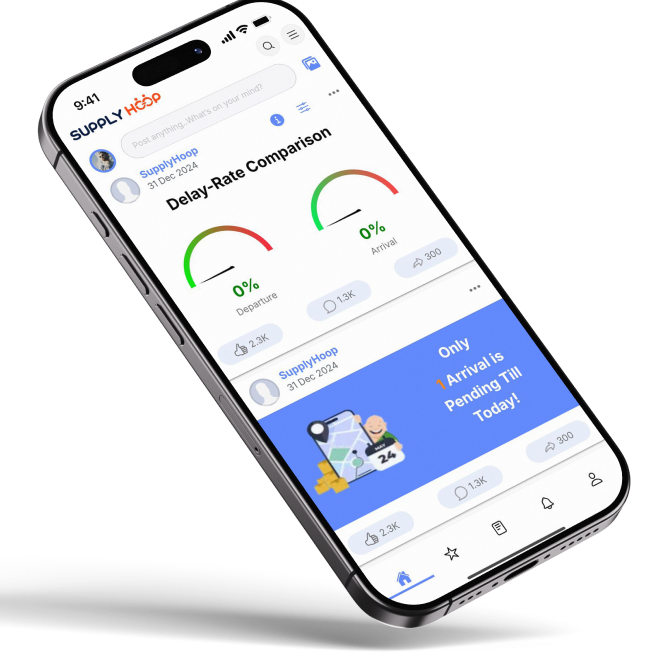
Rather than requiring users to check every shipment throughout the day, mobile notifications can bring relevant booking changes, departure updates, revised schedules, arrival milestones, and exceptions to their attention.
The goal isn’t to make a phone buzz every time something happens.
It’s to highlight the changes that matter.
A revised ETA affecting a customer’s delivery commitment deserves attention. A routine milestone that requires no action may not need the same urgency.
Good mobile visibility helps teams recognize what has changed without making them search for every change themselves.
Sometimes a Tracking Update isn’t Enough
Imagine opening a shipment and noticing that its expected departure date has changed.
You can see the revised date, but the customer wants to know why.
Was the vessel rescheduled? Has the booking changed? Is there an alternative sailing?
A tracking milestone alone may not answer those questions.
That’s why communication matters just as much as visibility.
A mobile app with live chat functionality can provide a convenient way to contact the relevant support team, request clarification, and continue the conversation without unnecessarily switching between applications.
For freight forwarders, this can make the transition from reviewing shipment information to requesting assistance more convenient.
It doesn’t mean every issue will be resolved instantly. Response times still depend on support availability, the information required, and the complexity of the enquiry.
But it can remove some of the friction involved in finding the right communication channel.
And when relevant updates need to reach customers or partners, connected communication options such as WhatsApp integration can help simplify how shipment information is shared.
The important point is that the right people receive the right updates, without exposing unrelated operational or commercial information.
One Shipment is Easy. What about Fifty?
Managing a single shipment is relatively straightforward.
Managing fifty shipments at different stages is another story.
One booking is awaiting confirmation. Another is preparing for departure. Several are in transit. A few are approaching their destination, while others need attention because of schedule changes.
Now add customer calls, internal follow-ups, and unexpected exceptions.
Suddenly, the challenge isn’t just finding information.
It’s knowing which shipment needs your attention first.
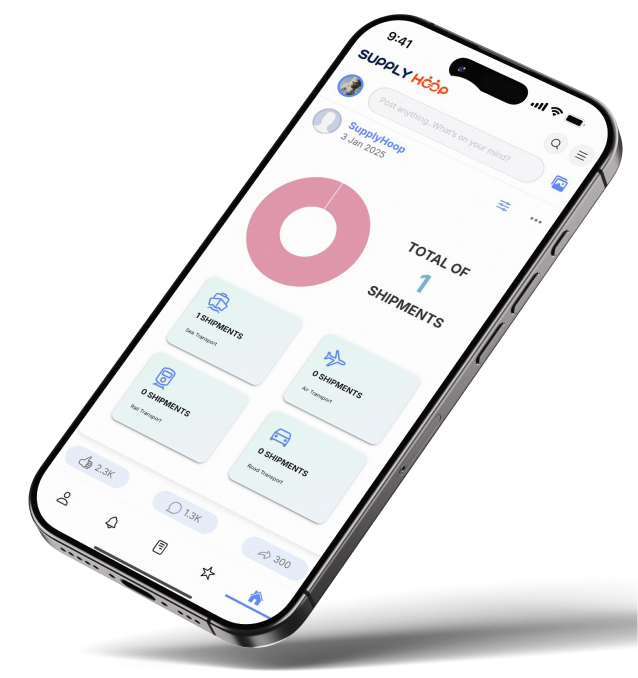
A centralized mobile shipment profile can provide a more organized starting point.
Instead of beginning a separate search for every shipment, users can review their relevant bookings, tracking progress, and available updates in one accessible environment.
A logistics manager might check upcoming departures before a meeting, review in-transit shipments during the afternoon, and respond to a customer enquiry while away from the office.
That flexibility is one of the practical advantages of mobile freight management.
It makes everyday shipment information available closer to the moment it’s needed.
Does Going Mobile Mean Replacing CargoWise?
Not at all.
Freight forwarders already rely on established systems to manage their operations.
CargoWise supports freight management workflows. Carrier platforms provide transportation information. ERP applications hold business data, while other systems support documentation, customs processes, and delivery activities.
Those systems still have important jobs to do.
A mobile freight management app should work alongside them, making relevant information and supported workflows easier to access.
For CargoWise users, Supply Hoop offers a mobile-first approach to connected supply chain visibility.
The idea is to make shipment milestones, ETA updates, exceptions, and other relevant logistics information accessible through a convenient mobile experience.
However, businesses should distinguish between visibility features and transactional capabilities.
Sailing schedule inquiries, shipment booking, booking duplication, and live chat depend on the specific application, available integrations, and supported workflows.
Before selecting a mobile solution, freight forwarders should check which functions are available, how information is synchronized, and what their teams can actually do from the app.
Because the best mobile platform isn’t necessarily the one with the longest feature list.
It’s the one that removes unnecessary steps from the work your team performs every day.
The Future of Freight Management isn’t Another Screen
For years, freight technology has focused on improving individual stages of the shipment journey.
Booking systems help manage transportation arrangements. Carrier portals provide tracking information. Communication tools connect people. Operational platforms maintain shipment records.
But freight forwarders don’t experience these activities as separate tasks.
They experience them as one continuous shipment journey.
From checking a sailing schedule to confirming a booking, monitoring milestones, receiving important notifications, communicating with the relevant people, and following the cargo through delivery, every stage is connected.
Mobile freight management makes that connection more accessible.
It allows teams to spend less time moving between screens and more time handling the activities that keep shipments progressing.
And with Supply GPT, authorised users can also ask natural-language questions about connected shipment information, making it easier to retrieve relevant updates without navigating through multiple records.
The goal isn’t to move every complex freight operation onto a phone.
It’s to make the everyday information and actions that matter most available when they’re needed.
Because a shipment doesn’t stop moving when you leave your desk. Your visibility shouldn’t either.
With Supply Hoop, freight forwarders can bring connected shipment information closer to their daily workflows and support a more accessible approach to end-to-end supply chain visibility.