Let’s be honest, nobody in logistics wants to dig through multiple systems just to answer one simple question:
👉 “Where’s my shipment right now?”
But for years, that’s exactly how freight teams worked. Open the ERP. Check the tracking portal. Send a message to the carrier. Wait for confirmation. Follow up again.
In 2026, that process feels outdated.
AI-powered chatbots are now transforming how freight forwarders, logistics teams, and customers track cargo in real time, directly from a mobile device. And the biggest shift isn’t just speed. It’s simplicity.
What AI Chatbots Actually Do in Logistics?
AI chatbots in logistics are no longer basic support tools that only answer scripted questions.
Modern AI-powered logistics assistants are connected directly to shipment data, visibility platforms, and operational systems. Instead of searching manually, users can simply ask questions naturally, just like texting a coworker.
For example:
- 📍 “Where’s my container right now?”
- ⏱️ “What’s the updated ETA?”
- 🚨 “Are any shipments delayed today?”
- 📄 “Is customs clearance completed?”
And within seconds, the chatbot provides real-time answers pulled directly from connected systems.
Why Mobile Access Changes Everything?
Here’s the reality: logistics doesn’t happen behind a desk anymore.
Operations teams work across:
- Warehouses
- Ports
- Truck yards
- Customer meetings
- After-hours coordination
That’s why mobile-first visibility has become essential.
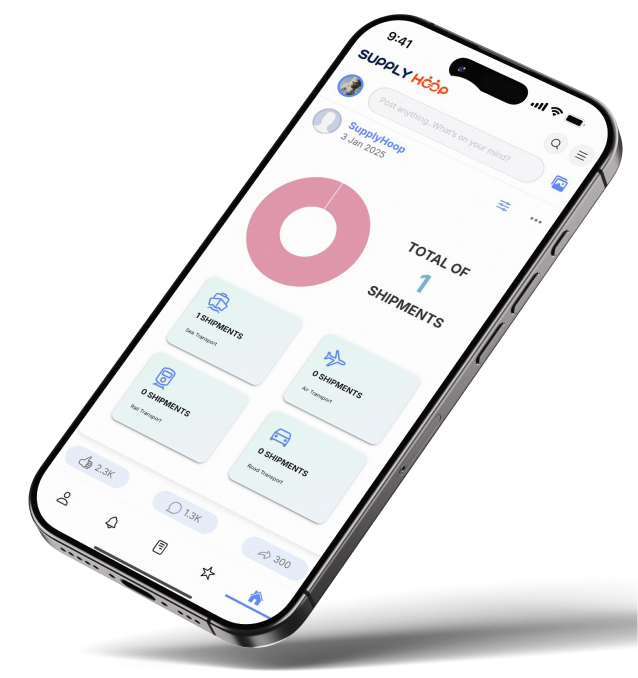
An AI chatbot integrated into a mobile app gives teams instant access to shipment updates anytime, anywhere. Your phone becomes a live supply chain control point.
With mobile AI visibility, teams can:
- 📡 Track shipments in real time
- ⚡ Respond faster to disruptions
- 📢 Update customers immediately
- 🚚 Monitor multiple shipments simultaneously
And because everything happens on mobile, decisions happen faster, too.
From Tracking Shipments to Understanding Problems
Traditional tracking tells you where a shipment was.
AI-powered visibility helps explain:
- Why is a shipment delayed
- What milestone was missed
- Whether route deviations occurred
- What action may be required next
That’s a huge difference.
Instead of simply displaying data, AI chatbots turn shipment information into operational insight.
And in a world where disruptions happen daily, that context matters.
Real-Time Alerts Reduce Operational Pressure
One of the biggest challenges in logistics is delayed awareness.
A missed checkpoint, customs hold, or delayed vessel can quickly create downstream problems if teams find out too late.
AI chatbots connected to mobile visibility platforms can automatically notify teams when:
- 🚨 ETAs change significantly
- 📦 Containers are delayed
- ⚓ Port congestion impacts schedules
- 📄 Customs documentation requires action
This helps teams move from reactive firefighting to proactive management.
Instead of constantly checking systems, the system updates itself.
Why Customers Expect this Now?
Customer expectations have changed dramatically over the last few years.
People are used to real-time updates in everyday life, from food delivery apps to online shopping. That same expectation now exists in freight forwarding and supply chain operations.
According to recent industry research:
- 📊 Over 70% of shippers expect real-time shipment visibility
- ⚡ More than half prefer instant updates over manual follow-ups
- 📱 Mobile accessibility is becoming a top priority for logistics customers
When customers can quickly get accurate shipment updates, trust improves.
And trust matters more than ever in competitive freight markets.
AI Chatbots Make Communication Faster and More Human
Let’s be real, most logistics delays don’t just create operational stress. They create communication overload.
Emails pile up. Teams follow up repeatedly. Customers ask for updates multiple times.
AI chatbots simplify that process.
Instead of waiting for someone to respond manually, customers and teams can instantly access shipment information through conversational interactions.
That means:
- Fewer repetitive status calls
- Faster response times
- Better customer experience
- Reduced pressure on operations teams
Communication becomes quicker, clearer, and much more scalable.
Why this Matters in 2026?
Supply chains today are more unpredictable than ever.
Geopolitical disruptions, port congestion, capacity shortages, and regulatory complexity continue to create pressure across logistics operations.
In this environment, visibility alone isn’t enough.
Teams need:
- 📱 Mobile accessibility
- 🤖 AI-powered decision support
- ⚡ Real-time communication
- 📡 Continuous shipment visibility
Organizations that can respond faster will operate more efficiently, protect customer relationships, and reduce costly disruptions.
Final Thought
The days of searching through multiple systems for shipment updates are fading fast.
AI-powered chatbots are making cargo tracking simpler, faster, and more accessible through mobile-first visibility. Instead of chasing information, logistics teams can now ask questions naturally and receive instant operational insight.
That shift changes everything.
Because when visibility becomes real-time, conversational, and mobile, supply chains stop feeling reactive and start feeling controlled.👉 If you’re ready to simplify cargo tracking and strengthen your supply chain visibility, now is the time to embrace AI-powered mobile logistics tools.