A shipment expected on Tuesday is now showing Wednesday. By the following morning, the estimated arrival has moved to Friday. For customers relying on that cargo, the repeated changes raise an obvious concern: How reliable is the ETA displayed in the tracking app?
Across international freight operations, estimated arrival times are becoming an important part of how businesses plan inventory, warehouse activities, transportation, and customer deliveries. Yet an ETA is not a confirmed delivery commitment. It is a forecast based on available shipment information and operating conditions, which can change throughout the journey.
For freight forwarders, the challenge is no longer simply providing an arrival date. It is ensuring customers and operations teams understand what that date represents, when it changes, and how the revised timeline affects the next stage of transportation.
Vessel Arrival and Cargo Delivery are Two Different Timelines
One of the most common misunderstandings in freight tracking is treating a vessel’s ETA as the expected delivery date.
Consider a container travelling from Shanghai to Durban. The tracking system indicates that the vessel is expected to arrive on October 18. However, that date does not necessarily mean the container will be available for collection or delivered to the consignee.
After the vessel arrives, cargo may still require terminal discharge, customs clearance, release formalities, inland transportation, and warehouse receiving arrangements. Each stage has its own operational timeline.
The same distinction applies to air freight. An aircraft arriving at the destination airport does not automatically mean the shipment is ready for collection. Road freight ETAs may be closer to the final delivery time, particularly when vehicle location updates are available.
This makes it important for logistics teams to distinguish between vessel or flight arrival, cargo availability, and final delivery when communicating shipment expectations.
Why Transportation Conditions Continue to Change ETAs?
Shipment ETAs are influenced by several operational factors, including vessel schedule revisions, weather conditions, port congestion, transshipment connections, and inland transportation delays.
For ocean freight, a vessel may depart later than planned or spend additional time waiting for a berth at an intermediate port. Even a small delay can affect subsequent port calls and change the expected arrival date.
Transshipment adds another layer of uncertainty. If a container misses its planned connecting vessel, the next available sailing may be several days away. A delay of only a few hours on the first leg can therefore result in a much longer change to the overall shipment timeline.
Road transportation faces different challenges. Traffic congestion, road closures, accidents, and route restrictions can influence delivery estimates. When tracking systems receive updated vehicle locations and route information, the expected arrival may be recalculated.
These revisions do not necessarily indicate inaccurate tracking. They may reflect changes in the transportation conditions used to calculate the original estimate.
Why Cargo Can Still be Delayed After Arriving on Time?
An accurate vessel ETA does not guarantee that cargo will be available immediately after arrival.
A ship may reach the destination port as scheduled but wait for berth availability. Terminal congestion, container discharge, and yard processing can delay the next movement.
Customs procedures can also affect delivery timelines without changing the vessel’s recorded arrival date. Document discrepancies, inspections, regulatory requirements, or pending release formalities may prevent cargo from progressing to collection.
For example, a container arriving at Durban may still need onward transportation to Johannesburg. Its final delivery date depends on customs release, truck availability, road conditions, and warehouse receiving arrangements.
This is why freight forwarders need visibility beyond the international transportation leg. Following the relevant milestones after arrival provides a more complete understanding of when cargo may actually reach its destination.
What Makes a Mobile Shipment ETA Reliable?
There is no universal accuracy percentage that applies to every mobile shipment tracking application. ETA reliability depends on transportation mode, shipment stage, connected data sources, and how frequently information is updated.
A road vehicle approaching its destination with frequent GPS updates may have a relatively narrow arrival window. An ocean shipment several weeks away from its destination has more opportunities for schedule changes.
For logistics businesses, evaluating ETA reliability involves understanding how recently the information was updated, which shipment milestone it represents, and how revised arrival dates are communicated.
A tracking platform displaying a carrier-provided ETA may also operate differently from a system that generates predictive estimates using transportation schedules, location information, and historical performance.
The most useful ETA is therefore not necessarily the one that remains unchanged. It is the estimate that reflects the latest available information and provides enough context for operational planning.
How Mobile Visibility Helps Teams Respond to ETA Changes?
When an ETA changes, the impact often extends beyond the shipment itself. A revised vessel arrival can affect container collection, warehouse receiving appointments, inland transportation, and customer inventory plans.
Discovering these changes late can leave operations teams with less time to adjust.
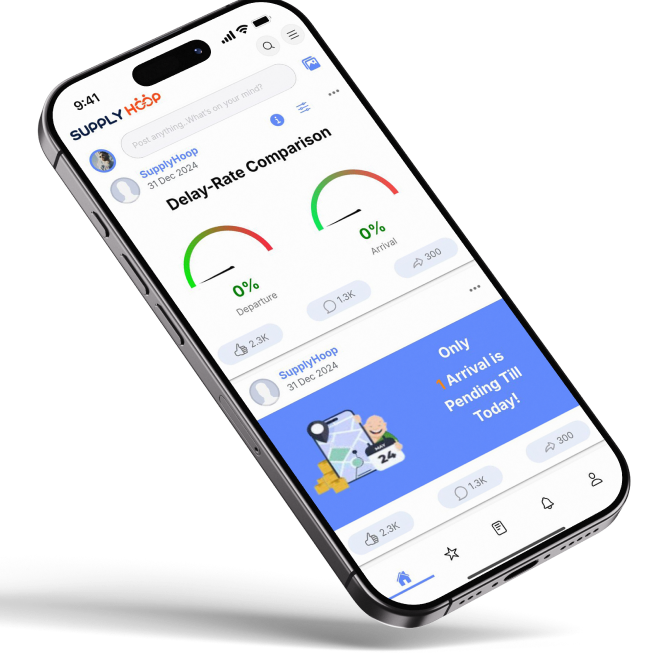
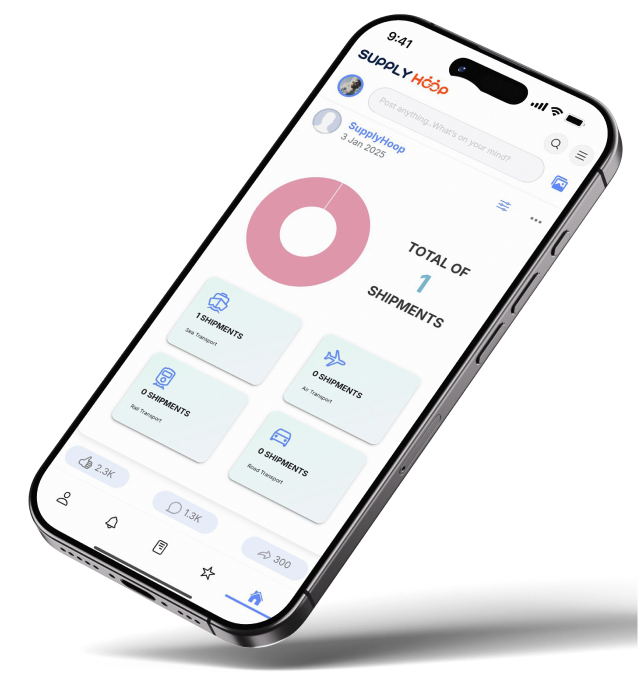
With mobile supply chain visibility, freight forwarders can access connected shipment milestones, tracking information, and available ETA updates through a mobile-first environment.
This helps authorised users review shipment progress while coordinating with customers, transport partners, and internal teams, without depending entirely on desktop access.
Through WhatsApp integration, relevant shipment updates can also be communicated to appropriate stakeholders, helping teams keep customers informed when important changes occur.
For freight forwarders managing multiple active shipments, Supply GPT provides another way to access connected operational information. Users can ask which shipments have revised ETAs, which ocean shipments are arriving this week, or which movements are currently delayed.
These capabilities help teams identify shipments requiring attention without manually reviewing every record. However, the explanation for an ETA change still depends on the information available from connected sources.
The Real Value of ETA Tracking is Knowing What Changed
International freight operates across multiple carriers, ports, airports, customs facilities, and inland transportation networks. Schedule changes are a normal part of that environment.
For freight forwarders, the priority should not be promising that an ETA will never change. It should be providing access to the latest available estimate, understanding which milestone it represents, and recognising changes that may affect downstream operations.
A vessel arriving on time does not always mean the cargo is ready for delivery. Similarly, a revised ETA does not automatically mean the tracking system has failed.
Reliable end-to-end shipment visibility is about making arrival information understandable, current, and useful for decision-making.
With Supply Hoop, logistics teams can stay connected to shipment progress, monitor available ETA revisions, and access relevant updates from their mobile devices.
As customer expectations for timely shipment information continue to grow, the ability to recognise and communicate ETA changes becomes an increasingly important part of freight forwarding operations.