A shipment was supposed to depart yesterday. The customer checks the tracking portal, but the status still says “Cargo Received.”
Has the shipment departed? Is it waiting at the terminal? Has the carrier updated the information? Or has the departure been delayed?
The operations team starts checking carrier websites, emails, and booking references to find out what happened.
The problem is not necessarily that the shipment has stopped moving. It is that nobody has a clear, updated picture of its progress.
This is where shipment milestone updates through a mobile app become valuable.
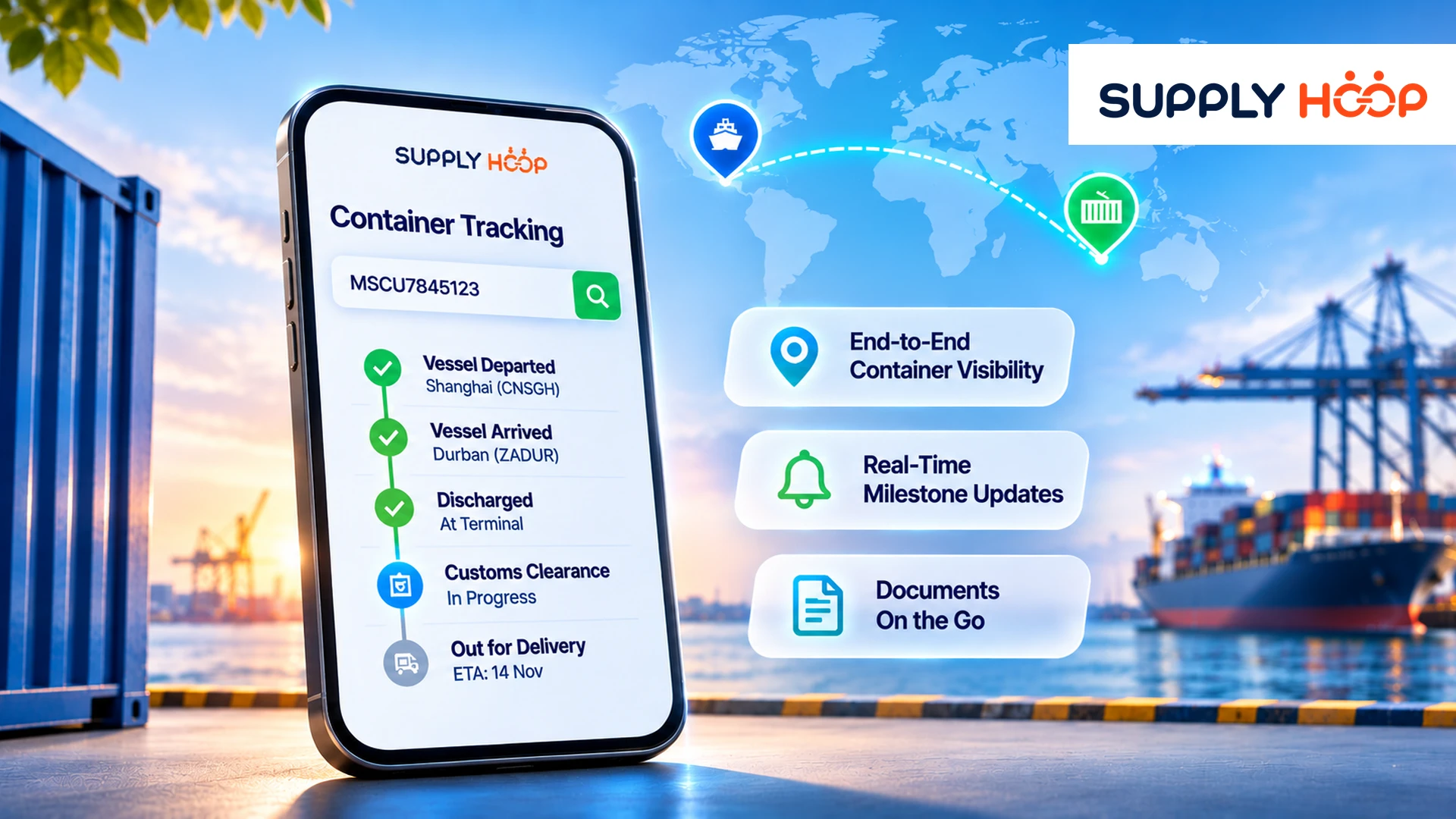
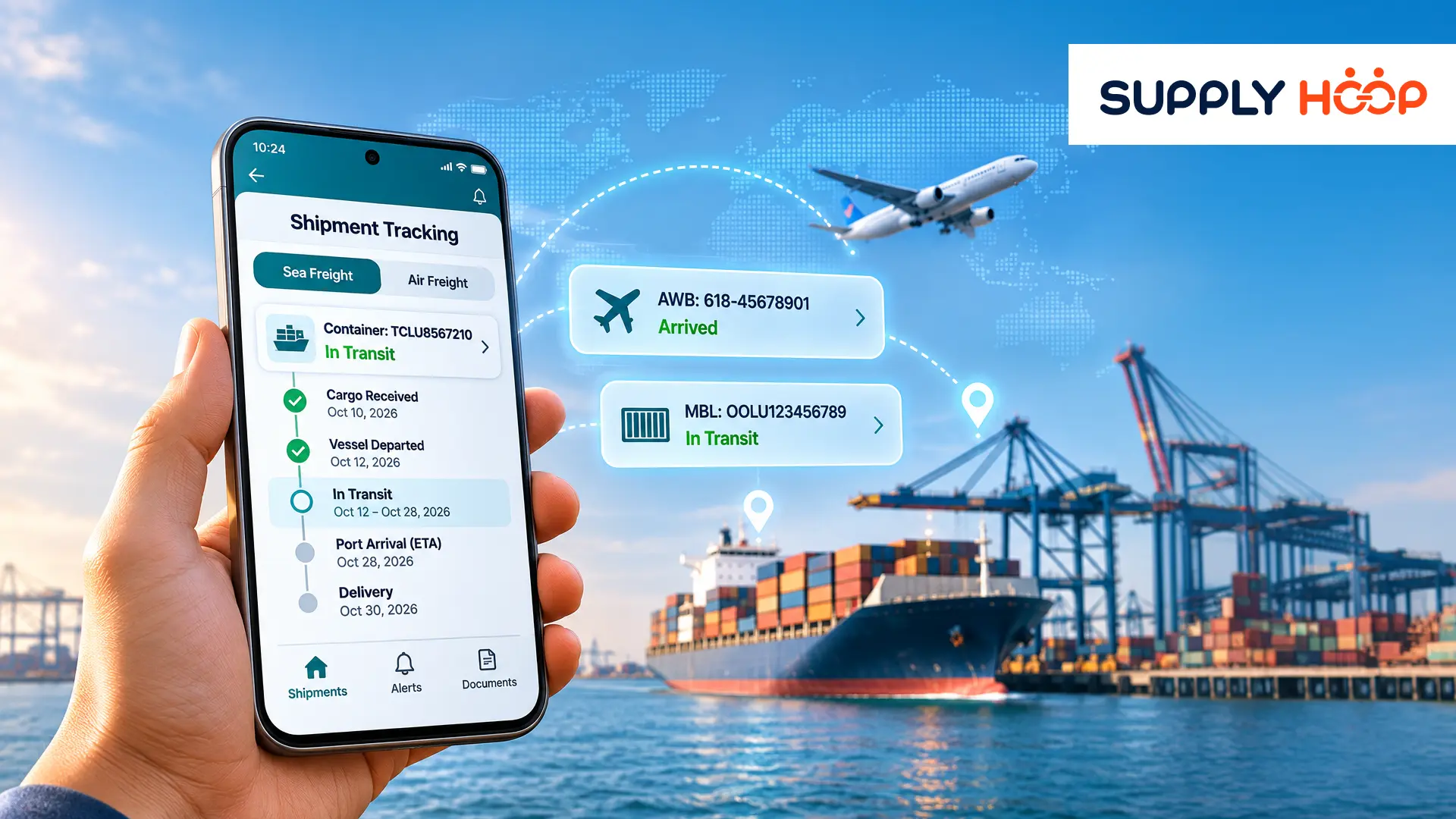
Instead of relying on scattered tracking messages, freight forwarders and their customers can follow the shipment journey through a chronological timeline of events, from booking and cargo acceptance to transportation, customs clearance, and final delivery.
When milestone information is connected with available carrier updates, location data, ETAs, and exception notifications, a mobile app helps users understand what has happened, what is expected next, and whether the shipment is progressing according to plan.
Why are Shipment Milestone Updates Important in Freight Tracking?
A shipment rarely moves directly from its origin to its destination without passing through several operational stages.
For ocean freight, a container may be received at a terminal, loaded onto a vessel, transferred through a transshipment port, discharged at the destination, and collected for inland transportation.
For air freight, cargo may move through acceptance, export clearance, flight departure, transit connections, import clearance, and final delivery.
Each stage represents a shipment milestone.
These events help freight forwarders understand where a shipment stands within the transportation process.
However, tracking becomes difficult when milestone information is spread across shipping line portals, airline systems, terminal updates, and internal logistics software.
A mobile shipment tracking platform brings available updates into a more accessible view.
For example, instead of checking multiple systems to confirm whether a container has departed, an operations executive can review the latest recorded milestone from a phone.
The information is especially useful when the executive is away from the office, attending a customer meeting, or coordinating shipments outside normal working hours.
More importantly, milestone tracking helps teams recognize when the shipment’s actual progress differs from the expected schedule.
What Information should Every Shipment Milestone Include?
A milestone should provide more than a short status such as “In Transit” or “Arrived.”
A useful shipment milestone record explains what happened, when it happened, and where the event took place.
Consider a container discharged at a destination port.
The milestone should identify the event as “Container Discharged,” record the event date and time, and show the relevant port or terminal.
Where available, it may also identify the reporting party and connect the event to a container number, booking reference, or Bill of Lading.
For air freight, the same principle applies to events such as cargo acceptance, flight departure, and arrival.
A complete milestone record can include:
- Event: The activity completed, such as cargo received, vessel departed, customs cleared, or delivered.
- Timestamp: The actual event date and time, with planned or estimated times displayed separately.
- Location: The relevant port, airport, terminal, city, or reported GPS location.
- Shipment reference: The container number, booking number, MBL, AWB, or other shipment identifier.
- Reporting source: The carrier, terminal, transport provider, or connected system supplying the update.
- Exception details: Any reported delay, missed connection, hold, or revised arrival estimate.
These details make milestone updates more useful for operational decisions.
They also help avoid a common misunderstanding: an event that was planned to occur is not necessarily an event that has been completed.
A mobile tracking system should clearly distinguish between planned, estimated, and confirmed milestones.
How does a Mobile App Present Shipment Milestones More Clearly?
Carrier systems often generate detailed tracking messages using different event descriptions and formats.
While these messages are valuable, reviewing them individually can be difficult for users managing multiple shipments.
A mobile app can organize the available information into a chronological shipment timeline.
For example, a shipment record might show:
| Shipment milestone | Status |
| Booking confirmed | Completed |
| Cargo received | Completed |
| Export customs cleared | Completed |
| Loaded on vessel | Completed |
| Vessel departed | Completed |
| Vessel arrived at destination | Expected |
| Container discharged | Pending |
| Final delivery | Pending |
This format allows users to distinguish completed events from upcoming activities.
The current shipment status and latest available ETA can appear above the timeline, alongside the origin, destination, transportation mode, and shipment reference.
Where location information is available, a map can provide additional context about the vessel, aircraft movement, or inland transportation leg.
The important distinction is that a map does not always represent the cargo’s exact live position.
For example, vessel-position data may indicate where the carrying ship was last reported, while a confirmed carrier milestone establishes whether the container was actually loaded onto that vessel.
Combining these details gives users a more meaningful view than a standalone tracking status.
Which Ocean Freight Milestones should You Track?
Ocean freight shipments pass through several stages that influence transportation planning, customs activities, and final delivery arrangements.
For containerized shipments, the timeline commonly begins with booking confirmation and continues through cargo receipt or terminal gate-in.
Once the container is loaded, the carrier may report the vessel’s departure from the origin port.
If the shipment involves transshipment, additional milestones may identify discharge at an intermediate port and loading onto a connecting vessel.
At destination, the vessel’s arrival does not necessarily mean the container is available for collection.
The container must be discharged, and applicable customs and release requirements must be completed before the relevant inland transportation arrangements can proceed.
A typical ocean freight milestone sequence includes booking confirmed, gate-in, loaded on vessel, vessel departed, transshipment where applicable, destination arrival, container discharged, customs clearance, gate-out, and delivery.
Empty-container return may also be an important final milestone for FCL movements.
For freight forwarders handling LCL and FCL shipments, the milestone requirements can differ. LCL cargo may require additional visibility into consolidation, deconsolidation, and cargo availability after the container reaches the destination.
Access to these milestones through a mobile app helps operations teams understand which activities are complete and which still require coordination.
How do Air Freight Milestone Updates Work?
Air freight generally involves shorter transportation timelines, making timely milestone information particularly important.
A shipment may be booked for a particular flight, but the booking confirmation alone does not establish that the cargo has been accepted or loaded.
Similarly, an aircraft’s arrival does not necessarily mean the shipment has completed import clearance or is ready for collection.
A typical air freight tracking timeline includes booking confirmation, cargo acceptance, export customs clearance, flight departure, transit connection where applicable, flight arrival, import customs clearance, and final delivery.
The mobile app should connect these events to the relevant Air Waybill and shipment record.
Consider a shipment moving through an international transit hub.
If the first flight arrives later than planned, the cargo may miss its scheduled connection.
The original destination ETA may no longer be reliable.
A mobile milestone timeline helps users recognize that the cargo has completed the first transportation leg but has not yet departed on the next one.
This distinction is important when updating customers, arranging destination transportation, or coordinating time-sensitive deliveries.
Why do ETA Changes and Exception Alerts Matter?
A shipment can complete several milestones successfully and still arrive later than originally expected.
Weather disruptions, port congestion, missed connections, customs holds, and transportation changes can affect the remaining journey.
Milestone updates show what has already happened.
ETA updates and exception alerts help explain what may happen next.
For example, a container may have departed its origin port on schedule, but its connecting vessel could be delayed at a transshipment hub.
The completed departure milestone remains accurate. However, the expected destination arrival date may need to change.
A useful mobile tracking app should make both pieces of information visible.
It should also notify the relevant users when an important change occurs.
Not every routine milestone requires a push notification. Notifications are most useful when they relate to events such as vessel or flight departure, destination arrival, revised ETAs, customs holds, missed connections, or delivery completion.
Understanding why shipment ETAs change helps freight forwarders distinguish ordinary schedule adjustments from disruptions that require immediate attention.
An exception-first approach also reduces the need to repeatedly check shipments that are progressing normally.
Instead, teams can concentrate on the movements that may affect delivery commitments.
Can Carrier and Driver Updates Improve Milestone Accuracy?
Carrier milestones provide important information, but they may not cover every stage of the shipment journey.
This becomes particularly noticeable when cargo moves from a port or airport into inland transportation.
A shipping line may confirm container gate-out, while the consignee still needs to know whether the truck has reached the delivery location.
A connected driver application or transport management system can provide additional updates for these inland activities.
For example, GPS and geofencing technology may detect when an assigned vehicle enters or leaves a designated location.
Depending on the system configuration, that movement can trigger a transport milestone without requiring the driver to enter every update manually.
Driver-reported events may also include pickup confirmation, delivery timestamps, photographs, signatures, or proof of delivery.
These updates can be connected to the broader shipment timeline when the relevant systems support integration.
However, automated location events should not be treated as confirmation of every cargo activity.
A truck entering a warehouse geofence does not automatically prove that the cargo has been unloaded or accepted.
Reliable milestone tracking requires a clear distinction between location-based observations and confirmed operational events.
Why should Shipment Documents be Connected to Milestones?
Tracking information tells users how a shipment is progressing.
Documents provide the supporting information needed to complete many of those activities.
For example, customs clearance may depend on the availability of commercial invoices, packing lists, declarations, and other relevant documentation.
Delivery completion may require a signed proof of delivery or another acknowledgment from the receiving party.
When shipment records and supporting documents are accessible through connected mobile systems, users can retrieve the information relevant to a particular stage without searching through multiple email threads.
This is where mobile document access becomes useful.
A freight forwarder reviewing a customs-related milestone may need to check whether the necessary documents are available.
A customer service executive responding to a completed delivery enquiry may need access to the corresponding POD.
Keeping documents associated with the relevant shipment record helps teams verify progress and respond to requests more efficiently.
It also creates a clearer operational history when shipment details need to be reviewed later.
How do Mobile Milestone Updates Improve Customer Communication?
Customers usually do not need every technical message generated by a carrier.
They want to know whether their shipment is progressing, when it is expected to arrive, and whether anything has changed.
Without accessible milestone information, customer service teams may need to contact operations staff each time a customer requests an update.
This creates repeated work, especially when a freight forwarder manages hundreds of active shipments.
A mobile shipment timeline helps authorized users access the latest available information directly.
For example, when a customer asks whether a shipment has cleared customs, the team can check the recorded clearance milestone rather than relying on an earlier arrival notification.
When the ETA changes, the revised information can be communicated with the relevant context.
When delivery is completed, the final milestone and available supporting records can help close the enquiry.
This also supports better supply chain collaboration between freight forwarders, shippers, consignees, and transportation partners.
Everyone does not need access to the same operational details, but authorized stakeholders benefit from receiving consistent shipment information.
How Supply Hoop Makes Shipment Milestones Accessible on Mobile?
For freight forwarders, the challenge is often not a complete absence of shipment data.
It is the difficulty of accessing relevant updates when information is distributed across freight management systems, carrier platforms, and communication channels.
Supply Hoop provides a mobile-first visibility experience that helps freight forwarders access connected shipment information, monitor cargo movements, and stay informed about important operational changes.
For businesses using CargoWise, this mobile visibility approach can complement existing shipment management workflows by making available information easier to access outside the desktop environment.
Instead of repeatedly switching between systems to review shipment progress, users can monitor connected shipment details and milestones through their mobile devices.
Supply GPT further supports access to connected logistics information through natural-language questions, helping users retrieve relevant shipment details without navigating multiple records manually.
Meanwhile, WhatsApp integration provides an additional communication channel for sharing relevant shipment information with customers.
The objective is to help freight forwarders make better use of the information already available across their logistics operations.
The accuracy and timeliness of individual milestones still depend on the connected data sources and the availability of updates from the relevant transportation partners.
From Shipment Milestones to Better Freight Visibility
A shipment timeline should do more than show a collection of completed events.
It should help users understand where the cargo stands, what is expected next, and whether any change requires attention.
For ocean freight, that means following the container beyond vessel departure and arrival.
For air freight, it means distinguishing flight movements from cargo acceptance, clearance, and delivery.
For inland transportation, it means connecting available pickup and delivery information with the broader shipment record.
When these updates are accessible through a mobile app, freight forwarders can spend less time searching for shipment information and more time coordinating the next operational step.
Shipment milestone updates become most valuable when they connect confirmed events, expected movements, and relevant exceptions into one understandable view.
Want to keep your freight operations informed at every shipment milestone? Book a demo to explore how Supply Hoop helps your team access shipment tracking updates, monitor exceptions, and improve end-to-end supply chain visibility through a mobile app.