It’s been three days. That’s how some logistics teams spend rebuilding a shipping document after multiple edits, formatting changes, and version updates. Just as they finished, the customer came back with one more request: “Can you update the consignee details and send the latest copy?”
The document had to be reopened, edited, renamed, saved, attached to an email, and shared again. While the shipment continued moving, the team spent valuable time managing paperwork instead of managing logistics.
This happens every day across freight forwarding operations. The biggest delays aren’t always caused by vessels, trucks, or customs. Sometimes they’re caused by the simple task of finding and sharing the right document.
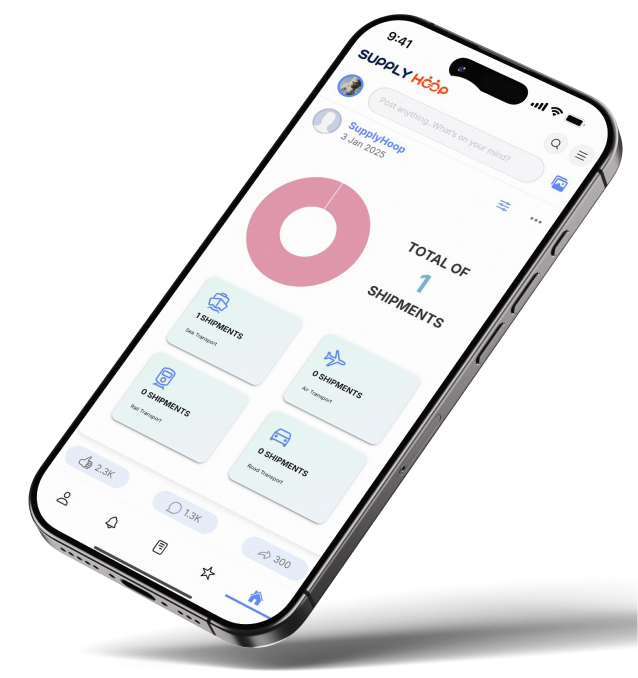
A mobile app changes that by making shipment documents available instantly, wherever your team is working.
Why Document Management Becomes a Hidden Operational Cost?
Every shipment generates paperwork. Commercial invoices, packing lists, bills of lading, customs declarations, delivery orders, proof of delivery, certificates, permits, and customer-specific documents all need to be stored, updated, and shared throughout the shipment lifecycle.
As shipment volumes increase, so does the complexity of managing these files.
Operations teams often spend more time searching for documents than they realize. Files are stored in different folders, shared through long email chains, downloaded multiple times, or saved with different version names. Before a document reaches the customer, someone has usually spent several minutes locating the latest copy.
Those minutes may seem small, but across hundreds of shipments every week, they become hours of lost productivity.
When Finding a Document Takes Longer than Solving the Problem?
Imagine a customer calling to ask for the latest bill of lading while you’re walking through a warehouse or meeting another client.
Without mobile access, the process usually looks familiar. Someone returns to their desk, searches through folders, checks whether the document is the latest version, downloads it, attaches it to an email, and finally sends it to the customer.
The customer waits.
The shipment waits.
The operations team stops what they’re doing.
The real question was never whether the document could be formatted correctly. The real question was whether the customer could receive the information immediately.
Access Every Shipment Document from Your Mobile App
A mobile supply chain visibility platform removes the dependency on office desktops by making shipment documents available directly through the app.
Instead of searching across multiple systems, users can instantly access documents linked to each shipment from a single screen.
Whether it’s a commercial invoice, packing list, bill of lading, customs paperwork, delivery order, or proof of delivery, the latest version is always available alongside the shipment information.
This means logistics professionals can retrieve important documents whether they are in the office, visiting customers, working remotely, or supervising warehouse operations.
Share Documents in Seconds, Not Hours
The value of mobile document management goes beyond viewing files. Sharing documents becomes just as simple.
Rather than downloading files, creating email attachments, or searching through folders, users can open the shipment, select the required document, and share it immediately with customers, customs brokers, transport partners, or internal teams.
This significantly reduces response times while ensuring everyone receives the correct version.
Instead of asking colleagues, “Can someone send me the latest document?” teams can respond independently from anywhere.
Keep Everyone Working from the Same Version
Version control is one of the biggest challenges in logistics documentation. Multiple revisions often exist for the same shipment, creating confusion over which file should be shared.
A mobile visibility platform helps eliminate this problem by linking documents directly to live shipment records.
As documents are updated, users always access the latest approved version instead of outdated copies stored in emails or local folders.
This improves accuracy while reducing the risk of sharing incorrect documentation with customers or regulatory authorities.
Improve Customer Experience with Faster Document Delivery
Customers rarely enjoy waiting for paperwork.
Whether they’re requesting an invoice, proof of delivery, customs document, or shipping instruction, they expect fast responses.
When logistics teams can retrieve and share documents instantly from a mobile app, customer service improves naturally.
Questions are answered faster.
Requests are completed during the first conversation.
Customers gain confidence because they receive information immediately instead of hearing, “I’ll send it once I’m back at my desk.”
Supply GPT Helps You Find the Right Document Faster
As shipment volumes grow, locating the correct document can become another time-consuming task.
Supply GPT simplifies document retrieval by allowing users to ask questions in plain language instead of manually searching through records.
For example:
- Show the bill of lading for today’s export shipment.
- Find the proof of delivery for this customer.
- Which shipments are still missing customs documents?
- Show documents attached to this purchase order.
By understanding natural language, Supply GPT helps users locate information more quickly, reducing the time spent navigating folders and shipment records.
Share Documents Through WhatsApp Without Leaving the Workflow
Many customers already communicate through WhatsApp because it’s fast and convenient.
When mobile document management is combined with WhatsApp integration, teams can securely share shipment documents directly from the shipment workflow.
Whether it’s a delivery order, invoice, proof of delivery, or customs document, the required file can be sent immediately without switching between different applications.
This keeps communication connected to the shipment while making document sharing much more efficient.
Connected with CargoWise and Existing Logistics Systems
A mobile document solution works best when it integrates with the operational systems logistics teams already use.
By connecting with CargoWise and other logistics platforms, shipment documents remain synchronized with live operational data.
Users no longer need to upload the same files multiple times or maintain separate document repositories. Every shipment, milestone, and supporting document stays connected, creating one reliable source of information across the organization.
Turn Document Management into a Competitive Advantage
Document handling may seem like a routine administrative task, but it has a direct impact on operational efficiency, customer satisfaction, and response times.
When teams spend less time searching, formatting, and forwarding files, they gain more time to focus on shipment planning, customer service, and exception management.
Mobile document access transforms paperwork from an operational bottleneck into a seamless part of the logistics workflow.
Conclusion
Every shipment depends on accurate documentation, but accessing and sharing those documents shouldn’t slow your operation down. A mobile app gives logistics teams instant access to shipment documents, making it easy to retrieve, share, and manage files from anywhere.
With mobile document access, WhatsApp sharing, Supply GPT for faster document retrieval, and seamless integration with CargoWise and other logistics systems, your team can reduce manual effort, respond to customers faster, and keep every shipment moving with confidence.
Book a demo today and discover how end-to-end supply chain visibility with mobile document access and sharing can simplify logistics documentation and keep your entire operation connected wherever work takes you.