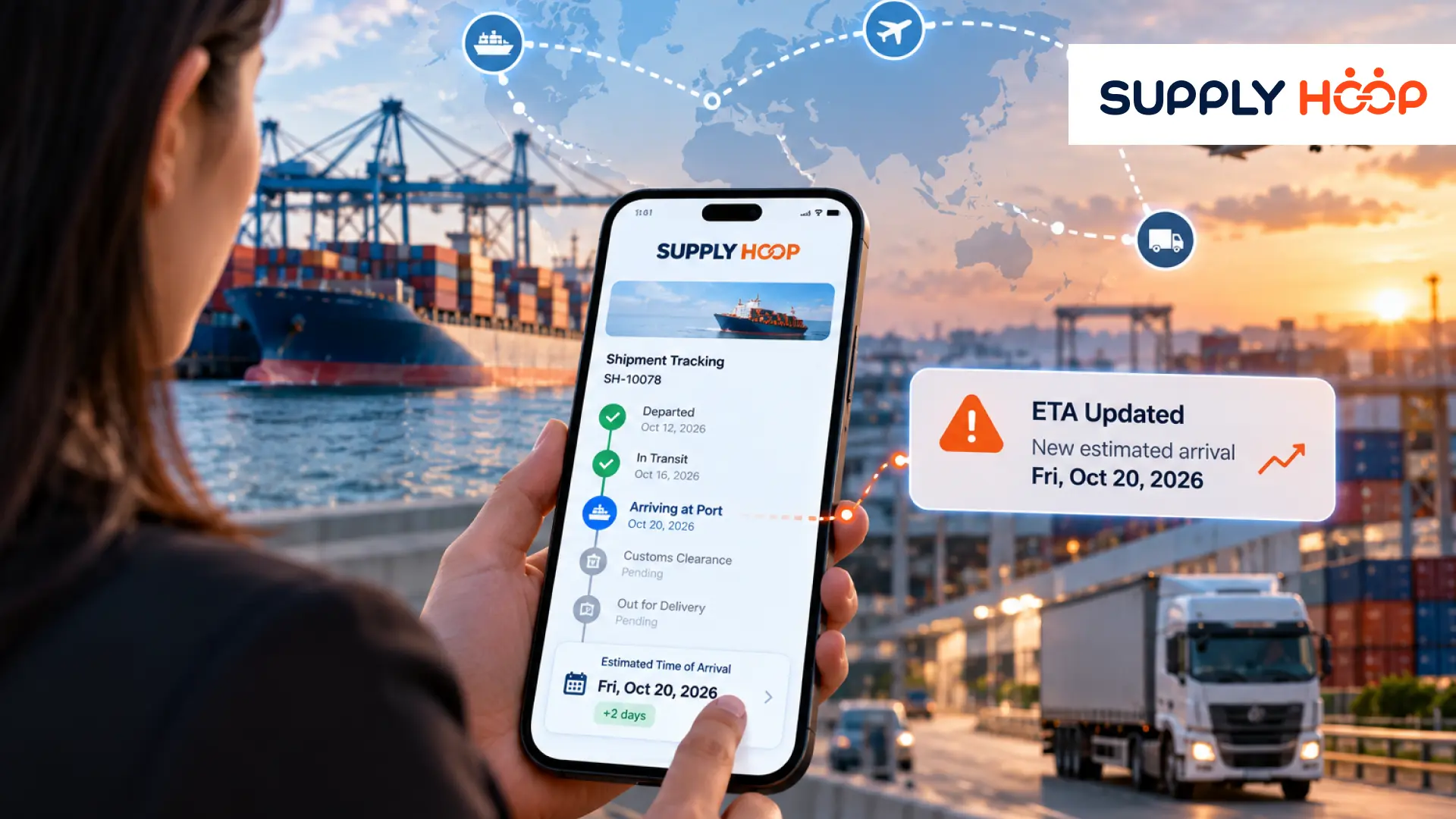
Your shipment was supposed to arrive on Tuesday. Yesterday, the mobile app showed Wednesday. Today, it says Friday.
Naturally, the first question is: Why does the ETA keep changing?
For customers, an estimated time of arrival (ETA) often looks like a confirmed delivery commitment. For freight forwarders, however, it is a prediction based on available transportation data, shipment milestones, and operating conditions.
That distinction matters.
An ETA can be accurate when it is calculated and updated using reliable information. But international freight moves through ports, airports, customs facilities, warehouses, and transport networks where conditions constantly change.
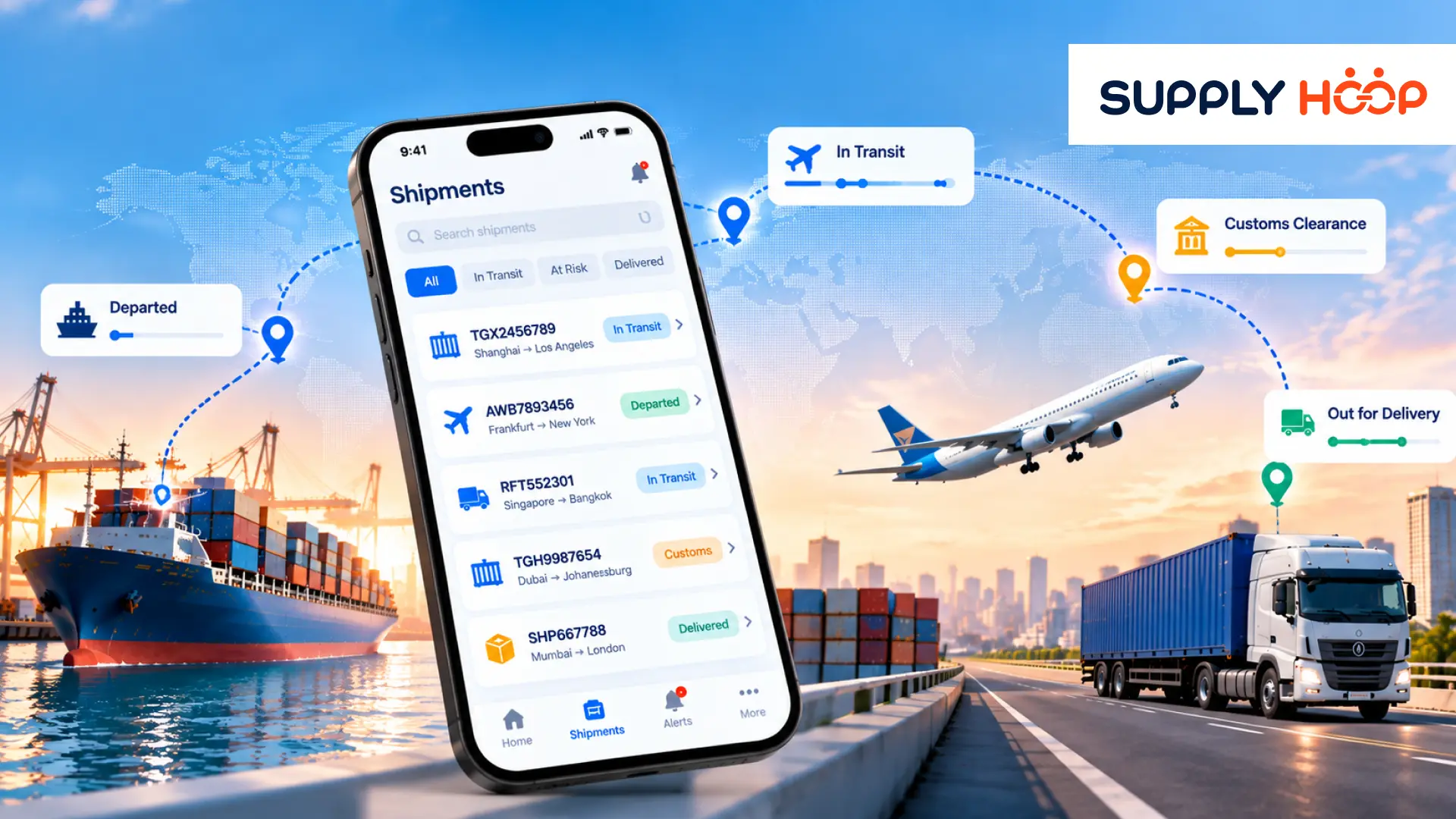
A mobile shipment tracking app helps logistics teams access the latest available ETA, recognize schedule changes, and understand how those changes affect the shipment journey.
The important question is not whether an ETA will ever change. It is whether the information is current, what the estimate actually refers to, and how quickly your team can respond when the expected arrival changes.
First, What does ETA Actually Mean in Freight Shipping?
ETA stands for Estimated Time of Arrival. It indicates when a vessel, aircraft, vehicle, or shipment is expected to reach a specified location.
However, ETA can refer to different stages of a shipment.
For ocean freight, the vessel ETA may indicate when the ship is expected to arrive at the destination port. It does not necessarily mean the container will be unloaded, cleared through customs, and ready for delivery that day.
Similarly, an air freight ETA may refer to the aircraft’s arrival at the destination airport rather than the time cargo becomes available for collection.
Road freight ETA may be closer to the actual delivery time, particularly when the vehicle is approaching its destination.
This is why freight forwarders should distinguish between:
- Vessel or flight ETA: Expected arrival of the transportation service.
- Port or airport arrival: Expected arrival at the destination facility.
- Cargo availability: When cargo is expected to become available for collection, subject to handling and release processes.
- Delivery ETA: Expected arrival at the consignee’s location.
These milestones are connected, but they are not interchangeable.
A vessel arriving on time does not automatically mean the cargo will be delivered on time.
How Do Mobile Apps Calculate Shipment ETAs?
A mobile app typically does not create every ETA independently.
Instead, a connected logistics visibility platform receives estimated arrival information from relevant data sources, such as shipping lines, airlines, transport providers, tracking systems, and freight management platforms.
Some visibility systems also use predictive models that combine transportation schedules, location updates, historical performance, and current operating conditions to estimate arrival times.
For ocean freight, ETA information may depend on the vessel’s planned schedule, latest position, voyage progress, and carrier updates.
For road transportation, GPS location, remaining distance, traffic conditions, route information, and driving restrictions can influence the estimate.
For air freight, flight schedules, departure updates, aircraft movements, and connection information may contribute to the expected arrival.
The accuracy depends on the data source, update frequency, and prediction method.
A mobile app displaying a carrier-provided ETA is not necessarily using the same calculation method as a platform generating its own predictive ETA.
This is an important consideration when evaluating mobile supply chain visibility.
A good ETA experience should make the latest available estimate accessible while helping users understand which shipment milestone it represents.
1. Vessel Schedule Changes Can Move Your ETA by Days
Ocean freight schedules are affected by numerous operational factors.
A vessel may depart later than planned, spend additional time at an earlier port, or experience congestion that affects its berth availability.
Even when the vessel is moving normally, schedule changes elsewhere in the rotation can influence its expected arrival.
For example, a container shipment from Shanghai to Durban may initially show a vessel ETA of October 18.
If the vessel experiences delays at an intermediate port, the shipping line may revise the expected arrival to October 20.
The mobile tracking app may then display the revised information once the connected source updates its records.
This does not necessarily indicate a tracking error.
It means the expected arrival has changed based on the latest available transportation information.
The practical concern is whether the revised ETA reaches the freight forwarder early enough to adjust the next stages of the shipment.
2. Weather and Traffic Conditions Can Affect Arrival Predictions
Transportation schedules are built around expected operating conditions.
Actual conditions can be different.
Strong winds, heavy seas, storms, and poor visibility may influence vessel movements or port operations. Severe weather can also disrupt airport activity and inland transportation.
For road freight, congestion, road closures, accidents, and unexpected route restrictions may change the expected delivery time.
Consider a truck transporting cargo from a distribution center to a customer’s warehouse.
The initial ETA is 2:00 p.m. However, a major road closure adds two hours to the remaining journey.
If the tracking system receives updated vehicle location and route information, the estimated arrival can be recalculated.
This is one reason real-time ETA tracking can be more useful than relying exclusively on the original transportation schedule.
The estimate reflects the information available at a particular moment, not a guarantee that operating conditions will remain unchanged.
3. Transshipment Delays Can Change the Entire Delivery Timeline
A direct shipment and a transshipment shipment do not carry the same scheduling risks.
In ocean freight, transshipment involves transferring a container from one vessel to another at an intermediate port.
If the first vessel arrives late, the container may miss its planned connecting vessel.
The next available connection could depart several days later.
For example, a shipment moving from Singapore to a destination in Europe may depend on a scheduled connection at an intermediate hub.
A delay of only a few hours on the first leg could result in a significantly longer delay if the planned connection is missed.
The original ETA may no longer be realistic.
This is why a mobile shipment tracking app should help users follow relevant milestones across the shipment journey, rather than displaying only the original departure and final arrival dates.
Understanding the current stage of transportation gives freight forwarders better context when an ETA changes unexpectedly.
4. Port Congestion and Terminal Operations Affect Cargo Availability
A vessel can reach the destination port without the cargo becoming immediately available.
The ship may need to wait for a berth. Terminal operations may experience congestion. Container discharge and yard processing can also take additional time.
These activities affect when the shipment can progress to customs clearance and inland transportation.
For importers, this distinction is especially important.
Suppose the vessel arrives on Monday, but the container is discharged on Wednesday.
The vessel ETA may have been accurate. However, the cargo availability timeline has changed.
If the consignee was expecting delivery based only on the vessel arrival date, the difference can create confusion.
Freight forwarders therefore need visibility into the milestones that follow arrival.
A connected mobile app can help users review available shipment events and understand whether the cargo has progressed beyond the vessel arrival stage.
5. Customs Clearance Can Delay Delivery Without Changing Vessel ETA
One of the most common misunderstandings in international shipping is assuming that the ETA includes customs clearance.
A shipment may arrive at the destination port exactly as scheduled but remain unavailable because customs procedures are incomplete.
Possible causes include document discrepancies, inspections, regulatory requirements, or pending release formalities.
These issues may not change the vessel’s recorded ETA.
They can, however, affect the final delivery timeline.
For example, an importer may see that a container arrived yesterday and expect delivery today.
But if customs release is still pending, the freight forwarder cannot treat the arrival milestone as confirmation that the cargo is ready for collection.
This is why shipment visibility should connect transportation progress with available customs milestones.
Instead of relying on one estimated arrival date, teams can check whether the shipment has completed the processes required for the next movement.
6. Inland Transportation and Warehouse Readiness can Change Final Delivery ETA
The final stage of a shipment can introduce another set of variables.
After cargo becomes available at the port or airport, it may still require collection, inland transportation, warehouse receiving, and final delivery arrangements.
A transport vehicle may not be immediately available. A warehouse may have limited receiving appointments. A delivery location may have operating-hour restrictions.
These factors can affect the delivery ETA even when the international transportation leg was completed on time.
Imagine a container arriving at Durban and requiring onward transportation to Johannesburg.
The vessel arrival date alone cannot determine when the container will reach the consignee.
The final timeline depends on cargo release, transport availability, road conditions, and receiving arrangements.
For logistics teams, the useful approach is to monitor the shipment through the relevant milestones and distinguish international arrival from final delivery.
How Accurate should You Expect a Mobile ETA to be?
There is no universal accuracy percentage that applies to every mobile shipment tracking app.
ETA accuracy varies according to the transportation mode, shipment stage, quality of connected data, and method used to generate the estimate.
A road vehicle approaching its destination with frequent GPS updates may have a relatively narrow arrival window.
An ocean shipment several weeks away from its destination has more opportunities for schedule changes.
A shipment involving multiple carriers or transshipment points may also have greater uncertainty than a direct movement.
When evaluating ETA accuracy, logistics businesses should consider three questions.
How recent is the information? An ETA updated recently may provide a better reflection of current conditions than an estimate that has not changed since booking.
What does the ETA represent? Vessel arrival, cargo availability, and final delivery are different milestones.
How does the platform handle revisions? Users should be able to recognize important changes rather than assuming the original date remains valid.
A useful way to measure accuracy is to compare the last predicted ETA against the actual arrival time across completed shipments.
Businesses can also measure how far in advance significant changes were identified.
These indicators provide a more meaningful picture of ETA performance than assuming every estimate should be exact.
Why Mobile ETA Visibility Matters More than Checking the Date?
An updated ETA becomes valuable when someone uses it to make a decision.
A revised vessel arrival may affect container collection planning.
A delayed air shipment may require a customer to reconsider a production schedule.
A changed road delivery ETA may influence warehouse labor allocation or receiving appointments.
This is where mobile visibility supports operational coordination.
Instead of waiting until someone returns to the office, authorized users can access available shipment information from their phones.
Freight forwarders can bring connected shipment milestones, tracking information, and available ETA updates into a mobile-first visibility environment.
This makes it easier to review shipment progress while coordinating with customers, transport partners, and internal teams.
Through Supply Hoop’s WhatsApp integration, relevant shipment updates can also be communicated through a familiar channel, helping teams keep customers informed when important changes occur.
Can Supply GPT Help You Understand ETA Changes Faster?
For a freight forwarder managing hundreds of active shipments, checking each ETA individually is not always practical.
A more useful approach is to identify which shipments require attention.
Supply GPT allows users to ask natural-language questions about information available through their connected logistics environment.
For example:
- Which shipments have revised ETAs?
- Show ocean shipments arriving this week.
- Which shipments are currently delayed?
- What is the latest ETA for my shipment?
- Which shipments have customs-related exceptions?
These questions can help users find relevant shipment information without manually navigating every record.
However, AI cannot automatically explain every ETA revision unless the underlying systems provide enough supporting information.
If a carrier updates an arrival date without identifying the reason, the platform should not invent an explanation.
That distinction is important for maintaining trust in shipment information.
An ETA is a Forecast. Your Response should be Based on the Latest Information.
An ETA change does not automatically mean the original estimate was wrong.
It means the expected arrival has been revised as new information becomes available.
In international logistics, that is a normal part of managing transportation across multiple carriers, locations, and operational processes.
The real challenge is making sure those changes do not remain hidden until they create problems for customers or internal teams.
For freight forwarders, accurate shipment communication depends on understanding the latest available ETA, recognizing the milestone it represents, and monitoring the events that influence the final delivery timeline.
Supply Hoop helps make that information more accessible through connected mobile shipment visibility, allowing logistics teams to follow shipment progress, review important updates, and communicate with greater confidence.
Want to keep your team informed when shipment ETAs change? Book a demo to explore how Supply Hoop can support end-to-end supply chain visibility and help your freight forwarding team stay connected to the latest available shipment information.