When Documents Delay Decisions, Shipments, and Cash Flow, Slow Down
Imagine a vessel has arrived, and the shipment is ready for release, but the approver who needs to sign off on the House Bill of Lading (HBL) is traveling.
Or a carrier invoice needs quick approval to avoid late fees, but the finance manager won’t be at their desk until tomorrow. Or a customer urgently requests a freight invoice, but no one can access it because they’re away from the office.
These moments happen every day in logistics. And every delay in approving, retrieving, or sharing documents creates a ripple effect through the entire supply chain, delaying cargo release, slowing invoicing, increasing detention costs, and frustrating customers.
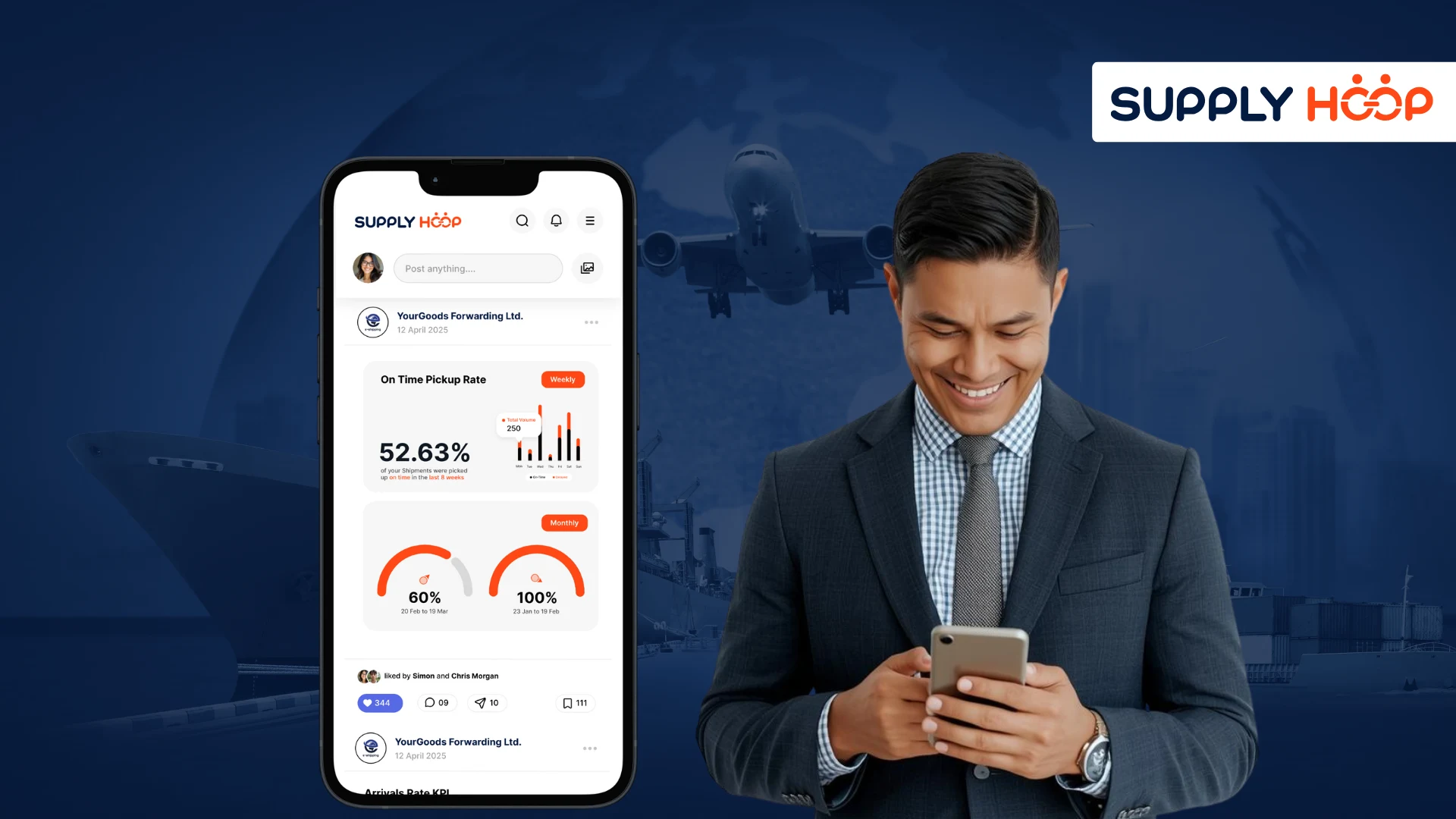
This is why logistics operations are shifting toward mobile-first document visibility, access, and approval workflows. Critical documents like invoices, HBL, MBL, POD, packing lists, or commercial invoices must move as fast as your shipments, and that means they must move through mobile.
Why Document Visibility is a Major Weakness in Traditional Logistics Workflows?
Logistics runs on documents. Every container, pallet, and order requires multiple files to move legally, financially, and operationally.
But document workflows break down because of:
1. Documents stuck in emails
Teams lose track of attachments sent across long chains of messages.
2. Approvers limited to desktop access
If someone isn’t logged into the ERP, nothing moves forward.
3. Too many systems handling data
Documents are scattered across emails, servers, shared drives, portals, and ERPs.
4. Slow customer and carrier communication
When documents aren’t accessible instantly, partners wait, and operations freeze.
5. High dependency on back-office teams
Field teams cannot resolve issues because they don’t have access to the documents they need.
In today’s dynamic supply chain environment, slow document handling is not operationally acceptable, and certainly not commercially.
The Shift: Why Mobile Access to Documents is Becoming the Standard?
Logistics professionals are rarely stationary. They are on the warehouse floor, on the road, inside ports, supervising loading operations, or visiting customers.
That’s why having all key supply chain documents accessible in a mobile app is revolutionary.
It allows operations, finance, procurement, and customer service teams to act instantly instead of waiting to reach a desktop system.
A mobile app removes obstacles by providing:
- Real-time access to documents
- Instant approval workflows
- Automated notifications
- Ability to share documents with customers or partners instantly
- Search and retrieval without digging through emails
When document access becomes mobile, decision-making becomes faster, clearer, and far more efficient.
What Types of Documents Can Be Approved or Accessed via Mobile?
In a fully digital, mobile-first workflow, logistics teams can view and approve:
- Invoices
- House Bill of Lading (HBL)
- Master Bill of Lading (MBL)
- Commercial Invoices & Packing Lists
- Delivery Orders (DO)
- Proof of Delivery (POD)
- Freight Quotations
- Purchase Orders (PO)
- Customs documents
- Vendor statements
These documents are no longer tied to office systems, they live inside the user’s pocket.
The Business Benefits of Mobile Document Access and Approval
Mobile document management is not just a convenience, it is a serious operational and commercial advantage.
1. Faster Releases and Fewer Delays
Whether it’s approving an HBL or confirming an invoice, delays in sign-off can stall cargo movement.
With a mobile app, approvals happen in seconds, not hours.
2. Real-Time Decision-Making
Approvers no longer need to “wait until they’re back at their desk.”
They can validate, approve, or decline documents instantly, reducing operational downtime.
3. Stronger Cash Flow and Faster Billing
Many logistics companies invoice only after confirmation of documents like HBL or POD.
Mobile approval speeds up billing cycles, helping finance teams collect faster and improve working capital.
4. Lower Detention, Demurrage, and Storage Fees
Document delays often force containers to remain at the port longer than necessary.
Mobile access ensures actions happen on time, preventing expensive penalties.
5. Reduced Dependency on Back-Office Teams
Operations staff and managers can retrieve documents themselves, without waiting for emails or ERP screenshots.
6. Higher Accuracy and Fewer Mistakes
Mobile systems allow teams to cross-check details on the spot, reducing errors that cause rework or compliance issues.
How Mobile Apps Enhance Collaboration Across the Supply Chain?
Document visibility doesn’t just help internal teams, it improves communication across all logistics partners.
With mobile access, teams can instantly share:
- HBL copies with carriers
- Invoice files with customers
- DO or POD details with transport teams
- Packing lists with warehouse staff
- Compliance documents with customs agents
This level of transparency builds trust, reduces miscommunication, and accelerates every stage of the logistics process.
Where AI Fits In: Smarter, Not Just Faster Document Workflows
A mobile app becomes even more powerful when combined with AI-driven features such as:
- Document Understanding
- AI instantly identifies key information in invoices, HBL, packing lists, etc.
- Missing Document Alerts
- Supply GPT can detect when required files are missing from a shipment or PO.
- Approval Recommendations
AI can highlight:
- pricing deviations
- duplicate invoices
- supplier or carrier inconsistencies
- mismatched shipment data
- Voice and Chat Queries
Users can simply ask:
- “Show me the HBL for shipment ABC123.”
- “Is the carrier invoice for Job 458 approved?”
- “Which documents are still pending for today?”
AI shifts document management from reactive to proactive, giving logistics teams clarity before problems arise.
The Operational Impact of Mobile Document Management
The biggest advantage of mobile access is not speed alone, it’s the consistency it brings to the workflow.
When documents are always accessible:
- Shipments move without unnecessary waiting
- Billing cycles are predictable
- Customer service responds faster
- Operations eliminate manual chase-ups
- Compliance becomes easier
- Audit trails become cleaner
A supply chain that handles documents efficiently handles business efficiently.
Why Mobile Document Approval is the Future of Logistics Operations?
Modern logistics moves 24/7, across time zones, across continents. Approvals tied to desktops belong to another era.
Mobile-first document access aligns with how logistics teams actually work today,
on the go, on the floor, and in the field.
With mobile approval workflows:
- No shipment waits for someone to “get back to the office.”
- No invoice sits untouched because someone is traveling.
- No HBL delays container release because the approver didn’t see the email.
Mobile access keeps your supply chain moving at the speed of your business, not the speed of your inbox.
Conclusion
Document approvals may seem like small tasks, but they carry enormous operational weight.
By enabling teams to access, review, and approve documents such as invoices and HBL directly through a mobile app, companies eliminate delays, reduce costs, and strengthen supply chain flow from end to end.
A mobile-enabled document workflow creates:
- faster approvals
- smoother operations
- better financial outcomes
- improved customer service
- higher transparency and collaboration
Want to achieve end-to-end supply chain visibility and make document approvals as fast as your logistics operations need them to be? Book a demo today.