Ask three teams for the status of the same shipment, and you may get three answers.
The ERP says the order has shipped. The transportation system shows it in transit. The carrier portal has a revised ETA. Meanwhile, customer service is working from an email received yesterday.
None of those systems is necessarily wrong. They are simply seeing different pieces of the journey.
That is the real problem with supply chain data silos. Information exists, but it is scattered across systems, partners, formats, and departments that do not communicate consistently.
And this is not a small technology problem. A recent logistics intelligence research found that 66% of surveyed teams use three or more systems to manage shipments, while only 4% use a single system. The same research found that 97% of decision-makers believe visibility alone is no longer enough, they need information that helps them act.
For freight forwarders and logistics teams, solving data silos therefore isn’t about adding another dashboard. It is about creating a connected visibility layer that turns fragmented logistics data into one reliable operational picture.
Where do Supply Chain Data Silos Actually Come From?
Most logistics companies did not intentionally create data silos. They accumulated them.
Finance adopted an ERP. Operations uses a TMS or CargoWise. Warehouses work through a WMS. Carriers have their own portals. Customers send purchase orders through another platform. Tracking information arrives through APIs, EDI, spreadsheets, emails, and sometimes even messages.
Every system has a legitimate purpose.
The problem appears between them.
A container number may be formatted differently in two systems. A carrier may report “vessel departed” while another system calls the same milestone “ATD.” An ETA may change in the carrier feed but remain unchanged in the customer-facing system.
So, eliminating silos does not mean forcing the whole company onto one enormous system. It means getting existing systems to exchange and interpret information consistently.
Start with One Shipment and Follow its Data
Before investing in another technology platform, there is a surprisingly useful exercise logistics teams can perform.
Choose one shipment.
Then trace where its information lives from beginning to end.
You might discover that the purchase order starts in an ERP, the booking is created in CargoWise, vessel milestones come from a carrier, customs information comes from another source, delivery confirmation arrives from a transport provider, and the final POD sits in an email attachment.
Now ask:
Where can someone see the complete story without contacting another person?
If the answer is nowhere, you have identified the visibility gap.
This is a better starting point than asking, “How many systems do we have?” The real question is whether information can move between those systems as easily as the freight moves between logistics partners.
A Visibility Platform should Connect Data, not Simply Display it
This distinction matters.
Putting information from several systems onto one dashboard can look like integration without actually solving the underlying silo problem.
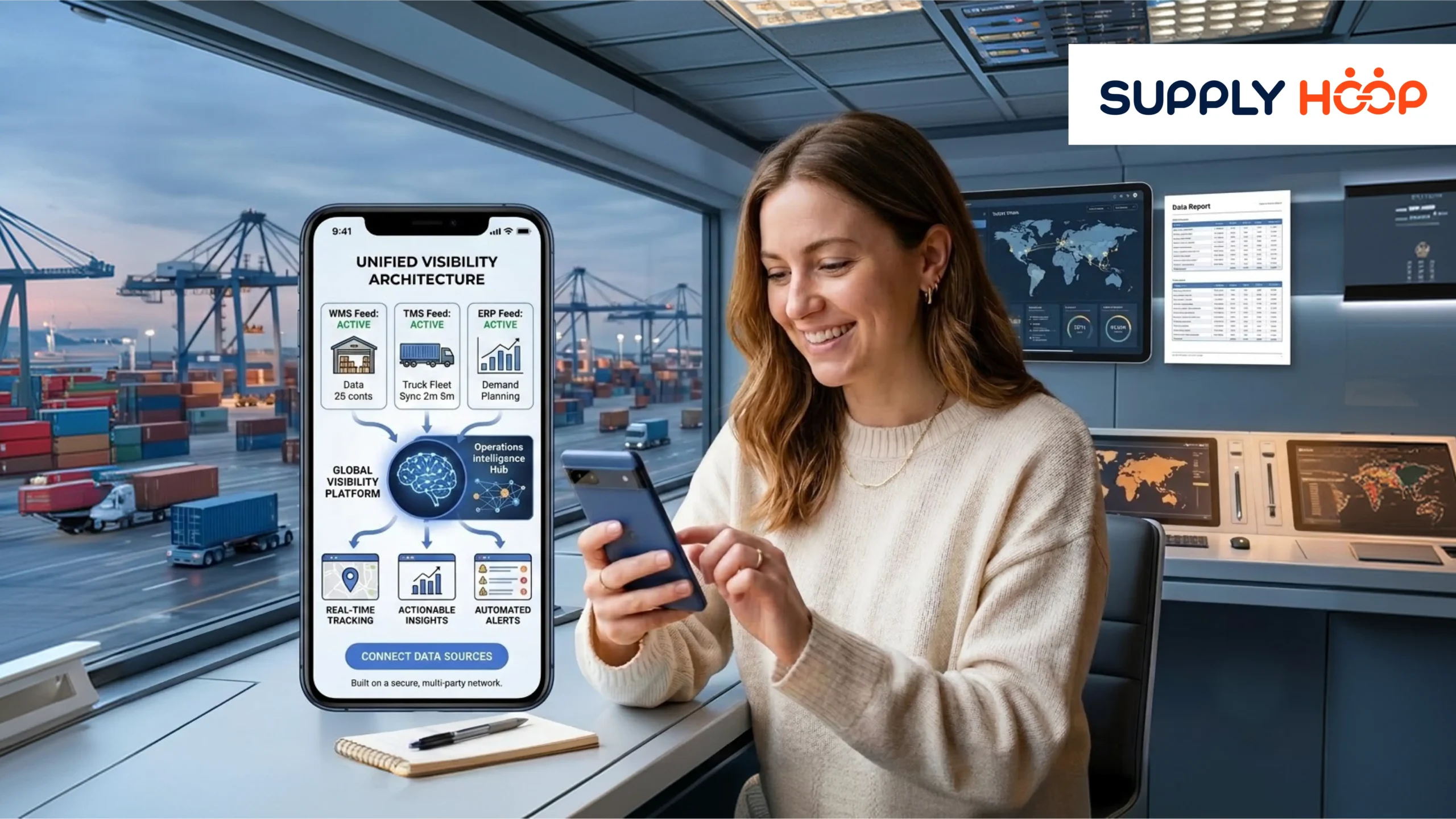
A true supply chain visibility platform needs an integration layer underneath the interface. APIs, EDI connections, webhooks, carrier feeds, ERP integrations, and other data exchanges bring information from different sources together. The platform then needs to normalize that information so the same shipment, order, container, customer, and milestone can be recognized across systems.
Industry integration guidance similarly emphasizes that real visibility depends on system-to-system data flows rather than simply introducing another portal.
Think of it this way:
Collection → Connection → Standardization → Context → Action
That is the path from fragmented data to usable visibility.
Build a Common Language for Your Logistics Data
Connecting systems is only half the job.
Suppose one carrier reports “Departed,” another reports “Vessel Sailed,” and another sends an ATD timestamp. A visibility platform needs to understand that these records describe the same operational event.
The same challenge exists with shipment alerts, references, locations, SKUs, purchase orders, container numbers, customers, and exception codes.
This is why data normalization matters.
Instead of asking every carrier, forwarder, warehouse, or ERP to structure information identically, the visibility layer translates different formats into a common operational model.
The result is much more useful.
A logistics manager can see 42 shipments arriving this week instead of manually reconciling 42 differently formatted status records.
Make Data Quality Visible Too
There is another mistake companies make when breaking down data silos: they assume connected data automatically becomes trustworthy data.
It doesn’t.
A platform may receive an ETA from three sources. Which one is current? A shipment may appear twice because different systems use different reference numbers. A milestone may be missing entirely.
Good visibility therefore needs to expose data quality problems instead of hiding them behind a polished dashboard.
Teams should be able to identify missing milestones, stale updates, duplicate records, conflicting timestamps, and incomplete references.
This changes an important operational question from:
“Do we have the data?”
to:
“Can we trust the data enough to make a decision?”
Recent research on supply chain visibility reinforces this data-centric approach, arguing that visibility depends on identifying the right data elements and processing them effectively rather than simply collecting more information.
Organize Information Around the Shipment, Not the Software
Once data is connected, the user should not need to know where it came from.
Consider a shipment moving from Shanghai to Chicago.
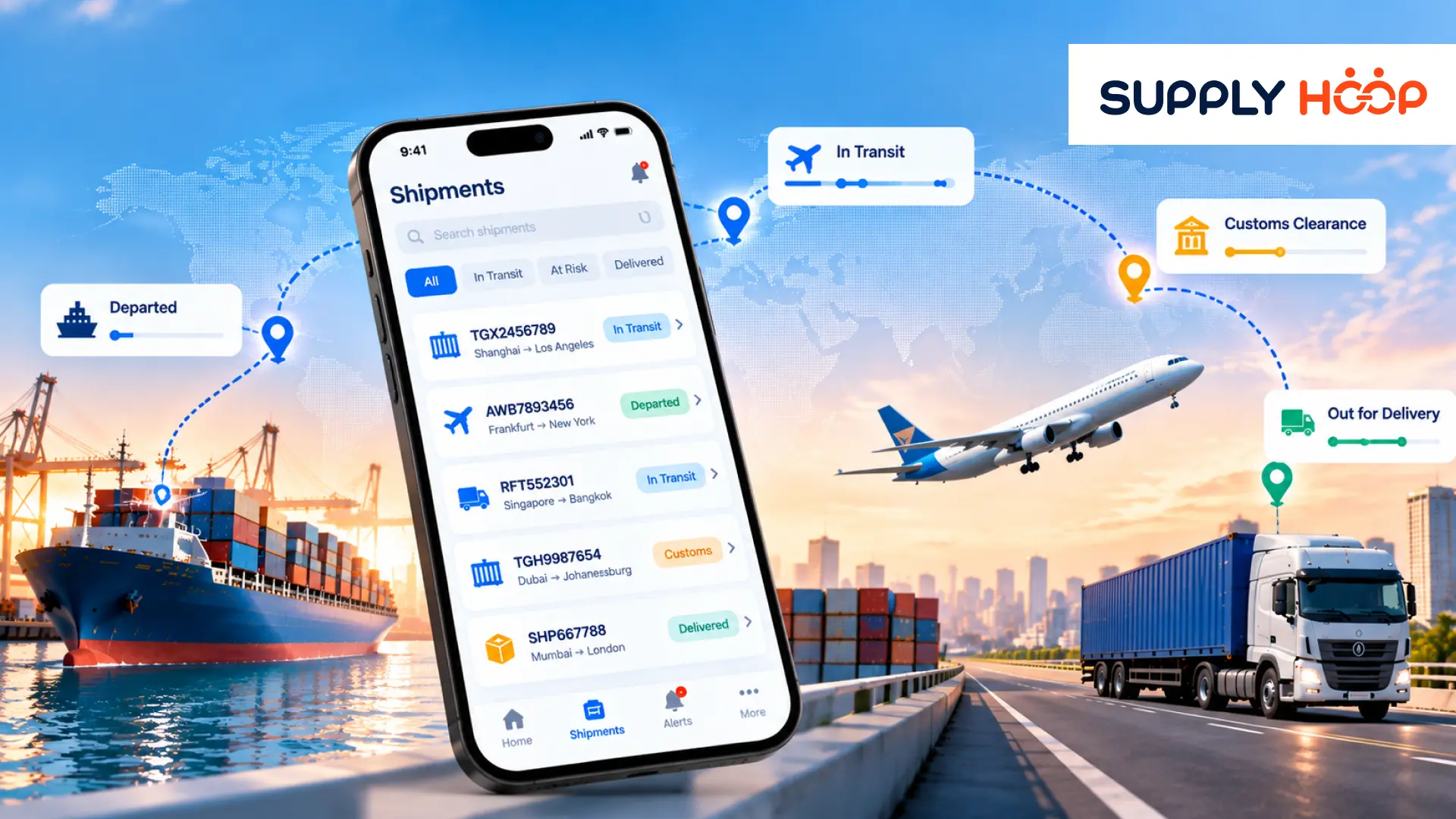
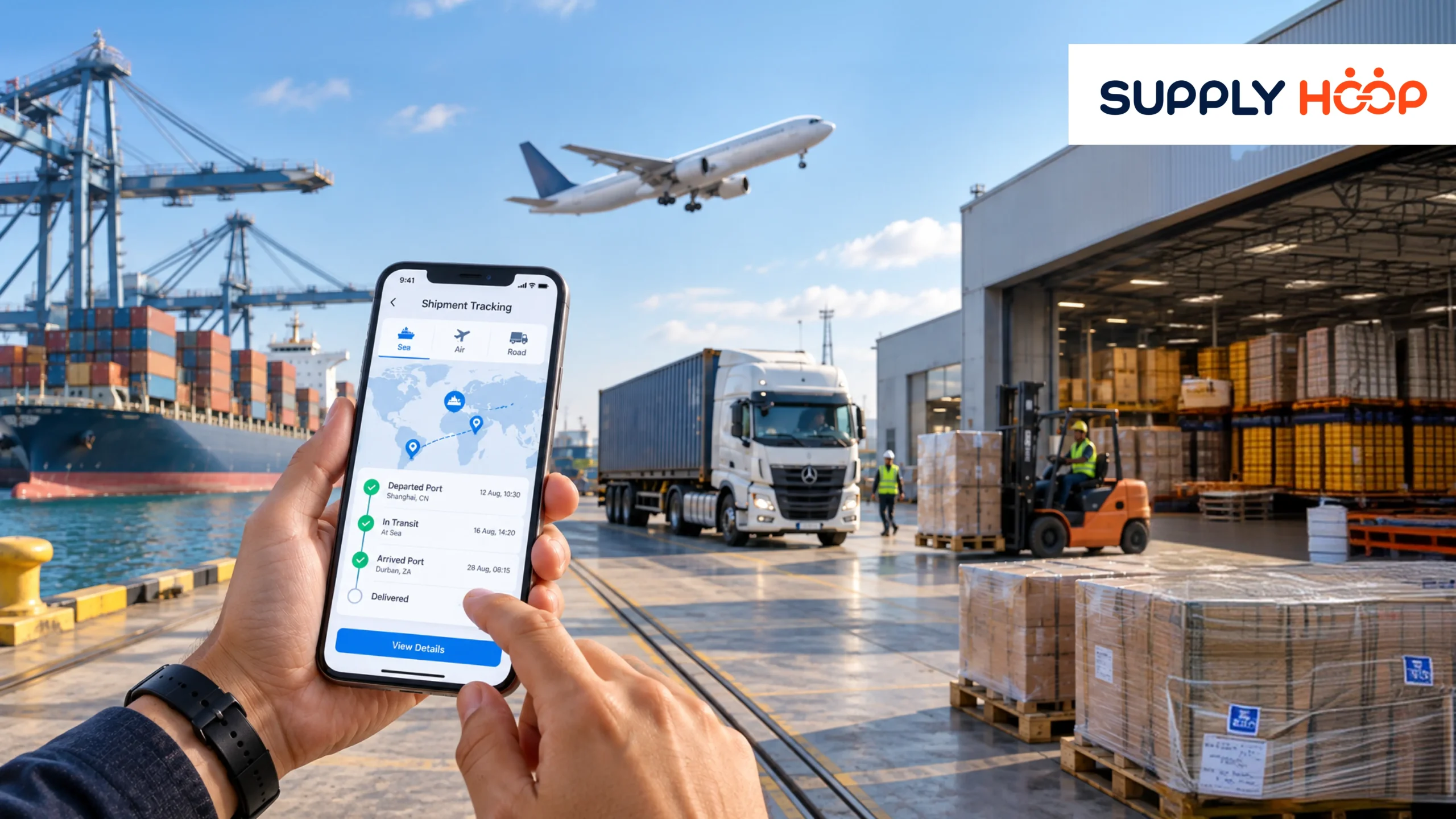
The user should be able to open that shipment and see its booking, container, planned departure, actual departure, current movement, revised ETA, customs status, documents, delivery information, and exceptions together.
Behind the scenes, those details may come from six different systems.
The user shouldn’t have to care.
This is one of the biggest practical benefits of a visibility platform: it organizes information around the logistics movement rather than around the application that created the data.
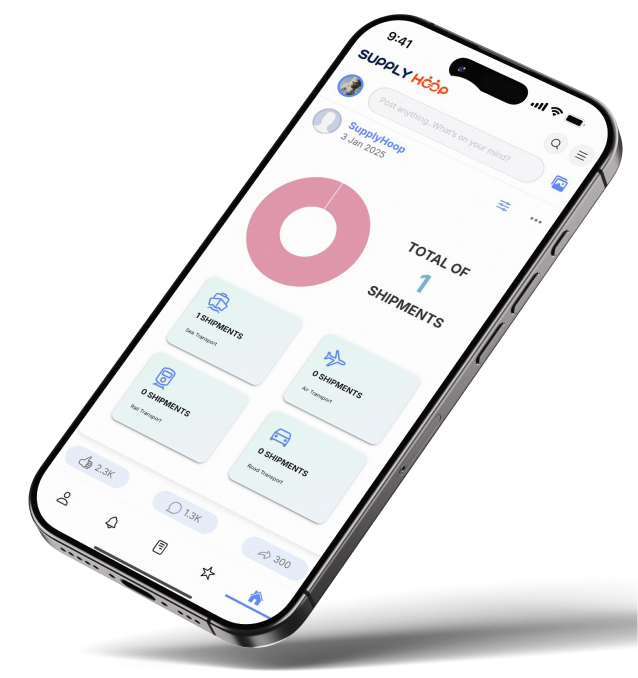
For mobile users, that difference becomes even more important. Instead of carrying several systems in their pocket, they carry one operational view of the shipment.
Turn the Single View into an Exception View
Once the silos are connected, don’t make teams stare at every shipment equally.
Use the combined data to identify what has changed.
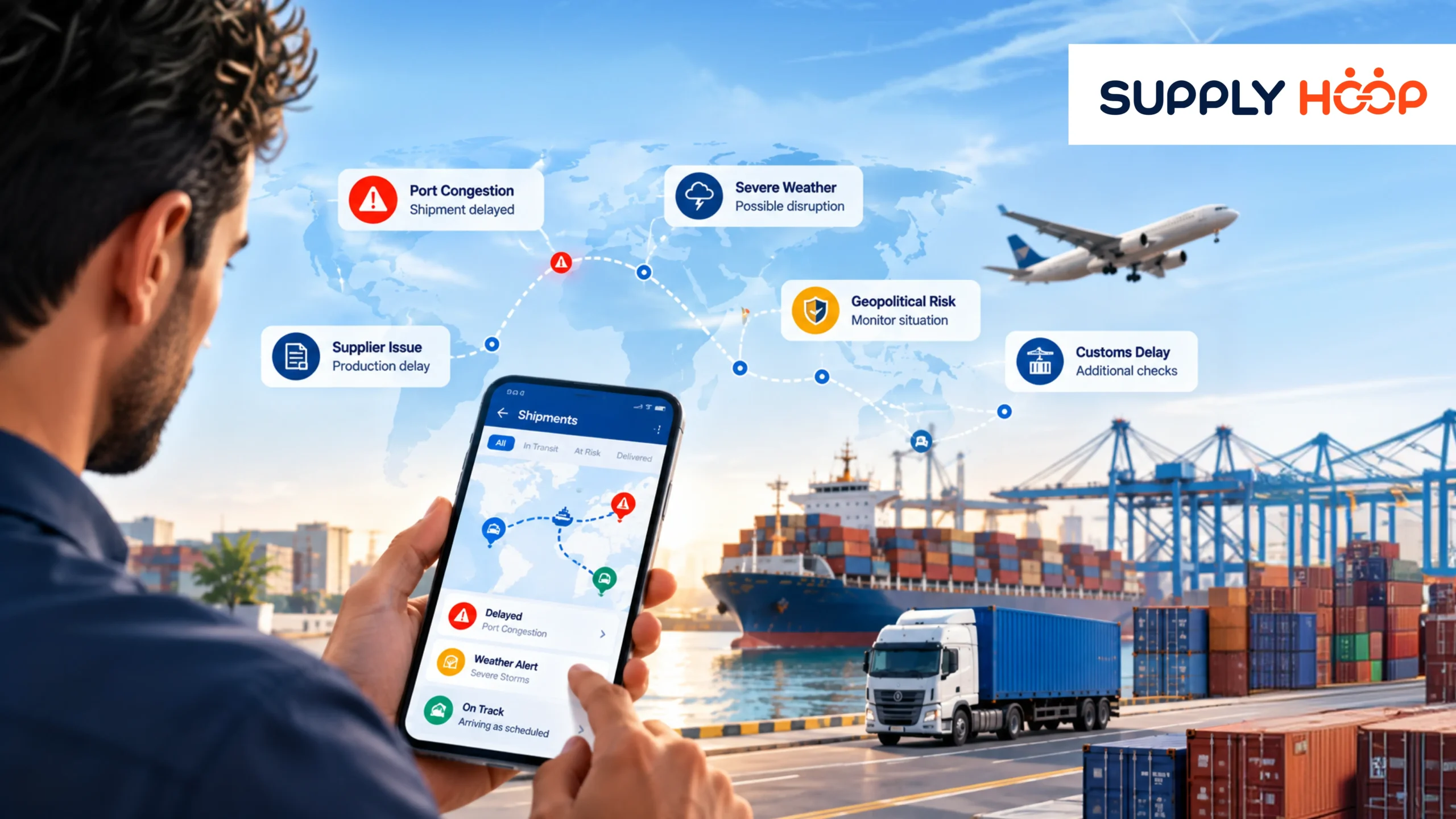
Imagine managing 800 active shipments. Seven have significant ETA changes. Three are waiting for customs release. Two containers are approaching free-time limits.
Those 12 shipments deserve attention. The other 788 probably don’t.
A visibility platform should therefore move users from “show me everything” toward “show me what requires action.”
This is where the value of integration starts becoming operational rather than technical.
Let AI Work Across the Connected Data
AI becomes far more useful after data silos are reduced.
If a logistics AI assistant can only see one system, its answers are limited by that system. Give it connected shipment, order, milestone, document, and exception data, and the questions become much more practical.
With Supply GPT, for example, a user could ask:
- Which shipments have changed ETA since yesterday?
- Which containers arriving this week have not cleared customs?
- What customer orders could be affected by current delays?
- Which shipments are missing documents?
- What requires my attention today?
Instead of forcing the user to understand the underlying systems, the AI becomes a conversational layer over the connected logistics information.
That is a much more meaningful use of AI than simply adding a chatbot to another isolated database.
Don’t Replace Good Systems Just to Create Visibility
A common concern when addressing data silos is:
“Do we need to replace our ERP, CargoWise, TMS, or other existing systems?”
Usually, that should not be the starting assumption.
Those systems already run important parts of the business.
The better approach is to integrate them.
A visibility platform can sit across CargoWise ERP systems, carrier feeds, customer information, tracking sources, and other third-party platforms, bringing relevant data together while allowing each underlying system to continue doing what it does best.
This approach also makes implementation more practical. Instead of a massive “rip and replace” transformation, businesses can prioritize the most painful visibility gaps first and expand integration gradually.
Measure Whether the Silos are Actually Disappearing
The success of a visibility project should not be measured by how impressive the dashboard looks.
Measure what your people no longer have to do.
Are customer service teams making fewer calls to operations?
Are people spending less time checking carrier portals?
Are ETA changes reaching customers faster?
Are fewer shipment updates being manually copied into spreadsheets?
Are customs, document, and delivery exceptions identified earlier?
Can management answer operational questions without asking someone to build a report?
When those numbers improve, the organization isn’t simply becoming more digital. Its data is becoming more usable.
One Connected View is Only the Beginning
The real goal of solving supply chain data silos is not to put everything on one screen.
It is to shorten the distance between something changing and someone doing something about it.
Connect the ERP, CargoWise, carrier feeds, shipment milestones, documents, customer information, and other logistics data. Normalize what those systems call things. Identify exceptions. Make the resulting information accessible through a mobile app. Then use intelligence such as Supply GPT to help teams interrogate that connected data without navigating system after system.
That is when a visibility platform stops being another place to look and starts becoming a practical operational layer across the supply chain.
If your team has the data but still spends too much time finding, reconciling, and explaining it, Supply Hoop can bring those disconnected signals into a clearer end-to-end supply chain visibility experience. Book a demo to see how your existing logistics data can work together instead of living in silos.