A customer asks a simple question.
“Where is my shipment?”
The customer expects a straightforward answer. But for the logistics team, finding that answer may involve opening CargoWise, checking a carrier tracking portal, searching through emails, and reviewing the latest spreadsheet.
By the time the information is found, another update may have arrived.
This is a familiar challenge in freight forwarding. Shipment information exists across multiple systems, but accessing the latest update often requires more effort than it should.
The problem isn’t necessarily the number of systems a logistics business uses. Each platform has its own purpose. The real challenge begins when people have to move between those systems just to understand what’s happening with one shipment.
What if the latest shipment updates were accessible from one mobile app instead?
That’s the opportunity behind mobile-first supply chain visibility.
Why does One Shipment Require So Many Systems?
Consider a freight forwarder managing an ocean shipment from Shanghai to Los Angeles.
The booking information may be available in CargoWise. Vessel movement updates come from the carrier. The revised ETA appears in a tracking portal. Customs information is recorded through another process, while delivery confirmation arrives from the transport provider.
Each system contributes information about a different stage of the shipment.
But when a customer asks for the latest status, the operations team may need to connect those updates manually.
This creates a frustrating situation. The business has invested in technology, yet employees still spend time searching, comparing, and confirming information before answering a routine customer question.
As shipment volumes grow, that effort grows too.
A single enquiry might take only a few minutes to resolve. Multiply that across hundreds of shipments, multiple customers, and daily follow-ups, and information retrieval becomes a significant part of the working day.
The Problem isn’t Having Multiple Systems. It’s Having to Check Them All.
Freight forwarding cannot realistically operate through one system alone.
Carriers, freight forwarders, customs authorities, warehouses, and transport providers use different technologies to manage their responsibilities.
Replacing all those systems with one application is neither necessary nor practical.
Instead, logistics businesses need a way to bring relevant shipment updates from different sources into one accessible view.
A mobile supply chain visibility platform can provide that connection.
Through integrations with CargoWise, carrier feeds, ERP systems, and other logistics platforms, shipment milestones and operational updates can become accessible within a mobile environment.
This means users no longer need to know which platform originally generated every update.
They can open the shipment and review the information available to them.
The underlying systems continue performing their individual functions, while the mobile app provides a more convenient way to access relevant shipment visibility.
What should a Single Mobile Shipment View Actually Show?
A useful mobile app should do more than display a tracking number and a generic shipment status.
For an ocean shipment, the user may need to know whether the vessel has departed, whether the ETA has changed, whether customs clearance is progressing, and whether delivery has been completed.
For air freight, the important milestones may include departure, arrival, clearance, and final delivery.
Road shipments may require transport progress, delivery status, and exception updates.
The value of a connected mobile view is that these different movements can be monitored without constantly switching between separate tracking environments.
Imagine opening one shipment and seeing its latest available status, key milestones, revised ETA, and relevant exceptions.
Instead of collecting updates from multiple sources, the logistics manager can begin with a clearer operational picture.
One shipment. One place to check its progress. Fewer steps to find the answer.
A Changed ETA shouldn’t be Hidden in Another Portal
Sometimes the biggest problem isn’t finding the shipment.
It’s discovering that something has changed.
A vessel’s ETA moves from Monday to Wednesday. The carrier has updated its system, but the freight forwarder’s customer service team is still working from the previous arrival date.
The customer calls on Tuesday expecting the cargo to arrive soon.
Only then does someone check the carrier portal and discover the change.
This is where mobile visibility becomes more valuable than basic tracking.
Connected shipment updates can help relevant users identify ETA revisions, delays, and exceptions earlier, rather than relying entirely on manual status checks.
The objective is not to send every operational update to everyone.
It is to help the appropriate people receive the information they need when something important changes.
That can give operations more time to review the impact, coordinate the next step, and communicate an updated expectation to the customer.
What Happens When the Logistics Manager is Away from the Desk?
Freight forwarding decisions don’t happen exclusively inside an office.
A logistics manager may be visiting a customer. An operations supervisor may be coordinating activity at a warehouse. A team member may be travelling between locations when an important shipment update becomes available.
Traditional desktop-dependent workflows can make these situations unnecessarily complicated.
Someone may need to contact a colleague, request a screenshot, or wait until they can access the relevant system.
Mobile visibility changes the way those updates are accessed.
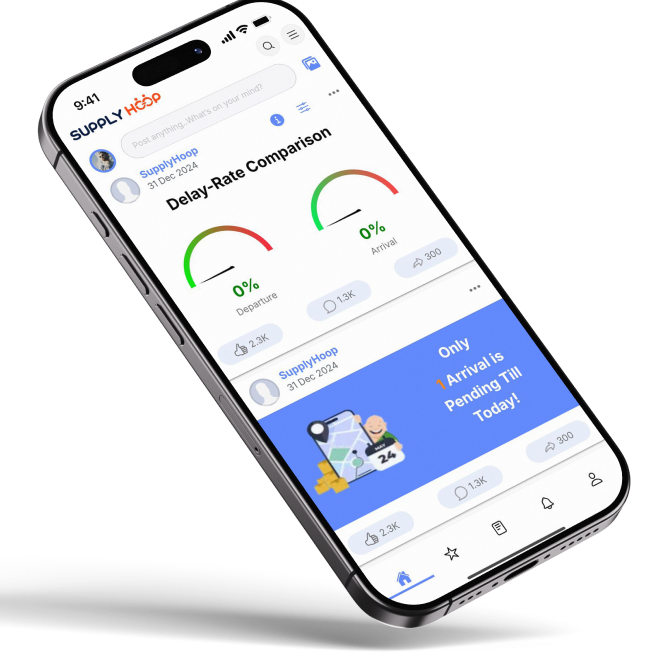
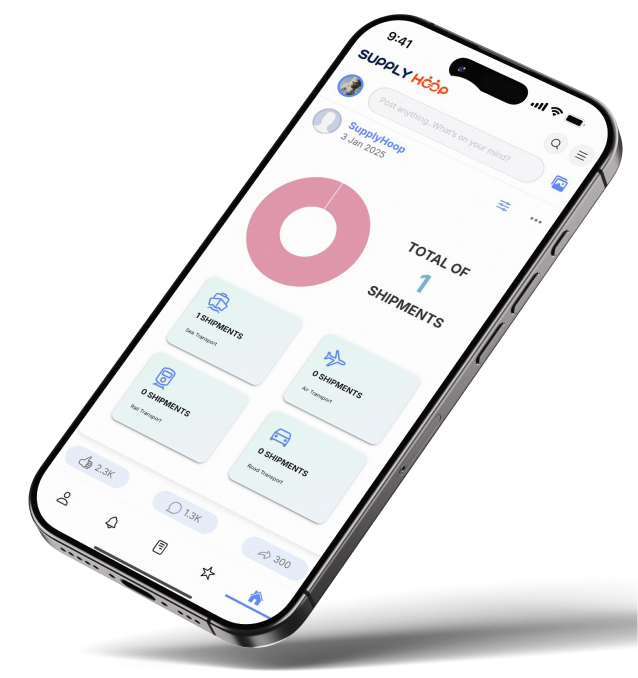
With Supply Hoop, authorised users can check relevant shipment progress, milestones, ETA changes, and exceptions from their mobile devices.
Instead of waiting to return to a workstation, they can review available information wherever their work takes them.
That convenience becomes particularly valuable when an update requires a timely decision.
From Searching Multiple Screens to Asking One Question
Even when shipment information is available through one application, users may still need to search individual records.
This is where AI can simplify the experience further.
With Supply GPT, logistics teams can interact with connected shipment information using natural-language questions.
For example, a user could ask:
“Where is my shipment?”
“Which shipments have changed ETA today?”
“Show my ocean shipments arriving this week.”
“Which shipments are currently delayed?”
“What requires my attention today?”
Instead of navigating multiple screens to locate relevant updates, users can ask a question and retrieve information available through their connected logistics environment.
This is an important distinction.
AI doesn’t replace the operational systems generating shipment data. It makes the connected information easier to access and interpret.
For freight forwarders managing large shipment volumes, that can reduce the time spent searching for routine answers.
Customers Need Relevant Updates, Not Access to Every System
Improving visibility doesn’t mean sharing all internal logistics information with customers.
A customer asking about delivery progress generally doesn’t need access to carrier contracts, internal costs, operational discussions, or unrelated shipment records.
They need an accurate update about their shipment.
That is why controlled visibility matters.
Operations teams may require detailed milestones and exception information. Customer service may need current shipment status and ETA updates. Customers may only need relevant progress information and authorised documents.
Supply Hoop’s mobile-first approach supports the goal of making shipment information more accessible while keeping the focus on the updates appropriate to each user.
With WhatsApp integration, relevant shipment updates can also be communicated through a familiar channel, helping reduce repetitive follow-ups.
The purpose is to improve communication without turning internal logistics systems into unrestricted information sources.
How Much Time could Your Team Recover?
The benefits of connected mobile visibility are not limited to convenience.
Think about the routine activities that occupy a freight forwarding team’s day.
Checking carrier portals for ETA changes. Searching email conversations for shipment updates. Contacting operations for confirmation. Copying information into spreadsheets. Responding to customers who are waiting for a status update.
These tasks may seem small individually, but together they consume time that could be spent managing exceptions, coordinating shipments, and supporting customers.
A connected mobile view can help reduce some of that repetitive information chasing.
For logistics managers evaluating a mobile visibility solution, the most useful questions are practical.
Are employees checking fewer systems for routine shipment updates? Can customer service respond without repeatedly contacting operations? Are important ETA changes being identified earlier? Can managers review shipment exceptions while away from their desks?
These outcomes reveal whether the technology is actually improving the workflow.
One Customer Question shouldn’t Trigger Five Different Searches
The future of freight forwarding isn’t about eliminating every specialised logistics platform.
CargoWise, carrier systems, ERP applications, and other technologies will continue playing important roles in managing freight operations.
The opportunity is to make the information they generate easier to access.
When relevant shipment milestones, ocean, air, and road updates, ETA changes, and exceptions become accessible through one mobile app, logistics teams can spend less time moving between systems and more time responding to what matters.
And when Supply GPT makes that connected information searchable through natural-language questions, even routine shipment enquiries can become easier to handle.
The goal isn’t to put every logistics system into one app. It’s to bring the shipment updates your team needs into one accessible mobile experience.
With Supply Hoop, freight forwarders can move towards a more connected approach to end-to-end supply chain visibility, helping authorised users access relevant shipment updates without constantly switching between platforms.