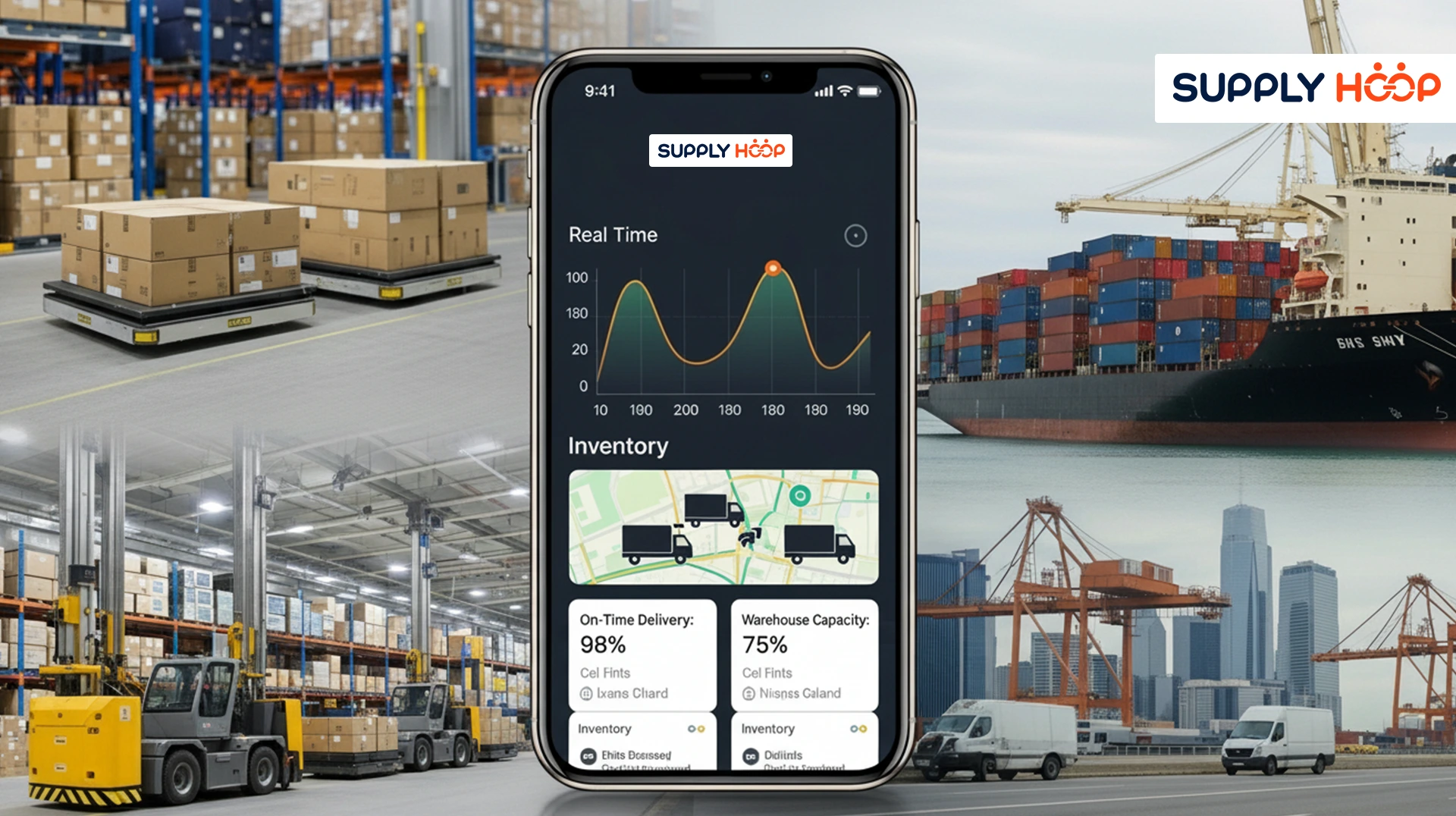
A planner reviews demand forecasts. A shipment delay is flagged. Inventory levels are shifting faster than expected.
Earlier, these decisions relied on experience, instinct, and delayed reports. Today, something different is happening. Before the planner reacts, the system already suggests what to do next.
That shift, from reacting to deciding with AI support, is quietly transforming supply chains.
Recent industry insights show that 67% of supply chain leaders now have increased confidence in AI-driven decision-making, while more than half prefer AI to recommend actions, while humans make the final call. This tells us something important:
AI isn’t replacing decision-makers. It’s becoming the engine behind better decisions.
Why Supply Chain Decisions are Becoming More Complex?
Supply chains in 2026 are no longer predictable systems. They are constantly influenced by:
- Demand volatility and changing customer behavior
- Geopolitical disruptions affecting routes and suppliers
- Regulatory pressure and compliance requirements
- Fluctuating transportation costs
- Inventory imbalances across regions
In this environment, decisions need to be made faster and with better accuracy.
The challenge?
Most traditional systems still rely on historical data and delayed reporting.
That gap between real-time events and decision-making is exactly where AI is stepping in.
AI is No Longer Experimental—It’s Operational
For years, AI was seen as a future capability. Today, it’s becoming part of daily operations.
Organizations are already applying AI across key areas:
- 47% are using or planning AI for inventory and supply optimization
- 41% are applying AI to logistics and routing decisions
- 71% are planning investments in generative and agentic AI
- 60% are focusing on predictive AI capabilities
These numbers reflect a clear shift:
AI is moving from analysis to action.
Instead of just identifying patterns, AI is now helping teams decide what to do next.
The New Decision Model: AI + Human Collaboration
One of the most important insights from current trends is how companies are using AI.
Most organizations are not handing over full control. Instead, they are adopting a hybrid decision model:
- AI analyzes large volumes of data
- AI suggests the best possible actions
- Humans validate and finalize decisions
This approach combines speed and intelligence with experience and accountability.
It also explains why only a small percentage of leaders fully trust AI to make independent decisions, but a majority rely on it for recommendations.
How AI Improves Supply Chain Planning?
Planning is one of the most critical and challenging areas in supply chain management.
AI improves planning by connecting multiple data points that were previously disconnected.
It helps organizations:
- Forecast demand more accurately
- Align procurement with real-time needs
- Adjust production plans dynamically
- Identify supply risks early
For example, AI can analyze demand signals, supplier performance, and inventory levels simultaneously to recommend the optimal purchasing decision.
This reduces overstocking, prevents stockouts, and improves overall efficiency.
AI in Logistics: Smarter Routing and Faster Decisions
Logistics operations are becoming increasingly dynamic. Routes change, delays happen, and costs fluctuate.
AI helps logistics teams respond in real time by:
- Optimizing routes based on current conditions
- Identifying the fastest and most cost-effective paths
- Predicting delays before they occur
- Recommending alternative shipping options
When combined with mobile visibility, these insights become actionable instantly.
Teams can adjust plans on the go instead of waiting for updates.
Inventory Optimization in a Volatile Environment
Inventory management has always been a balancing act. Too much inventory ties up capital. Too little creates shortages.
With demand volatility increasing, this balance is harder to maintain.
AI helps by:
- Analyzing demand patterns in real time
- Predicting future consumption trends
- Suggesting optimal stock levels
- Identifying slow-moving or excess inventory
This allows organizations to protect margins while maintaining product availability.
Connecting Demand, Procurement, and Production
One of the most powerful applications of AI is its ability to connect different parts of the supply chain.
Traditionally, demand planning, procurement, and production operated in silos.
AI brings these functions together by:
- Linking demand signals directly to procurement decisions
- Adjusting production schedules based on real-time data
- Identifying supplier risks and suggesting alternatives
This creates a more responsive and flexible supply chain.
Why Mobile Access Makes AI More Effective?
AI insights are only valuable if they are accessible when decisions need to be made.
This is where mobile applications play a critical role.
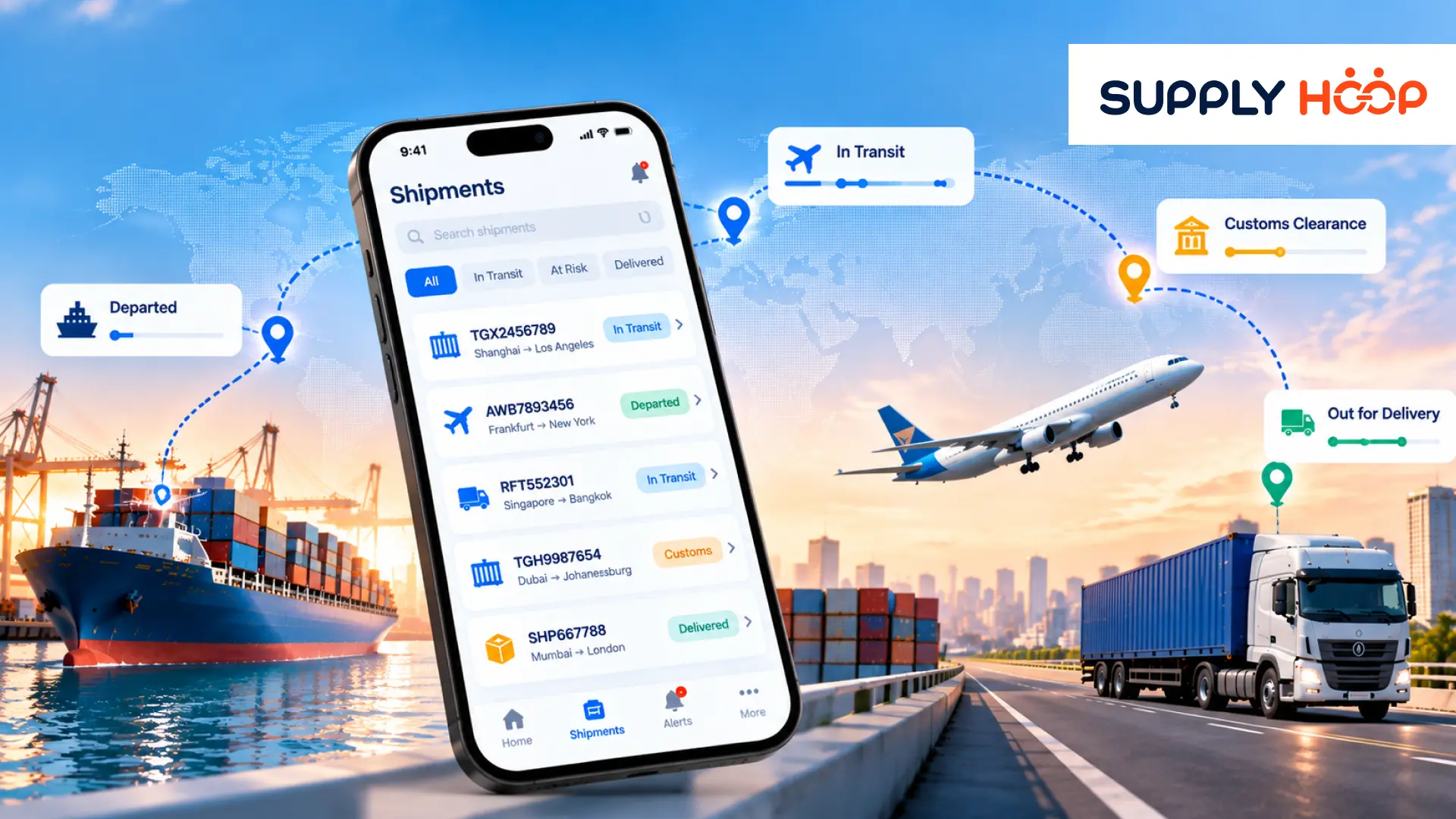
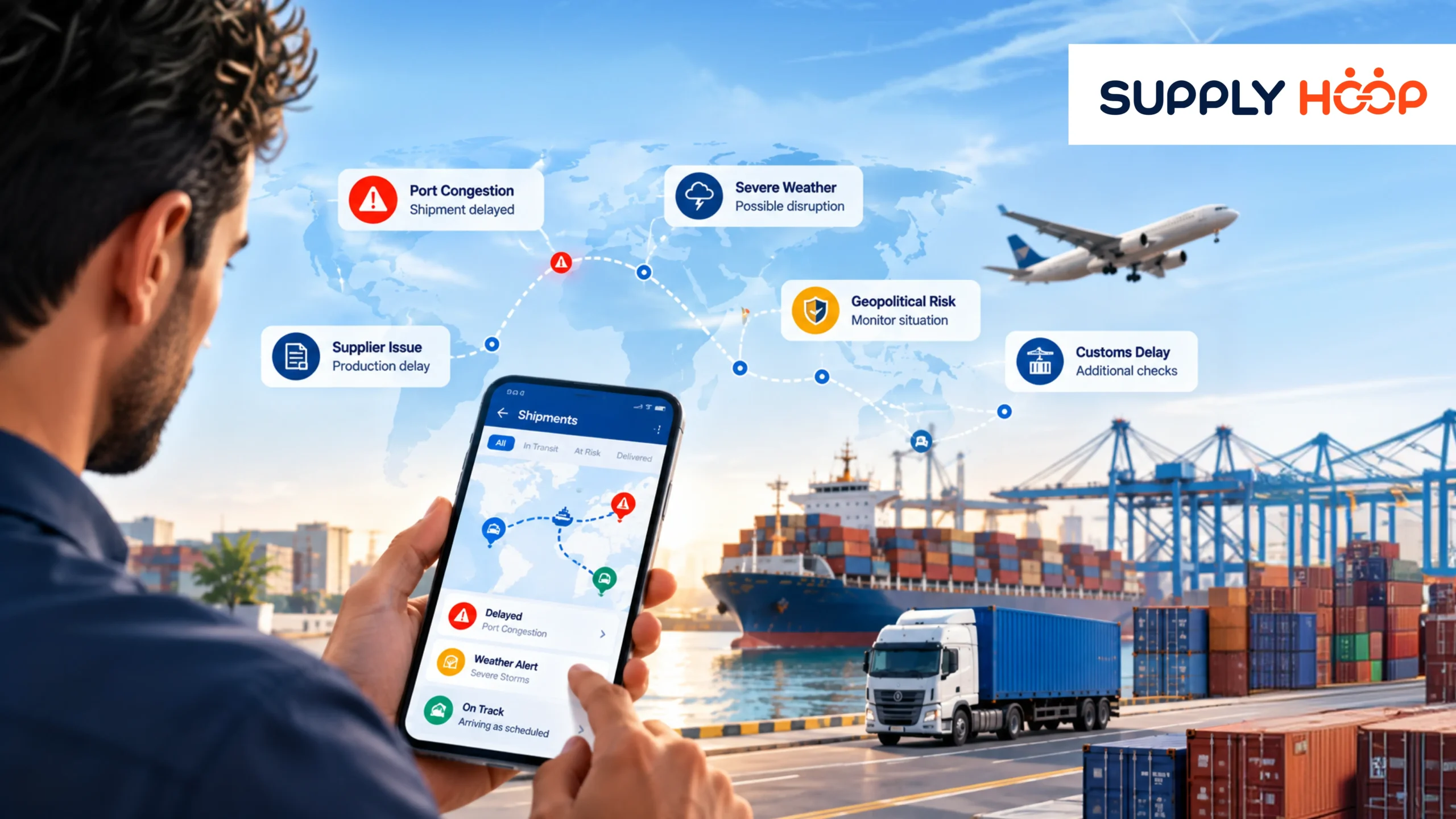
With AI integrated into a mobile visibility platform, logistics teams can:
- Access real-time recommendations instantly
- Check shipment status and risks on the go
- Respond to disruptions without delay
- Make informed decisions outside the office
Mobile access turns AI from a backend system into a practical decision-making tool.
The Business Impact: Speed, Accuracy, and Control
When AI is applied effectively, the impact is clear.
Organizational experience:
- Faster decision-making across operations
- Improved forecast accuracy
- Reduced operational costs
- Better inventory control
- Increased supply chain resilience
Most importantly, teams gain confidence in their decisions, even in uncertain environments.
Why Investment in AI is Accelerating?
The growing interest in AI is not just about innovation, it’s about necessity.
With 44% of leaders citing demand volatility as a major challenge, companies need systems that can adapt quickly.
AI provides that adaptability.
It enables organizations to:
- Respond to changing market conditions
- Manage risk more effectively
- Maintain operational efficiency
- Stay competitive in a complex environment
This is why investment in AI is expected to grow significantly over the next few years.
The Shift from Reactive to Intelligent Supply Chains
The biggest transformation happening today is the shift from reactive operations to intelligent systems.
In a reactive model:
- Decisions are made after events occur
- Data is delayed
- Teams operate under pressure
In an AI-driven model:
- Decisions are supported by real-time data
- Risks are identified early
- Actions are proactive
This shift is redefining how supply chains operate.
Conclusion
Supply chain complexity is not going away. If anything, it’s increasing.
What’s changing is how organizations respond.
AI is no longer just a tool for analysis, it’s becoming the backbone of decision-making across planning, logistics, and inventory management.
When combined with mobile visibility, AI empowers teams to make faster, smarter, and more confident decisions, wherever they are.
If you’re ready to bring intelligence into your operations and achieve true end-to-end supply chain visibility, now is the time to take the next step.
Book a demo today and see how AI-powered, mobile-driven visibility can transform the way your supply chain makes decisions.