A customer asks for the latest bill of lading. The shipment is moving, your operations team is busy, and the person who has the document is away from their desk.
Now the search begins.
Check the shipment record. Search the inbox. Find the attachment. Make sure it’s the latest version. Download it. Forward it.
The document exists. The problem is getting the right one to the right person at the right time.
For freight forwarders managing hundreds of active shipments, these small document delays can quietly consume hours every week. Mobile document access is changing that by putting shipment paperwork directly into the hands of logistics teams, wherever they’re working.
📱 Take Shipment Documents Beyond the Desktop
Logistics work doesn’t happen only behind a desk. Teams move between warehouses, customer meetings, terminals, and operational sites throughout the day.
Their documents should move with them.
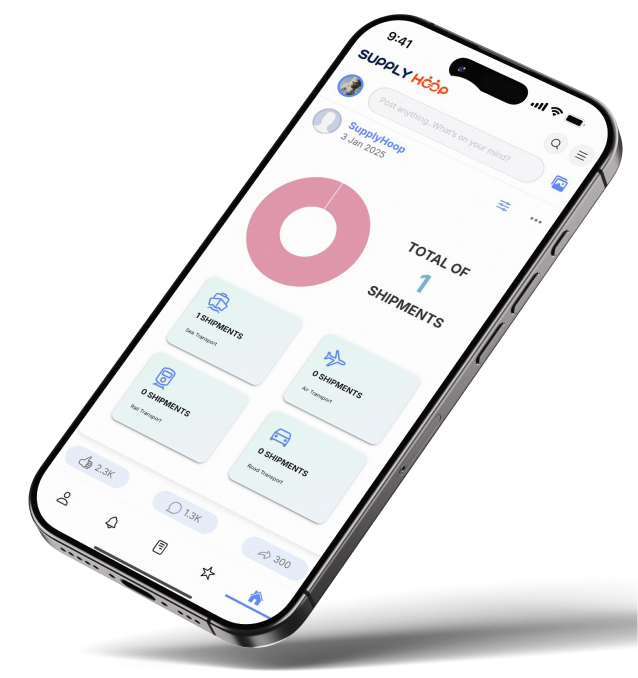
A mobile supply chain visibility app can connect documents directly to the relevant shipment, giving authorized users immediate access to bills of lading, commercial invoices, packing lists, customs documents, delivery orders, certificates, and Proof of Delivery.
Instead of asking a colleague to find a file, the team can pull it up directly from the shipment record.
🔎 Find the Right File, Not Just Another File
The challenge with logistics documentation isn’t always finding a document. It’s knowing you’ve found the right version.
Email attachments, downloaded copies, local folders, and renamed files can quickly create version confusion.
Connecting documents to live shipment records provides a clearer source of truth. When an approved document is updated, teams can access the current version without digging through yesterday’s email chain.
That matters when the document is being shared with a customer, broker, carrier, or customs authority.
🤖 Ask Supply GPT Instead of Searching
Now take mobile document access one step further.
Rather than manually navigating shipment records, Supply GPT can help teams retrieve information using everyday questions.
A user could ask:
- 📄 “Show me the bill of lading for this shipment.”
- 📦 “Find the POD for this delivery.”
- ⚠️ “Which shipments are missing customs documents?”
- 🔍 “Show me the documents for this purchase order.”
The goal is simple: spend less time searching for information and more time acting on it.
💬 Turn WhatsApp Requests into Faster Responses
A lot of logistics communication already happens on WhatsApp.
A customer may message asking for an invoice. A transport partner may need a delivery document. Someone in operations may need the latest shipment paperwork while away from the office.
When document access and WhatsApp communication are connected to the mobile workflow, teams can retrieve and share the required information much faster.
No waiting to get back to the office. No lengthy internal document chase.
Just find, verify, and share.
🔗 Keep CargoWise Data and Documents Connected
Mobile access becomes much more useful when it works with the systems already running the operation.
Integration with CargoWise and other logistics platforms can keep shipment information and supporting documents connected. Instead of creating another isolated document repository, the mobile app becomes an accessible visibility layer over existing operational data.
That means teams can see the shipment status and access the documents supporting that shipment from the same environment.
⏱️ Small Time Savings Add Up
Saving a few minutes on one document request may not sound transformational.
Multiply that across hundreds of shipments, customer requests, customs queries, POD requests, and internal follow-ups, and the picture changes quickly.
Better mobile document access can help logistics teams reduce repetitive searches, shorten customer response times, minimize version confusion, and keep documentation from becoming another operational bottleneck.
🚀 From Document Storage to Document Visibility
The next step in logistics document management isn’t simply storing more files digitally. It’s making the right document available when and where someone actually needs it.
With mobile document access, Supply GPT, WhatsApp-enabled sharing, and connected CargoWise data, freight teams can turn documentation into an active part of their supply chain workflow rather than something buried inside folders and inboxes.
Ready to make shipment information easier to access across your operation? Explore how end-to-end supply chain visibility can connect your documents, shipment data, and teams through one mobile experience.