Freight forwarding has always been mobile.
Cargo moves between ports, airports, warehouses, borders, distribution centres, and customer locations every day.
Yet the people managing that movement have traditionally been tied to something much less mobile: the desktop.
A logistics manager walking through a warehouse may need to return to a computer to check a shipment. Someone visiting a customer may call operations for an ETA. A manager away from the office may wait for a colleague to confirm whether a container has cleared customs.
That operating model is beginning to change.
The next phase of freight forwarding is not simply about putting existing software onto a smaller screen. It is about giving logistics teams access to the updates, exceptions, documents, communication, and decisions that matter wherever operations are happening.
🚚 Freight Operations No Longer Happen Behind a Desk
Think about how many logistics decisions happen outside a traditional office environment.
A warehouse supervisor needs to know whether an inbound container is delayed.
A sales manager sitting with a customer needs the latest shipment update.
An operations manager travelling between locations receives an alert about a customs hold.
A driver reaches the consignee and needs to capture Proof of Delivery.
Waiting until someone reaches a desktop can create an unnecessary gap between something happening and someone responding.
Mobile freight technology helps shorten that gap.
Instead of treating mobile as another place to view tracking information, logistics businesses can use it as an extension of their operational workflow.
📲 Mobile Visibility is Moving Beyond “Where is My Shipment?”
The first generation of mobile logistics tools focused heavily on tracking.
That was useful, but modern freight operations need more context.
Knowing that a container is “in transit” does not necessarily tell a logistics manager whether anything requires attention.
A useful mobile visibility experience should help answer questions such as:
Has the ETA changed?
Is customs clearance progressing?
Which shipments have exceptions?
Are important documents missing?
Has the delivery been completed?
Which update requires my attention now?
This shifts mobile logistics from simply checking shipment status to supporting operational decisions.
🚨 The Real Mobile Advantage is Exception Awareness
A logistics manager may be responsible for hundreds of active shipments.
Opening each shipment individually on a mobile device would simply recreate the same monitoring workload on a smaller screen.
The better approach is exception-led visibility.
If 300 shipments are moving normally and five require intervention, those five should be easy to identify.
A delayed vessel, customs issue, approaching delivery deadline, missing document, or significant ETA change can be surfaced to the relevant user.
Mobile alerts then become valuable because they answer:
“What changed while I wasn’t looking?”
That is much more useful than continuously checking a dashboard.
🤖 AI Changes How Managers Access Logistics Information
Mobile screens also create an interesting challenge: there is limited space.
Nobody wants to navigate through ten menus while standing in a warehouse or travelling between meetings.
Conversational AI offers another way to interact with logistics information.
With Supply GPT, users can ask operational questions naturally rather than manually searching through shipment records.
For example:
“Which shipments are delayed today?”
“What is arriving tomorrow?”
“Which containers are still waiting for customs clearance?”
“Show shipments with changed ETAs.”
“Which deliveries are still awaiting POD?”
The mobile experience becomes less about navigating software and more about asking for the information needed at that moment.
📄 Shipment Documents Need to become Mobile Too
Shipment visibility without document access still leaves an operational gap.
A logistics manager may know a shipment has reached customs but still need an invoice, packing list, shipping document, or clearance-related file.
A customer may request a document while the account manager is away from the office.
The operations team may need to verify the latest version before responding to an exception.
Mobile document access allows authorised users to retrieve relevant shipment documents without returning to their desktops or searching through email threads.
The same principle extends to the final mile. Digital Proof of Delivery can be captured at the delivery point, helping close the shipment record while the physical handover is happening.
💬 WhatsApp is Already Mobile. Shipment Information should be Too.
Freight forwarding has another mobile reality that cannot be ignored: customers already communicate through their phones.
Shipment questions frequently arrive through WhatsApp.
“Has my vessel departed?”
“Has customs cleared the cargo?”
“What is the latest ETA?”
“Can you send the POD?”
When shipment information and communication are disconnected, someone still has to check another system, find the answer, and manually respond.
Connecting WhatsApp with freight tracking can help relevant shipment updates move closer to the communication channels customers already use.
The objective is not to expose operational data to everyone. It is to make the appropriate update available to the appropriate stakeholder without unnecessary information chasing.
🔗 Mobile doesn’t Mean Replacing Your Core Logistics Systems
For logistics managers, adopting mobile technology should not automatically mean replacing the platforms already running the business.
CargoWise, ERP platforms, TMS solutions, carrier systems, and other operational applications still perform critical functions.
Mobile visibility can sit across these systems.
Through integrations such as CargoWise API connectivity, relevant shipment information can move into a mobile environment while the underlying operational system remains in place.
This distinction matters.
The mobile app does not need to become another isolated system.
It can become an accessible visibility layer over the systems already supporting the freight operation.
🔐 Mobile Access Also Needs Controlled Visibility
Making logistics information available on mobile does not mean making everything available to everyone.
Different users need different information.
Operations teams may require detailed shipment milestones and exceptions. Management may need network-level performance visibility. Customer service may need current status and ETA information. Customers may only need selected shipment updates and relevant documents.
A useful mobile strategy therefore needs role-appropriate access.
The question is not:
“How much data can we put on mobile?”
It is:
“What does this person need to know or do from mobile?”
That creates a much more practical starting point for mobile transformation.
📊 What should Logistics Managers Look for in a Mobile Platform?
Before introducing another app into freight operations, logistics managers should look beyond the interface.
Ask whether the platform connects with existing operational systems.
Check whether it provides real-time or near-real-time shipment updates rather than another static view.
Understand how user access is controlled.
Look at whether exceptions can be prioritised.
Consider whether documents, customer communication, delivery confirmation, and AI-assisted information retrieval can be incorporated into the same workflow.
Most importantly, measure whether the technology reduces everyday operational friction.
Are teams checking fewer systems?
Are managers receiving important exceptions sooner?
Are customer questions being answered faster?
Are people spending less time searching for shipment information?
Those outcomes matter more than the number of features inside the app.
🚀 Freight is Mobile. Freight Management is Catching Up.
The mobile revolution in freight forwarding is not about squeezing a desktop freight system onto a smartphone.
It is about changing where and how logistics decisions can happen.
Shipment updates can reach managers away from their desks. Exceptions can surface when attention is required. Relevant documents can travel with the shipment record. Proof of Delivery can be captured at destination. AI can make connected logistics information easier to interrogate. And appropriate updates can reach customers through the channels they already use.
The desktop will remain important.
But it no longer needs to be the only place where logistics becomes visible.
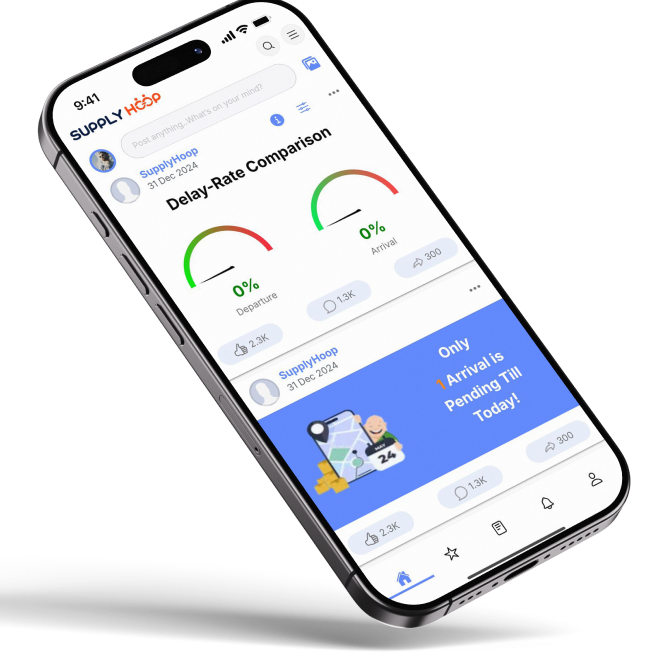
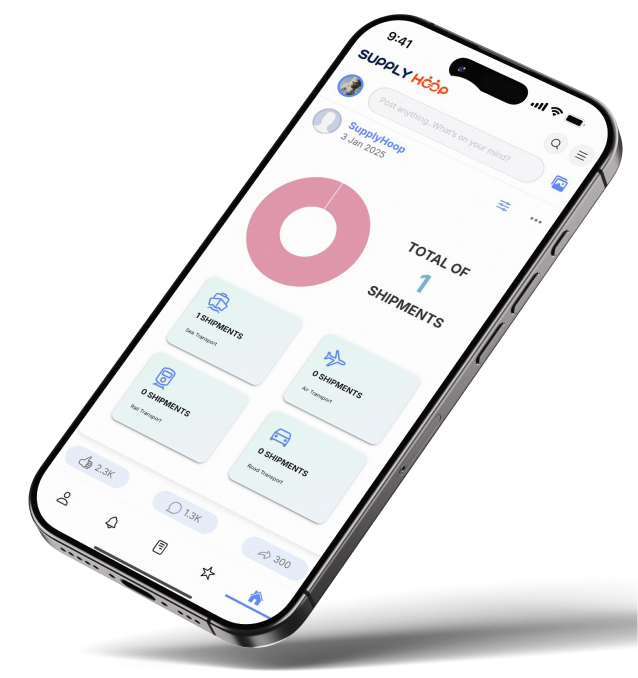
Supply Hoop brings relevant shipment updates, end-to-to end mobile visibility, Supply GPT, documents, communication, and connected logistics information into a mobile-first experience designed to complement existing freight systems.