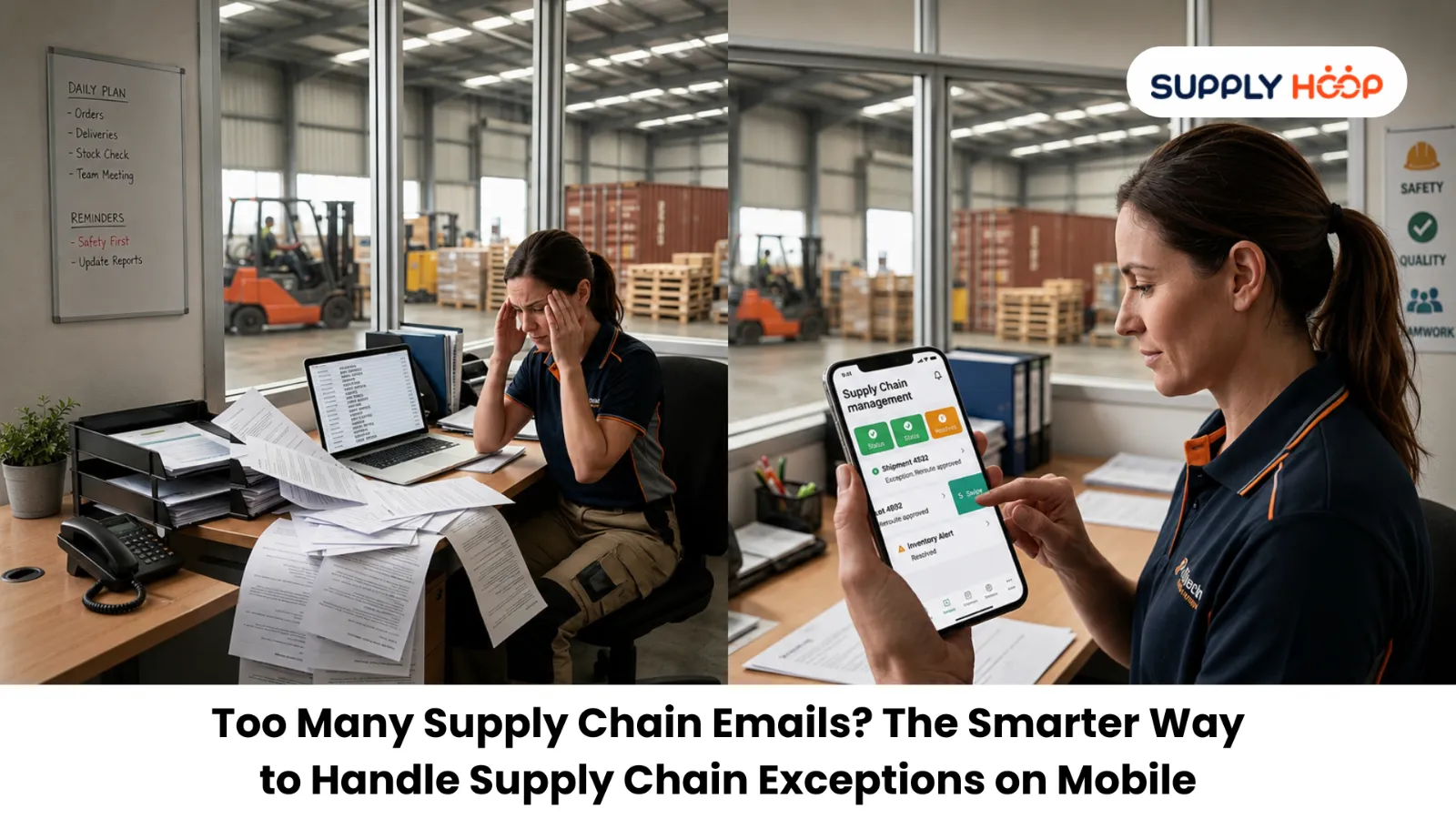
A delayed shipment.
A missed milestone.
A customs hold.
And suddenly, everyone’s inbox explodes.
Operations sends updates. Customer service asks for ETAs. Carriers respond late. Internal teams follow up again. Before long, one shipment exception turns into 30 unread emails and five different conversations.
Sound familiar?
In 2026, supply chain exceptions are happening faster and more frequently than ever. But the real issue isn’t just the disruption itself, it’s how companies are still managing those disruptions.
And for many logistics teams, email has quietly become the bottleneck.
Why Email-Based Exception Management No Longer Works?
Let’s be honest, emails were never designed for real-time supply chain operations.
They create delays, fragmented communication, and confusion during high-pressure situations. And when multiple shipments are affected at the same time, inboxes quickly become unmanageable.
Most logistics teams still deal with:
- 📧 Endless follow-up threads
- ⏱️ Delayed responses between departments
- 🔍 Difficulty identifying urgent exceptions
- 📄 Missing context across conversations
- 🚨 Important updates getting buried in inboxes
The result? Teams spend more time searching for information than solving problems.
The Shift Toward Mobile-First Exception Management
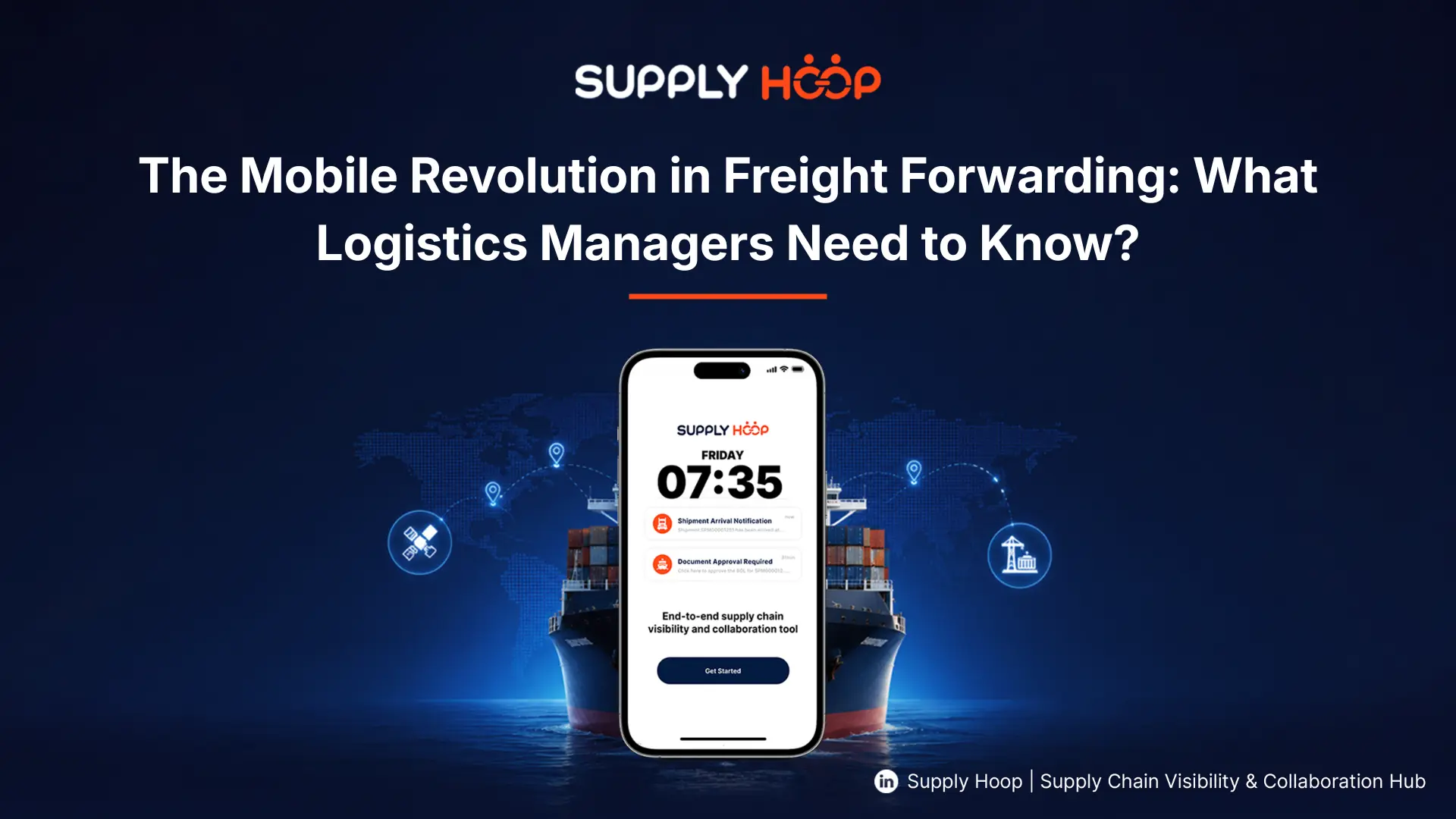
Modern logistics operations are moving away from email-heavy workflows and toward mobile-first visibility platforms.
Instead of waiting for someone to send an update, teams now receive real-time alerts directly through a mobile app.
That changes everything.
With mobile-based exception management, teams can instantly see:
- 🚨 Delayed shipments
- 📍 Route deviations
- 📄 Customs clearance issues
- ⚓ Port congestion impacts
- ⏱️ ETA changes and missed milestones
And because updates happen in real time, teams can respond immediately instead of chasing information through emails.
AI is Helping Teams Prioritize What Actually Matters
One of the biggest problems in exception management isn’t visibility, it’s overload.
Not every issue needs urgent action.
A one-hour delay on a routine shipment may not matter. A customs hold on a high-priority container absolutely does.
This is where AI-powered visibility becomes critical.
Modern AI systems help logistics teams:
- 📊 Prioritize high-impact exceptions
- ⚡ Surface critical disruptions first
- 🔎 Filter out low-risk operational noise
- 📢 Trigger alerts only when action is needed
Instead of drowning in hundreds of notifications, teams focus only on what truly impacts operations.
That dramatically improves response speed and decision-making.
Real-Time Visibility Reduces Operational Pressure
Supply chain disruptions don’t wait for office hours anymore.
Port congestion, weather delays, geopolitical disruptions, and carrier schedule changes can happen anytime.
Without real-time visibility, teams often learn about problems too late.
Mobile-first visibility platforms solve this by delivering:
- 📡 Live shipment tracking
- 🚨 Instant disruption alerts
- 📱 Real-time milestone updates
- 🔄 Continuous operational visibility
Your phone becomes your operational command center.
Whether you’re at a warehouse, in a customer meeting, or working remotely, you stay connected to live supply chain activity.
Why Faster Communication Matters More than Ever?
Most operational delays become worse because communication slows down.
Customers wait for updates. Internal teams chase information. Operations gets overwhelmed responding manually.
That’s why many logistics companies are now integrating visibility platforms with communication tools like WhatsApp and AI chatbots.
This allows:
- 📢 Automatic shipment notifications
- ⚡ Faster customer updates
- 🤝 Instant coordination across teams
- 📍 Real-time status sharing without emails
Instead of waiting for responses, information flows automatically to the right people.
And in logistics, faster communication often prevents bigger problems later.
Exception Management is No Longer About Detection Alone
A few years ago, visibility platforms focused mostly on identifying problems.
Today, that’s no longer enough.
Modern exception management is about:
- Detecting issues early
- Understanding operational impact
- Prioritizing the right response
- Acting quickly from anywhere
That’s why mobile-first AI visibility platforms are becoming such a competitive advantage.
They don’t just show teams what went wrong, they help teams decide what to do next.
The Industry is Moving Toward Smarter Operations
Recent logistics technology insights show that companies investing in real-time visibility and AI-powered exception management are seeing:
- 📈 Faster disruption response times
- 📉 Reduced operational delays
- 🤝 Improved customer satisfaction
- ⚡ Better coordination across departments
And perhaps most importantly, teams experience less operational stress.
Because when visibility improves, firefighting decreases.
Why does this Matter in 2026?
Supply chains today are more volatile than ever.
Geopolitical tensions, capacity shortages, changing regulations, and unpredictable transit times are creating constant operational pressure.
At the same time, customer expectations continue to rise.
People now expect:
- Immediate updates
- Accurate ETAs
- Real-time communication
- Faster issue resolution
Companies still relying heavily on email workflows are struggling to keep pace.
The future belongs to logistics teams that can:
- 📱 Operate from anywhere
- ⚡ Respond instantly
- 🤖 Use AI to prioritize decisions
- 📡 Maintain continuous supply chain visibility
Final Thought: Stop Managing Exceptions through Inbox Chaos
Supply chain exceptions will never disappear completely.
But the way companies manage them is changing fast.
The shift toward AI-powered, mobile-first visibility platforms is helping logistics teams move:
- From reactive emails to proactive alerts
- From fragmented communication to real-time coordination
- From operational overload to controlled execution
And that shift is becoming essential for modern freight operations.
If you’re ready to simplify exception management and strengthen your supply chain visibility, now is the time to embrace mobile-driven logistics visibility tools.