Working with multiple freight forwarders gives businesses flexibility. One provider may offer stronger ocean freight coverage in Asia, another may handle European air freight better, while a regional partner manages inland transportation.
That flexibility makes sense.
But there’s a catch: every additional forwarder can create another place your logistics team has to look for information.
Different portals. Different milestone formats. Different emails. Different ETA updates.
Before long, your team isn’t just managing shipments. They’re managing systems.
A centralized logistics mobile app changes that by bringing shipments from multiple freight forwarders into one connected visibility layer.
🌐 Multi-Forwarder Logistics Needs One Operational View
There’s nothing wrong with using multiple freight forwarders. In fact, it can help businesses access better capacity, regional expertise, specialized services, and competitive options across different trade lanes.
The problem starts when visibility becomes fragmented.
If one shipment is tracked through a forwarder portal, another through email, and a third through a spreadsheet, understanding the overall status of your supply chain becomes unnecessarily difficult.
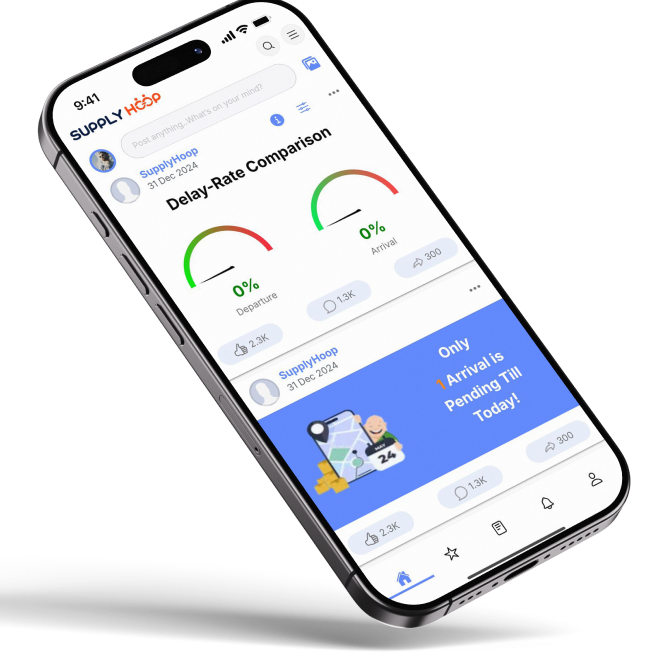
A centralized mobile app brings these different movements together so logistics teams can see what’s happening across their network without jumping between systems.
📦 See Every Shipment in One Place
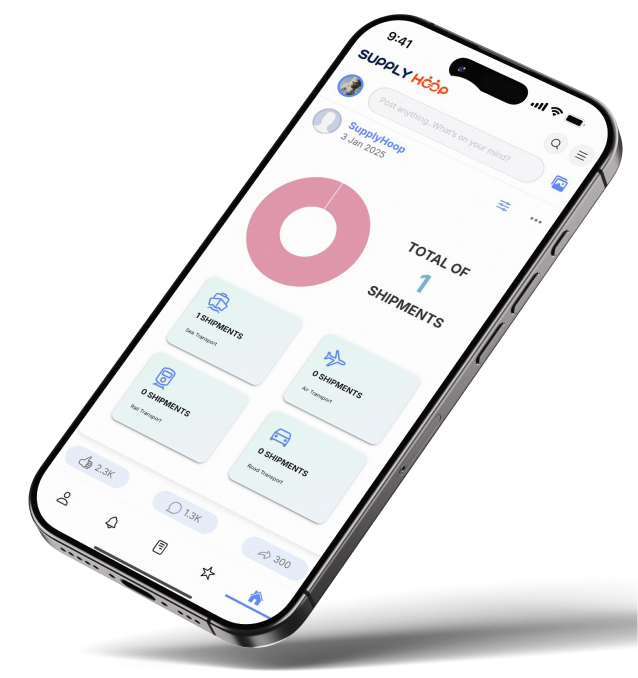
Imagine opening your phone and seeing your ocean, air, road, and rail shipments together, even when different forwarders are managing them.
Instead of thinking about which provider has the shipment, your team can focus on what the shipment needs.
A unified mobile view can bring together:
- 🚢 Shipment and container progress
- ⏱️ ETA, ETD, ATA, and ATD updates
- 📍 Key transportation milestones
- 🚨 Delays, holds, and exceptions
- 📄 Shipment documents
- 🚚 Delivery progress
The forwarders may be different. The operational view doesn’t have to be.
🚨 Spot Problems Across Forwarders Earlier
Multi-forwarder visibility becomes especially valuable when something goes wrong.
Maybe one container has missed a transshipment. Another shipment is waiting for customs clearance. An air freight movement has been rescheduled.
When this information sits across several systems, teams have to discover each issue individually.
Centralized visibility makes exceptions easier to identify across the entire shipment portfolio. Real-time alerts can bring important changes directly to the team, helping them focus on shipments that require action rather than manually checking every forwarder.
🤖 Ask About Your Entire Shipment Network
This is where AI can make multi-forwarder management much easier.
Instead of reviewing each provider individually, Supply GPT can help users ask operational questions across connected shipment data.
For example:
“Which shipments are delayed today?”
“What containers require immediate attention?”
“Which shipments have changed ETA?”
“Are any containers approaching detention risk?”
Rather than spending time gathering information first, teams can move directly toward understanding the problem and deciding what to do next.
📊 Compare Performance with Consistent Information
Centralized visibility can also make it easier to understand how different forwarding relationships are performing.
When shipment information is presented consistently, logistics teams can more clearly identify recurring delays, milestone performance, exception patterns, and service differences across their network.
That gives businesses better information for future routing and forwarder decisions.
The goal isn’t necessarily to reduce the number of logistics partners.
It’s to manage those partners with greater clarity.
💬 Keep Communication Connected
Different forwarders often mean different communication channels as well.
Some updates arrive by email. Others come through WhatsApp. Some require checking a portal.
Integrating communication with the visibility workflow helps reduce that fragmentation.
WhatsApp integration, for example, can help distribute relevant shipment milestones, ETA changes, and exception notifications while keeping communication aligned with the latest shipment information.
Customers get faster updates, and operations teams spend less time manually copying information from one place to another.
🔗 Connect Rather than Replace
Centralized visibility shouldn’t require businesses to throw away the systems they already depend on.
A mobile-first visibility layer can connect with CargoWise, ERP, and TMS platforms, carrier APIs, and third-party forwarder systems so information can flow into one accessible environment.
That’s important because the objective isn’t another portal.
It’s fewer portals to manage.
🚀 One Network. One View. Better Decisions.
Using multiple freight forwarders can make a supply chain more flexible, but it shouldn’t make it harder to understand.
A centralized logistics end-to-end supply chain visibility mobile app brings shipments, milestones, exceptions, documents, and updates from multiple providers into one connected view. Add AI-powered insights through Supply GPT and integrated communication, and logistics teams can spend less time collecting information and more time managing what actually needs attention.